Blog
Cataloguing the library books – a volunteer’s perspective
The library is undertaking a mammoth exercise to digitise it’s library card index catalogue, and convert it into a searchable online resource. Our team have recently added the 5,000th record. One of our volunteers, Ruth Baigent, gives us a brilliant insight into what that work involves, and her mixed feelings on taking it on!
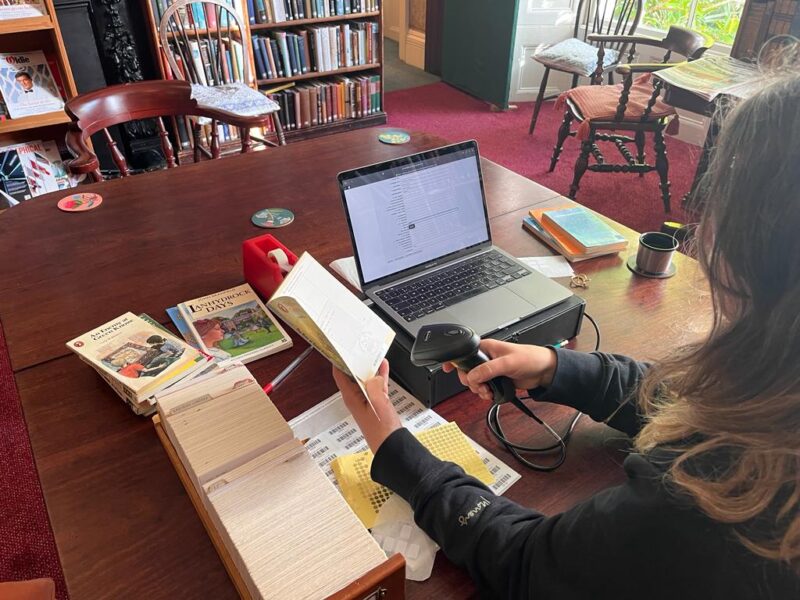
Ruth at work, with the index card catalogue to her left
Cataloguing for Morrab Library means scanning barcodes and checking and entering information, such as publisher details about each book and its library location, onto the new library database, the KOHA library system. We add a barcode sticker to the book with its library number, and each book gets a little gold sticker to indicate that it has been “KOHA-ed”. We started with the library’s various Fiction collections, and I am currently working through Children’s Fiction. I’ve been involved from early days, and we are now past the 5000 book target, with a huge quantity of Non-Fiction volumes to tackle next! There is a small team of us, and we usually work alone, quietly, at different times, and, though there are plans to have a get together at some point, there are still a few of us that have not met yet.
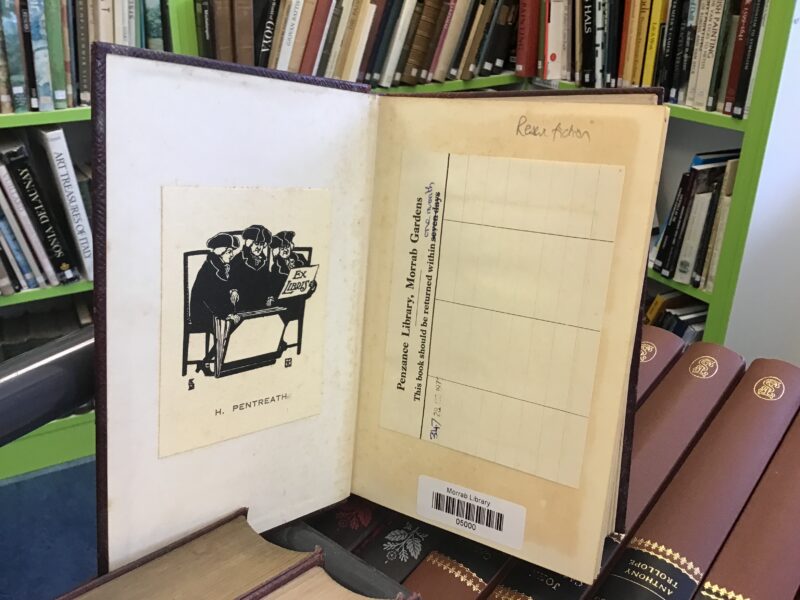
Number 5000!
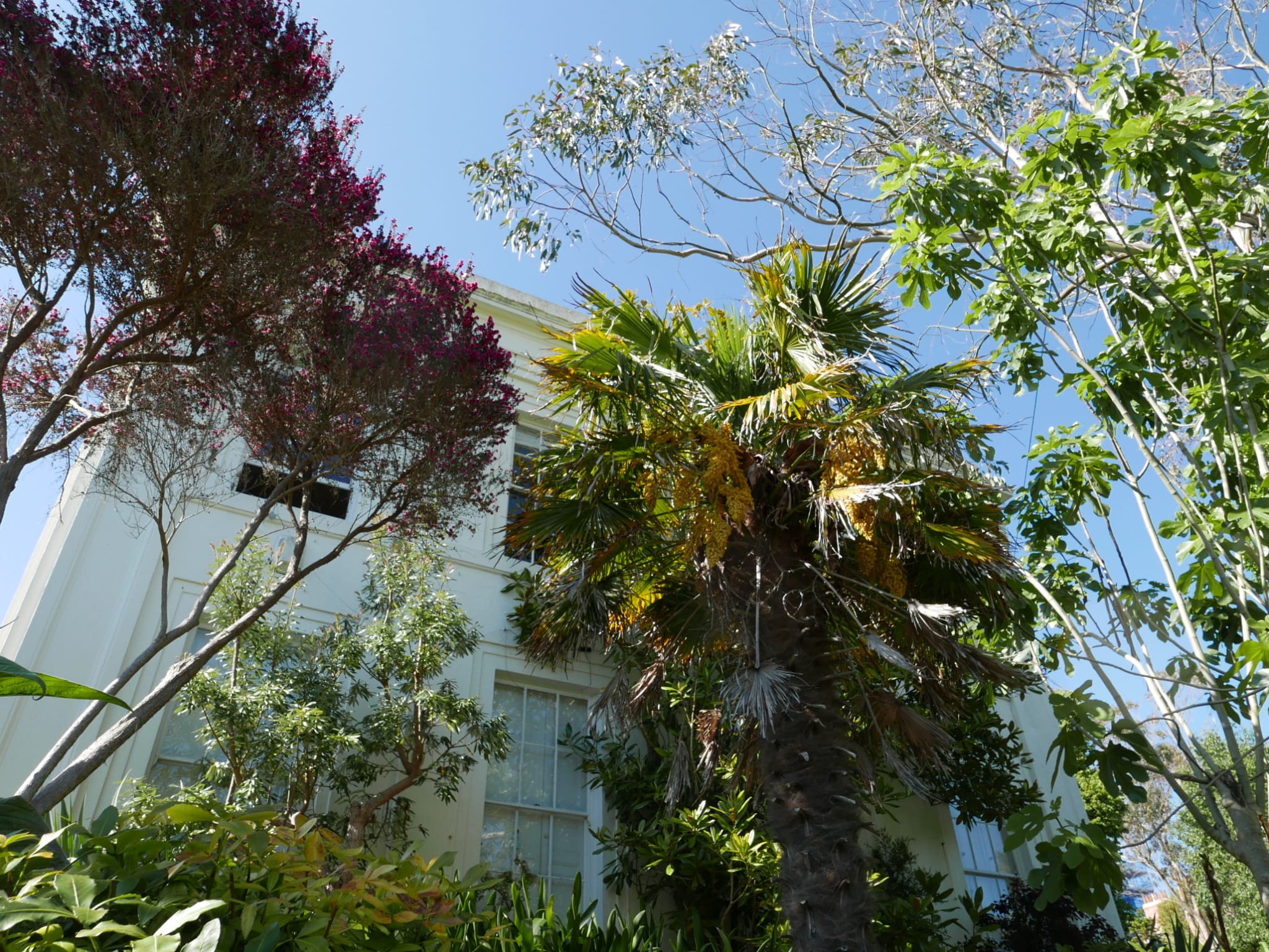
The library is a tranquil and peaceful place to work. The atmosphere is calm, and it is good to be surrounded by the old timbers, wall to wall books, spacious rooms, and large windows overlooking the eucalyptus trees and other beautiful plants in the sub-tropical Morrab Gardens. I first joined the library when I was about 23, and I have to say it hasn’t changed much over the two decades since, and all changes, such as the library extension, have been unobtrusive.
We all love books, of course, and we all love the old card system the library has in place too. I feel traitorous in some ways, adding the books to a computer database which will supersede the cards and card catalogues, the old pockets and date stamps which libraries just don’t use any more (although I hope Morrab Library will keep up with the date stamps!). The old ways of the public library have changed quite rapidly over the last 20-30 years, but I remember them from my school days, for instance, when we all joined a waiting list for “Are You There God, It’s Me, Margaret?” by Judy Blume. I waited for weeks and weeks, my name added to the long list on a piece of paper held by the librarian. The book would come in, and the next person on the list was notified. The book was stamped and the ticket placed in our little ticket pouch. It was so exciting! That was at a time when everyone said “shush!” when someone spoke and libraries were spaces for peace rather than community. Morrab Library does integrate both, though. Peace is respected, and there is a vibrant community at the same time.
Hopefully introducing the virtual catalogue will be equally unobtrusive, without losing the “life” of the systems. A virtual catalogue means we are able to search for books, to see where they are: are they on the shelves, have they been taken out, have they been reserved, are they off the shelves for conservation? How long have they been taken out for? Are they coming back? These are all important questions! Questions which can be answered very easily when we use a database. So I do see the point. But the card catalogues are so lovely, nothing will truly replace them.
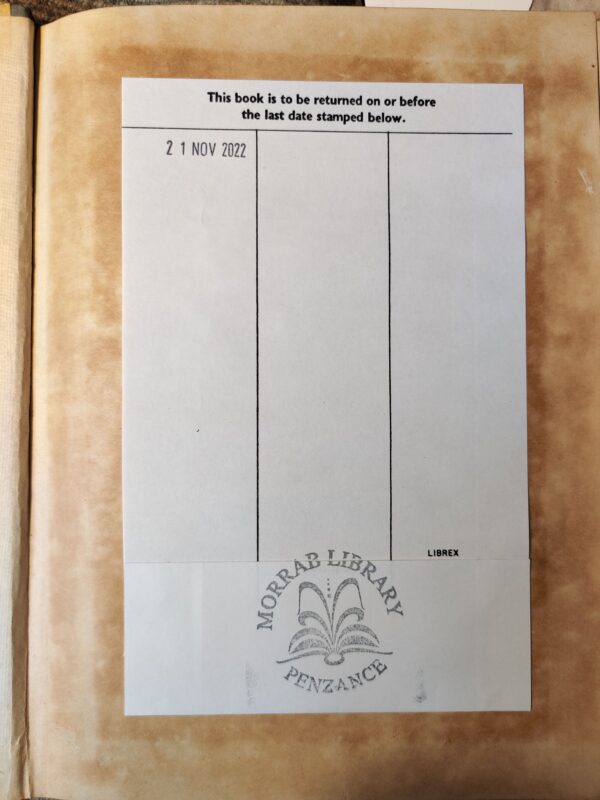 As I’m working, I love looking at the books and seeing when they were taken out, the long lists of dates due back – each date speaks to me of the person who took that book out. It is a beautiful community which I feel a part of. Sometimes, there is a completely blank list of dates. Some books have clearly never been taken out, or never read. I love these books even more, and long to read them. I’d like to start up a children’s book reading club, where we pick these books and read them each week but I wonder if the children wouldn’t be interested in the mysterious unselected books which I’m attracted to!
The books I love are those promising a magical story of nature and mystery, scattered with wood block prints, and detailed pictures relating to the story, even if obliquely! As a child, I would stare at prints such as these for hours, before TV really became a big feature in my life. Staring at these pictures as I read, I’d notice that oftentimes, the picture didn’t relate to the story — for instance, the story would say the girl was dressed one way, and she would be dressed quite differently in the picture — and I would wonder at how the picture came to be that way… The mysteries of the publishing industry and illustration commissioning were filled with deeper meaning for me… the how? and why? weren’t questions I expected (or wanted) mundane answers to. I simply dwelled in the richness of the mystery of these strange discrepancies. These were things done by other people and understanding eluded me, the mysterious world of Adults described so well by Antoine de Saint-Exupéry in “Le Petit Prince.” Though I have more answers now, I try to hold on to the mystery, and I remember it so well when I am amongst those children’s books, like the ones I used to surround myself with as a child.
Sometimes it is difficult to put the barcode sticker onto the page, as it feels like vandalism, but I also know that it’s nice to find books where a child has drawn or that have notes of dedication, or a bookmark, because it’s nice to think of those who were there before us. The Morrab stamps and stickers thus become part of the book’s history, and add to the interest, rather than detract from it. We will be history ourselves, one day, I hope.
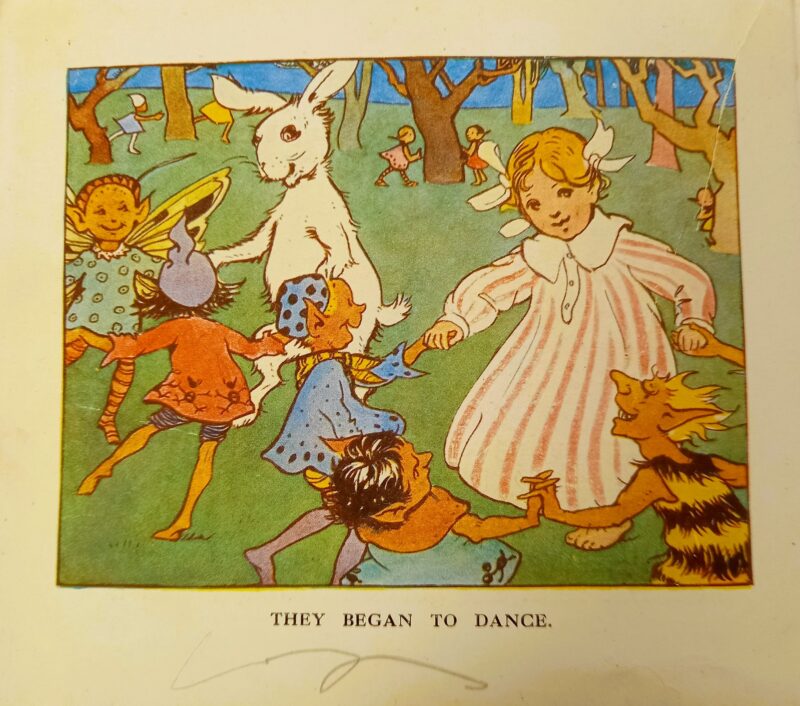
A page from ‘The Adventures of Mary Barbara’ by Angusine MacGregor and May Byron (date unknown)
There are some ancient books from the turn of the 20th century with no publisher information on them, hinting at a time when books were just books, and there were few enough of them that we didn’t need to know who published them, especially if we were children. It’s so vastly different from today, when book publication can feel like consumerism gone mad.
Cultural exchanges – the library joins forces with the PZ-Concarneau Twinning Society
Many of you will be familiar with the concept of ‘twinned towns’. Twinning became popular in Great Britain after the Second World War, in the belief that building links and exchanges between individual towns and cities would bring reconciliation and prosperity after years of conflict. Twinning Associations aim to promote international friendship and understanding.
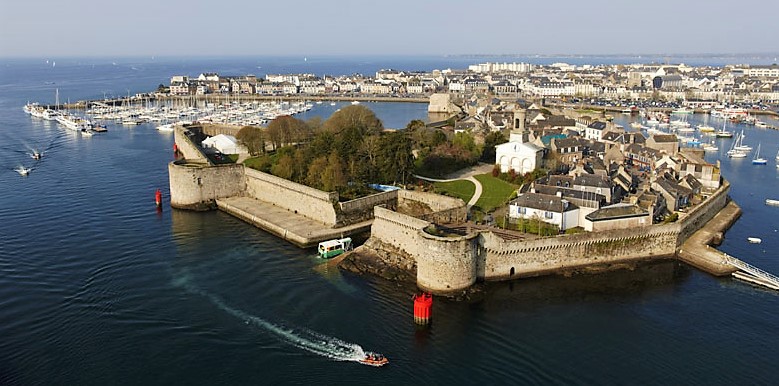
Penzance is twinned with four different towns throughout the world – Bendigo, Australia; Cuxhaven, Germany; Nevada City, California, and Concarneau, Brittany. There is a separate twinning association for each twin town. Their work is dedicated to helping their schools, sporting organisations, clubs, and other groups to forge links with those in our twin towns.
After a delayed start due to the pandemic, Morrab Library and the Penzance Concarneau Twinning Society finally had the opportunity to meet and begin what we hope will be a long and fruitful association. The aim is to forge links between ourselves and the Mediatheque in Concarneau. The Mediatheque, or media library, is the town’s public library, part of a network servicing the region, which provides a variety of both paper and digital services to the area.
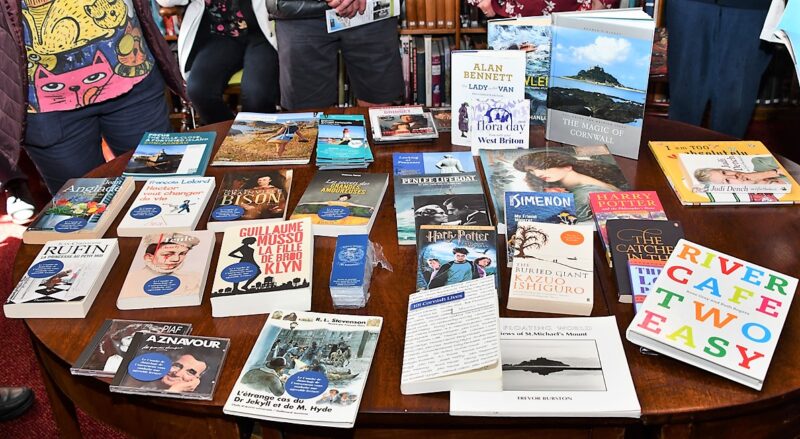
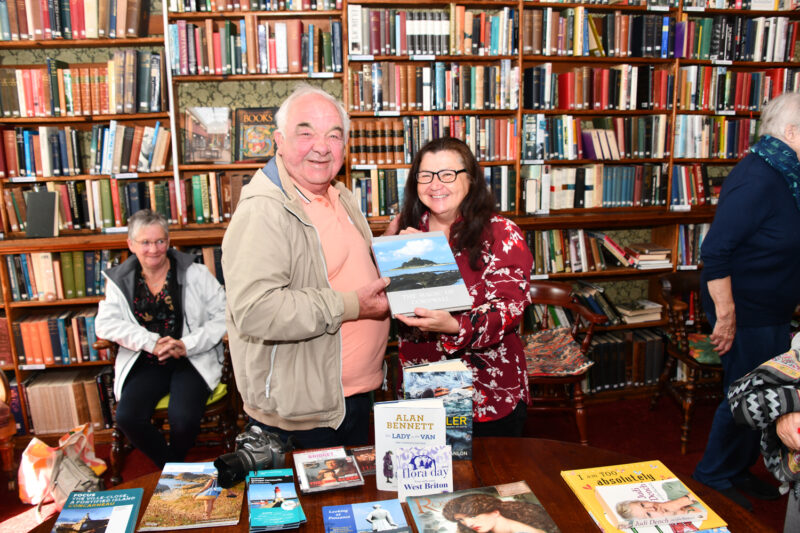
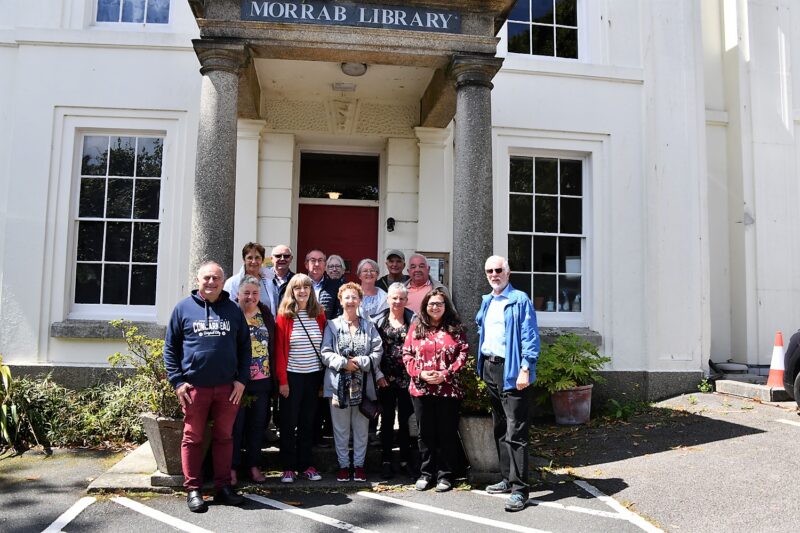
On Sunday June 26th over the Golowan weekend, Penzance welcomed a delegation from the Concarneau Twinning Society, who paid a visit to Morrab Library. They loved the library, its heritage and atmosphere, and spent far longer than planned exploring the building. We exchanged books – donations from us included volumes about Cornwall, popular fiction and children’s books all in English, and they presented a wonderful selection of French language titles. These will be catalogued into our collections in due course and available for loan, and identified by the special bookplate made by the Twinning Society. We were also given some lovely maps and guides to Concarneau, so if anyone is planning a holiday in Brittany, drop in for some information!
The library looks forward to future collaboration with the Concarneau Mediatheque, and the Twinning Society, which may even include a librarian exchange (a certain librarian has her fingers crossed!), alongside sharing more books and information about our beautiful towns.
Dennis Myner, Patricia Eschen and The Dennis Myner Trust
Morrab Library’s inaugural poetry competition is sponsored by The Dennis Myner Trust which continues the legacy of member and invaluable contributor to the library’s longevity – Dennis Myner.
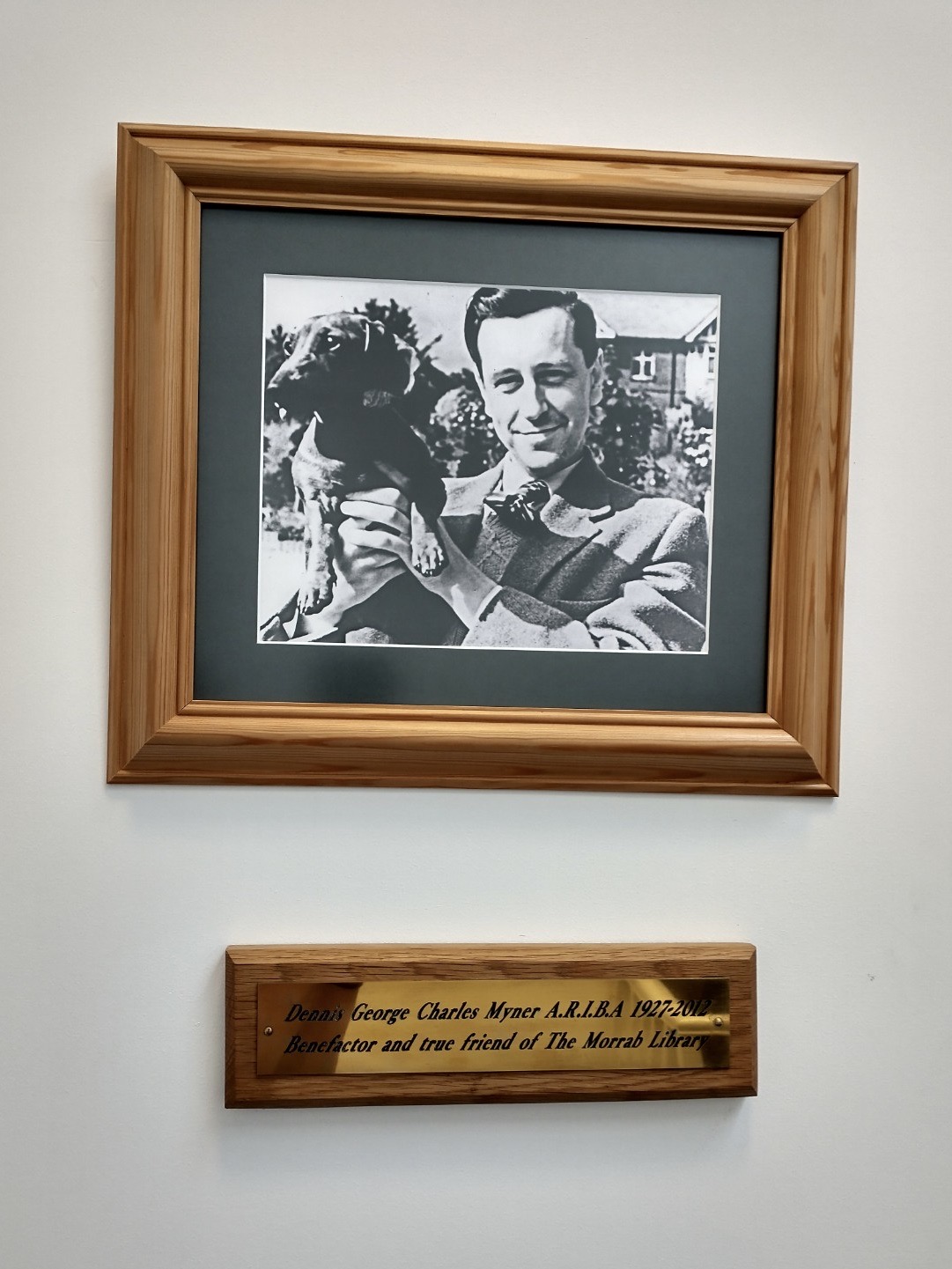
Who was Dennis Myner?
Dennis Myner was born in London in 1927. During WWII, his family moved to St. Albans where he later qualified as an architect. He moved to Penzance for his mother’s health in the late 1950s and in the early 1960s built his own house in St. Ives, where he set up his architectural practice.
Dennis frequented the Morrab Library’s Photo Archive during his retirement where he would purchase photographs to recreate in paint. This fervent hobby was encouraged by his sister, Patricia Eschen, who bought him his first set of oils and brushes when he retired, saying that he would need something to keep him busy! He set himself the goal of painting 300 pictures and had reached an impressive total of 753 just a few months before he died.
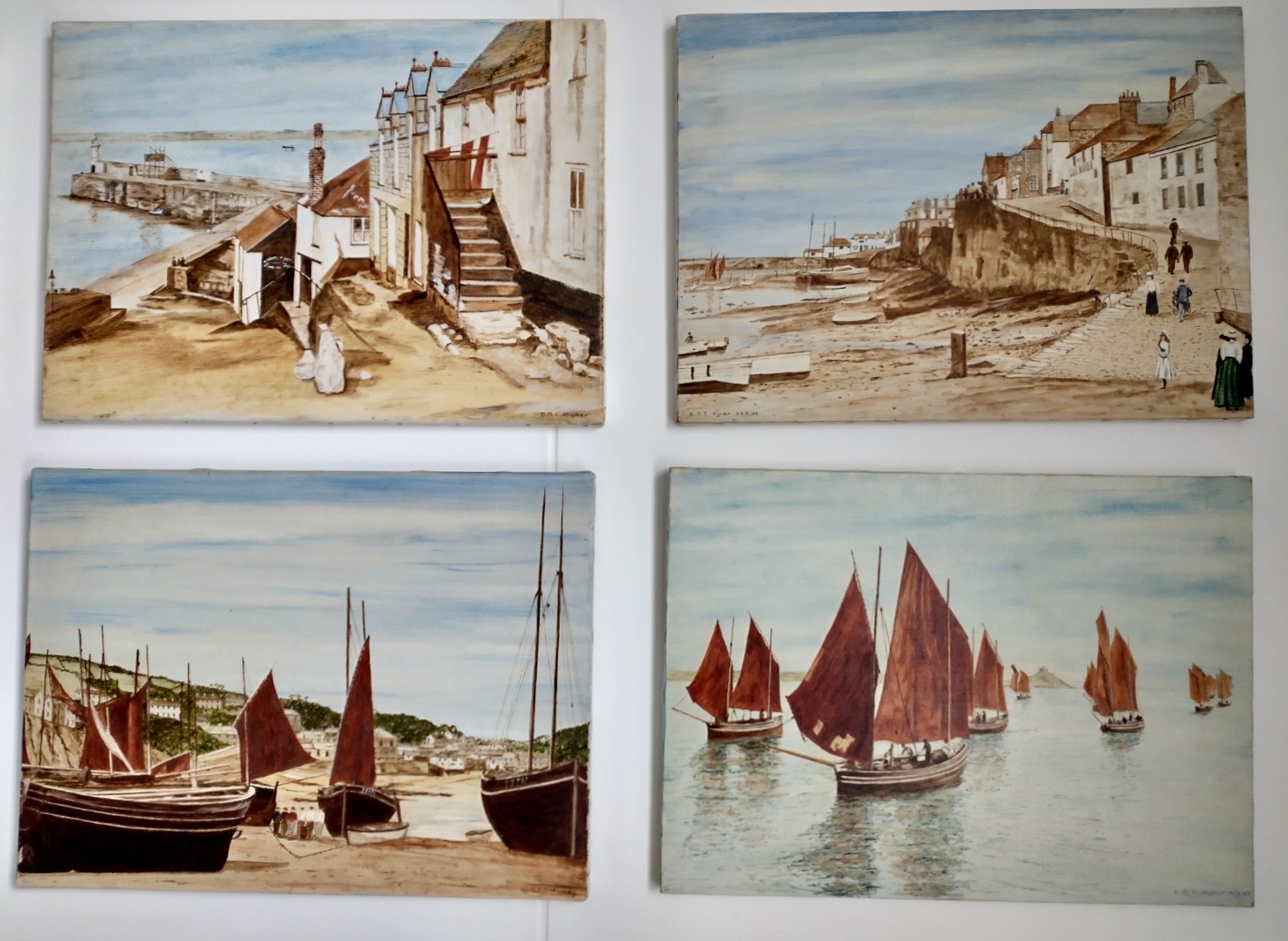
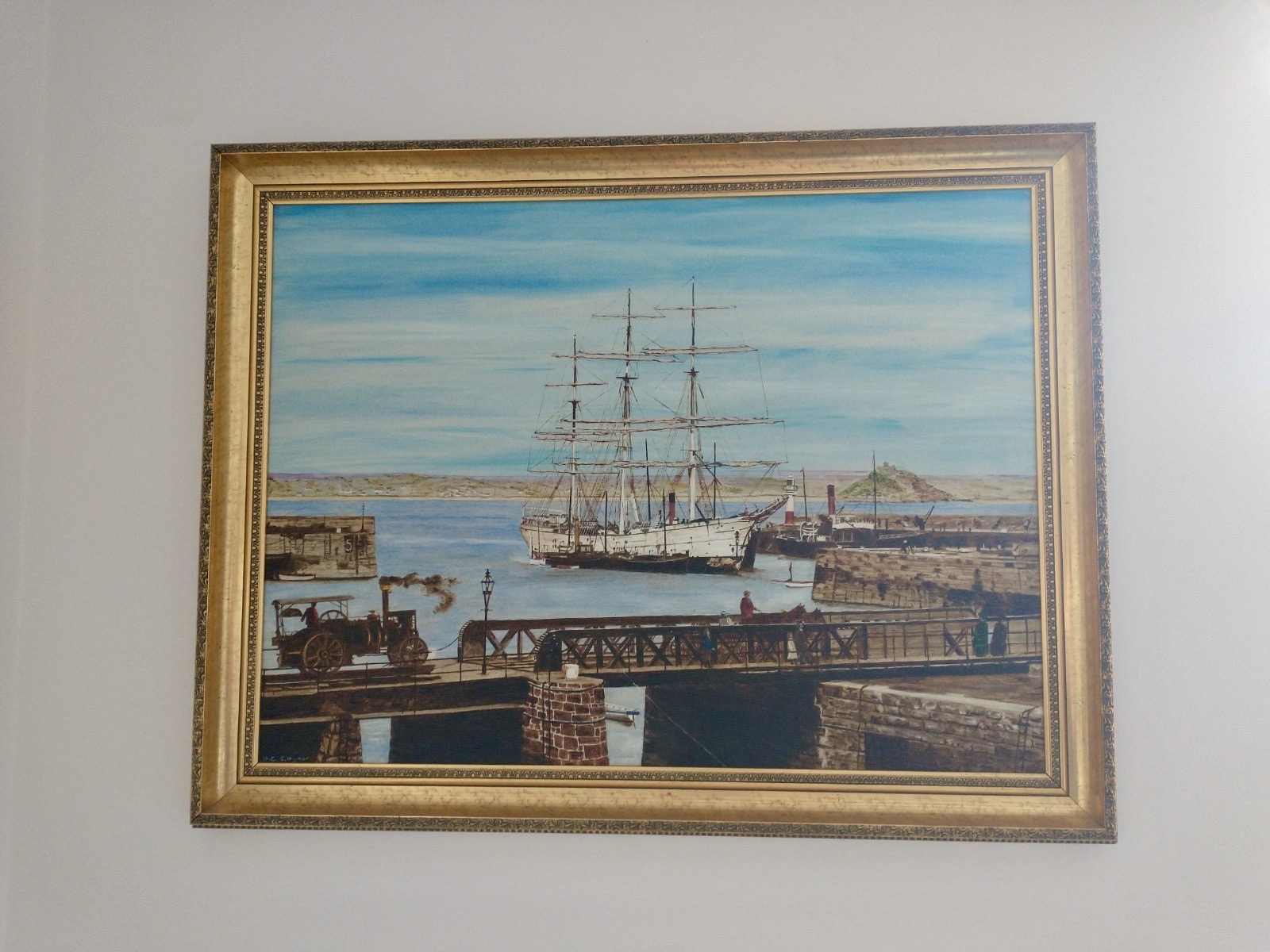
Dennis dedicated the latter part of his life to supporting Morrab Library and it became his life’s ambition to help ensure its future was secure. An incredibly determined man, he devoted fifteen years to obtaining planning permission for a much-needed extension to the Library which was completed in 2013.
When Dennis passed away in 2012 he left hundreds of his paintings to the library, a selection of which are on display in the Photo Archive. Our lovely volunteer, David Sleeman wrote a fascinating blog about the history of one of the scenes that Dennis depicted which you can read here.
Who was Patricia Eschen?
Our new poetry competition at the Library, the Patricia Eschen Prize for Poetry, acknowledges the generous support of Dennis’ beloved older sister and only sibling – Patricia Eschen. Patricia was outgoing and well-travelled and despite living in California for most of her adult life, she would return to Cornwall to visit Dennis regularly.
She loved the Arts and attended the opera, ballet and museums around the world wherever she travelled. The Library’s Art Room is named in her honour, and the prize will continue her patronage of the arts.
Patricia was instrumental in Dennis taking up oil painting. Many of the photographs from her travels were used as subject matter for his artwork, as well as photographs he purchased from the Morrab Library Photo Archive. Without her encouragement of his painting, Dennis would not have visited the library and hence there would be no Dennis Myner Trust today.
How do The Myner Trust help the Library today?
The Dennis Myner Trust helps to support the library through donations which are used to fund projects such as the bespoke conservation-grade photographic storage cabinets, computers, and professional scanning equipment in the Photo Archive, which has proved invaluable in our ongoing digitisation programme.
We are delighted to be able to launch the international poetry competition – ‘Patricia Eschen Prize for Poetry’ – from our very special library here in Penzance.
Our Library members have always shown a fervour for poetry – our earliest archive records reveal that poetry has been purchased for the library since our establishment in 1818. We have a thriving poetry group and a dedicated Poetry Room in the library. We are looking forward to shining a spotlight on poetry through our new competition this summer at the Morrab and we would not be able to do so without the support of the Dennis Myner Trust.