
Blog
Library Closure
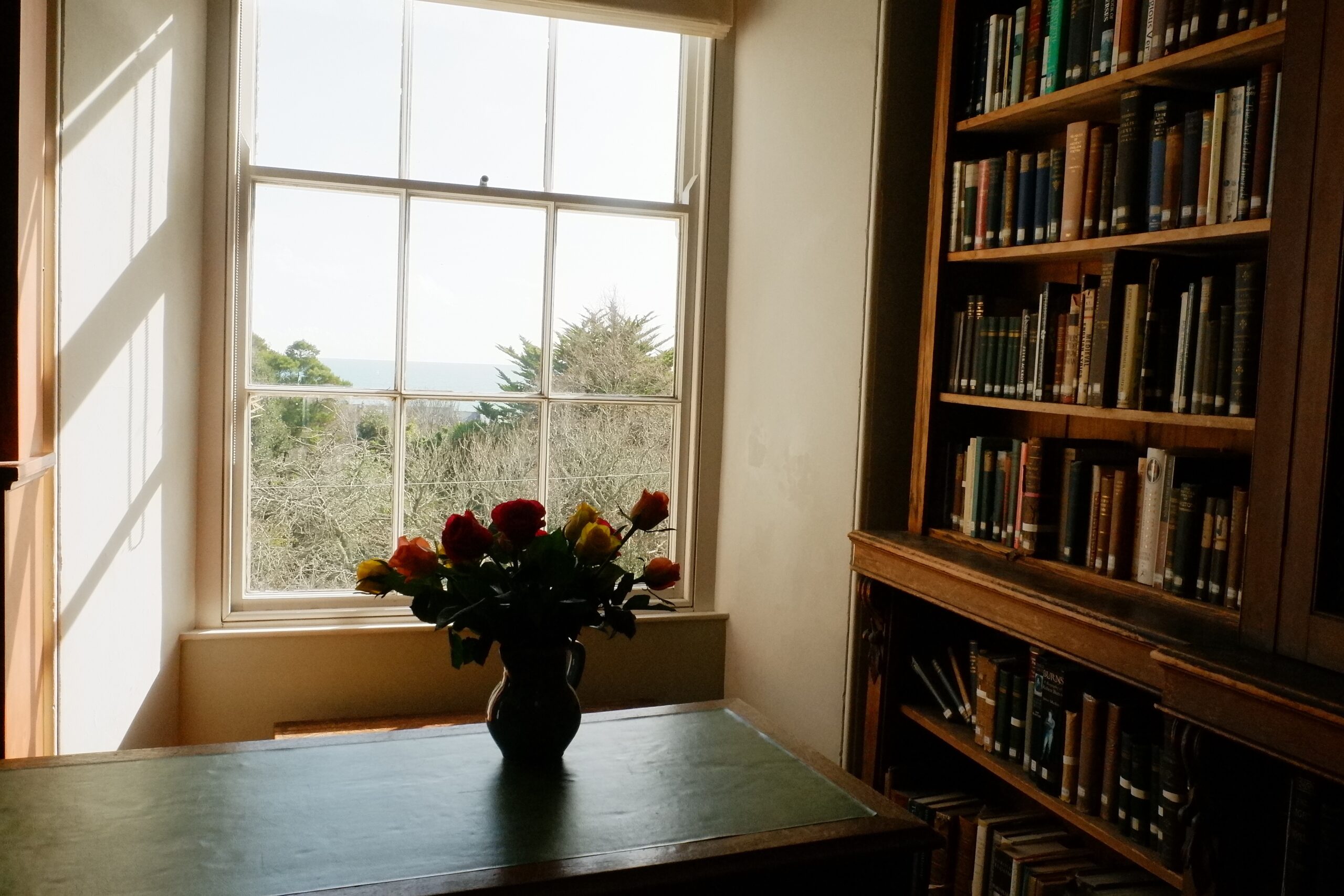
It is with great sadness that we need to let you know for a second time that due to restrictions initiated by government authorities, the library will close today at 4.00pm (Wednesday 4th November) until we are given permission to reopen, hopefully in early December. We apologise for the short notice, the government regulations were only fully announced last night.
We’re aware it leaves virtually no time for you to visit to stock up on library books for the lockdown period, and for this we can only apologise.
If you have any library books out on loan, please don’t worry about returning them. As you know, we do not impose fines for overdue books, and rather than try to return them to the library when we’re not here (they won’t fit in our letterbox!), we would rather you held on to them and kept them safe until we are open again.
In the meantime and as before, staff will be working from home, and we can be contacted via email and social media. Unfortunately, we cannot forward the library phone number to another number, but we will check for voicemail messages every few days. So please stay in touch, and if we are able to help in any way, we will be very happy to do so.
We have some practice at this now, and we hope you get through this period safely and with minimal inconvenience and anxiety. We shall of course continue to send you our weekly links to help keep you occupied in the next few weeks.
We will miss you, and hope to see you again very soon. Please stay safe and take care.
Lisa, India, Sue, Tuna and the Trustees
A Cornish Cargo
We’ve recently added a new book to the library collections. A Cornish Cargo: The Untold History of a Victorian Seafaring Family, by Alison Baxter. It tells the true story of Alison’s ancestors, from their move to Hayle to their subsequent adventures throughout the 19th century. Her blog follows below.
A Cornish Cargo
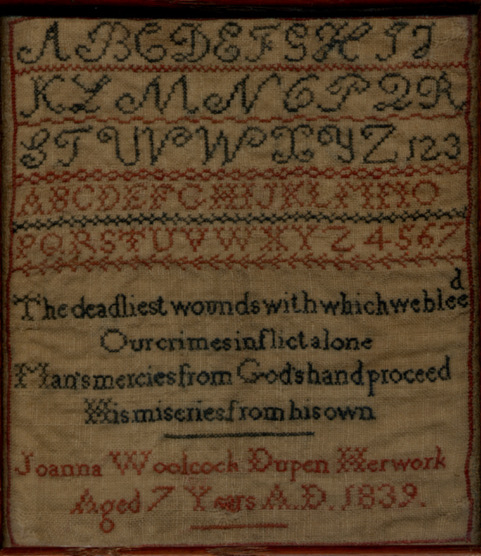
In 1839 a little girl stitched a neat sampler, the hundreds of tiny crosses displaying her command of the alphabet, the verse a reminder of her Christian faith. The child, Joanna Woolcock Dupen, was born in 1832 in Penzance, and baptised in the Wesleyan chapel there. According to the certificate, her father was working as a confectioner, which seems a remarkably tame occupation for a man who had previously sailed out of Falmouth to Ireland and the Mediterranean, braving the heavy seas in a small, single-masted cutter. He must soon have tired of stirring vats of sugar to satisfy the sweet tooth of the townsfolk, because when Joanna was three years old, the family moved to Hayle. Her father, Sharrock Dupen, had taken the job of steward on the new steam packet Herald, a vessel that was to transform the journey from Cornwall to Bristol.
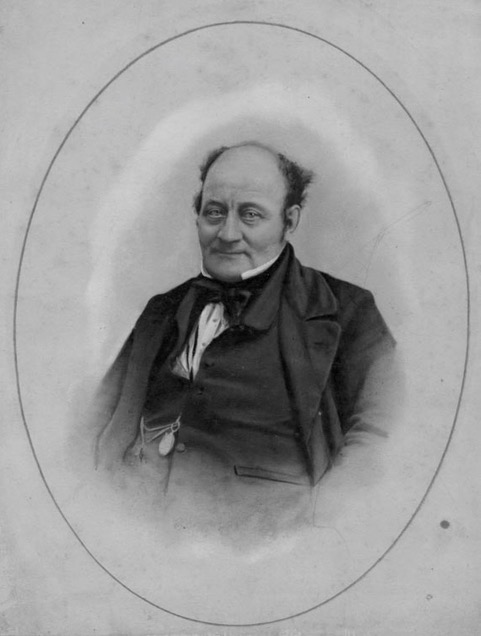
The child Joanna was my great-grandmother’s oldest sister, the first of a long family of thirteen, and Sharrock Dupen was my great-great-grandfather. An ordinary man, like most of our ancestors, but emblematic of an age when the power of steam was changing the world. Every week, the wooden Herald set off from the quay at Hayle, over the sandy bar and out into the bay for the overnight journey along the north coast, past the treacherous rocks of Hartland Point and into the mouth of the Avon. She carried tin, copper and iron goods from the foundries, returning with a cargo of everyday necessities for the shopkeepers of Hayle: coffee, butter, soap, needles, candles and buttons. Sharrock Dupen, a rotund, cheerful man, as we can see from his portrait, supplied the passengers with food, drink and reassurance. ‘We shall have a voyage as calm as a sail in a duck pond,’ he told one anxious traveller mendaciously.
When I inherited Joanna’s sampler, it inspired me to trace the history of the Dupens. I knew little about them apart from the fact that they were said to be of Huguenot origin. The one story I had been told was, I thought, bound to be apocryphal. We all inherit family myths that we enjoy without fully believing in them. Mine is about vegetables. In the 1930s my grandfather, a sceptical engineer, wrote this letter to the editor of the Morning Post: Mr Dupen’s Grandchild on a Family “Fairy Story”
Sir – With regard to your announcement about the Cornish Broccoli industry in Saturday’s issue of the “Morning Post”, as children we were often told that our grandfather – the Mr Dupen mentioned – first grew Broccoli in England, but I’m afraid we rather regarded this as some subtle kind of fairy story to encourage our appetite for the vegetable! From the announcement it would appear that he really was interested in the broccoli plant, but are there any records to show that he did actually introduce the plant into England, and if so, from where?
He thought it was a fantasy and so did my father, who passed it on to me and my brother as way of encouraging us to eat our greens. But now that the newspaper archive is searchable online, I was able to uncover the true story of how my great-great-grandfather is credited with rescuing the economy of Cornwall.
He was not in fact the first to grow broccoli but the first to transport it from Hayle to Bristol in the 1830s. An initial shipment of four dozen heads became fourteen dozen the following week and Sharrock Dupen had a virtual monopoly of the local trade until the growers themselves cut him out. Twenty years later, the steamer from Hayle was transporting 860 baskets containing fifteen to eighteen dozen heads of broccoli each. In a commemorative speech in 1933, the Lord Mayor of Bristol attributed the prosperity of Cornwall to this vegetable trade. The miner, so it was said, had become the broccoli grower.
My book, A Cornish Cargo, started with Sharrock Dupen but turned into an account of how his children also had their lives changed by the coming of steamships and railways. The boys went to sea at a time when it had become possible to serve as an engineer instead of an ordinary sailor and I was able to trace their voyages around the world. The girls too left home, travelling by steam packet to Bristol and onwards by the Great Western Railway to take up posts as governesses and schoolteachers. The only Dupens left in Cornwall now lie in the churchyard in Hayle. People sometimes tell me I’m lucky to have such interesting ancestors to write about, but I believe everyone has family stories that are worth telling. History is not just about famous people, battles, and politics. It’s about how ordinary people lived their everyday lives.
Introducing the new Arthur Quiller-Couch website
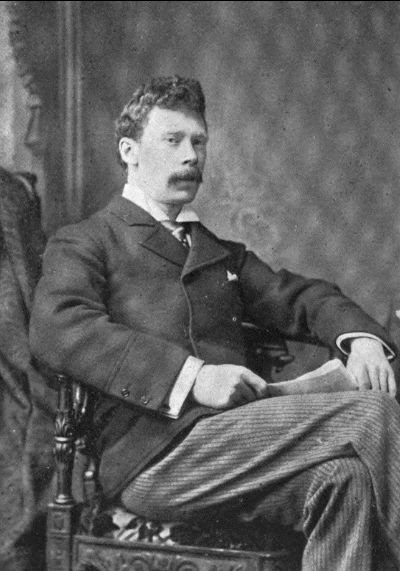
In normal times, Morrab Library would be hosting a large event (with lots of cake!) to celebrate the launch of this major new website exploring the life and works of Arthur Quiller-Couch. But instead, we’re delighted to tell our members all about it through this blog.
The site is curated by library member and leading researcher Andrew Symons, who has developed the articles and resources it contains in collaboration with Morrab Library, which holds collections of the works of Q and other members of the Couch family.
The product of many years’ study, the website offers the largest and most authoritative online collection of research into Arthur Quiller-Couch. It includes studies of many of Q’s literary works and the cultural landscape in which he worked. You will also find short articles, maps, summaries, chronologies, biographies of Q and his family – and a wealth of other resources – all of which help to illuminate his writings.
Many people in Cornwall will be familiar with the name of Q but may not know the extent of his work. He was a popular novelist with an international reputation, a poet, a literary critic, an anthologist and an academic who championed the importance of literature in the education of young people. Born in 1863, he lived through an extraordinary period of British history until his death in 1944. The lives of his grandfather, father and uncles also reveal much about the fascinating scientific and cultural history of Cornwall in the nineteenth century.
This site is designed to act as the fulcrum for wide-ranging study and exploration of Arthur Quiller-Couch and his writings. It welcomes submissions of original academic work from other researchers.
It is hoped that the website will also provide an introduction to the works of this outstanding figure in Cornish cultural life. Newcomers to Q may be surprised to find how contemporary his voice sounds today. Once known as the ‘Greatest Living Cornishman’, Q was a brilliant man who deserves to be rediscovered. The hope is that this important new website will help in that process.