Blog
Tags: Archeology, Conservation, Books, Cornwall, Archives, History, Collections
Penzance Then and Now (Part 4): Pubs, Taverns and Inns of Penzance, by Sam Hill
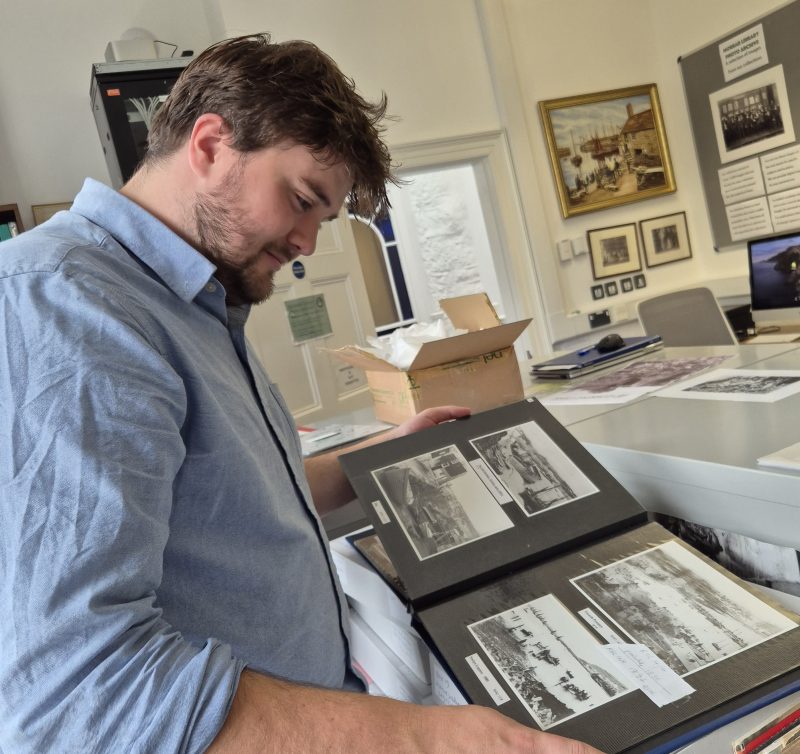
Join our Photo Archive intern, Sam Hill for his fourth blog, written during his time with us…
In our fourth instalment of the “Penzance Then and Now” blog post series, I shall be exploring some of the history of Penzance’s Pubs, Taverns, and Inns. When I was researching the last three blogs, I came across a great selection of images that show the historic nature of the town’s drinking spots.
It must be noted that not all the town’s drinking establishments are respresented in the Morrab’s collections, so if you do possess any historic images of these places please do get in contact with the Photo Archive team, as we would love to preserve them.
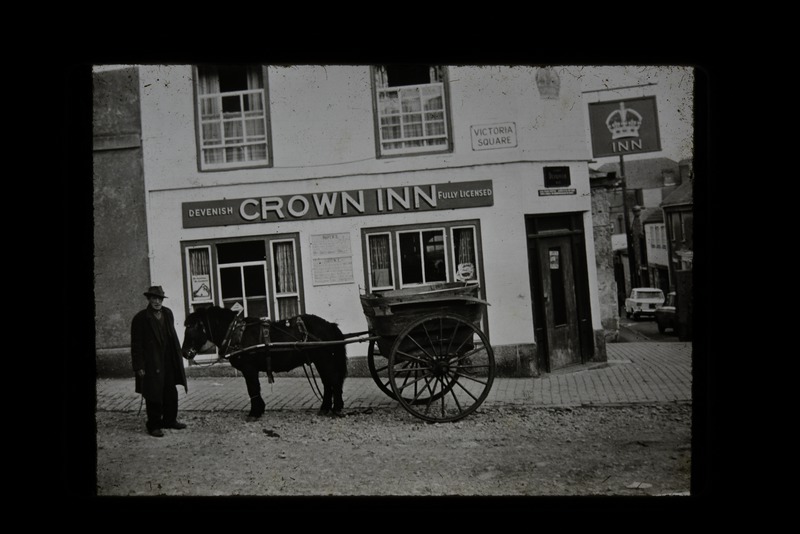
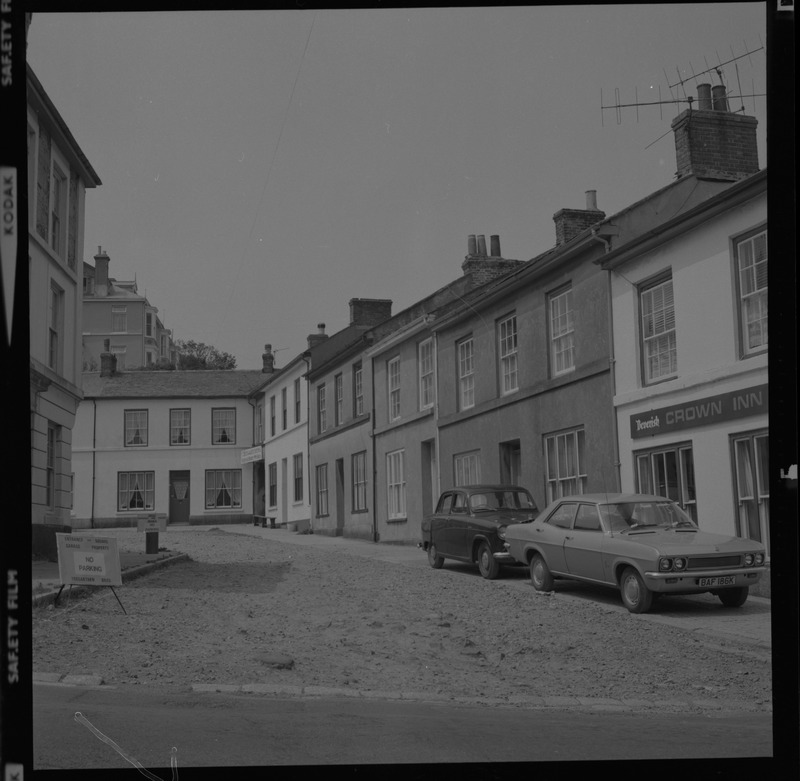
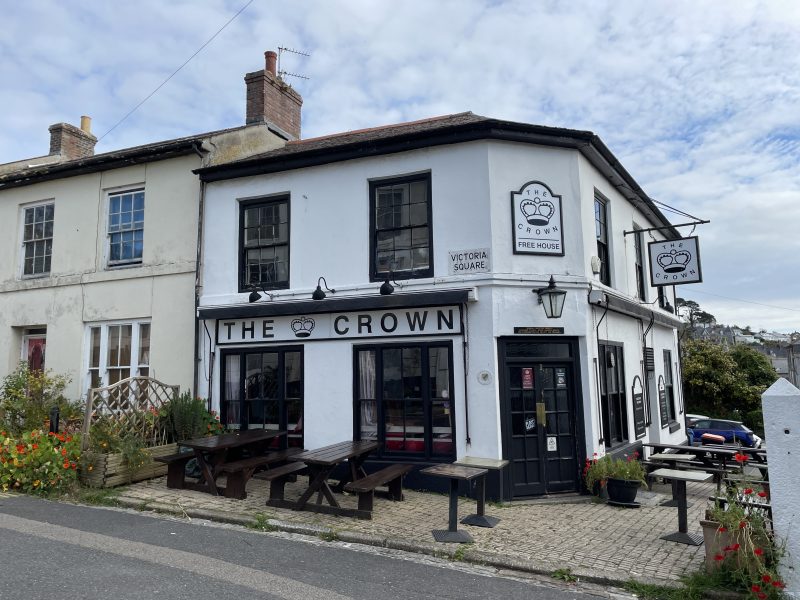
The Crown Inn
The Crown Inn has been designated as a Grade II listed building due to the early 19th century stucco style visible on the building. It is located on Victoria Square, which was constructed in 1829.
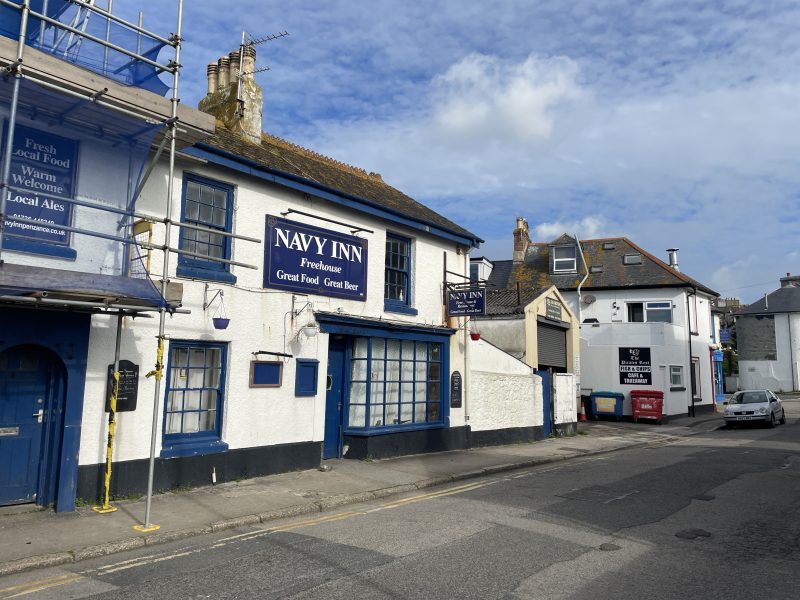
The Navy Inn
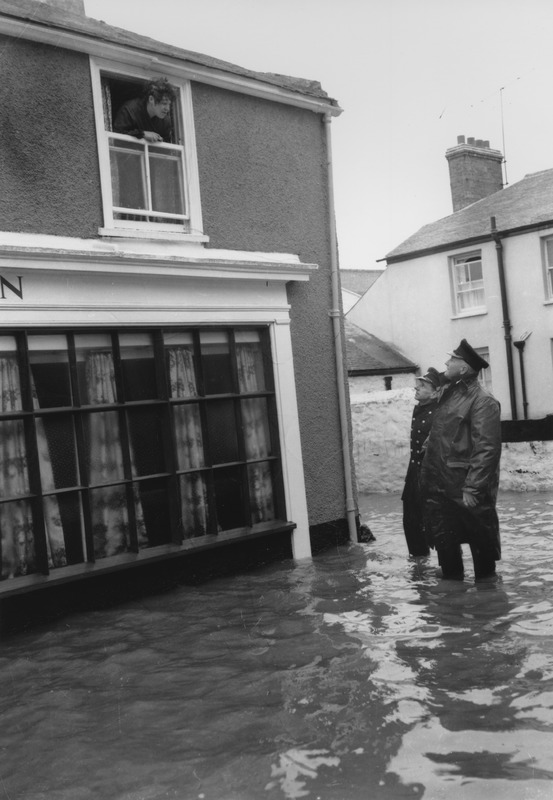
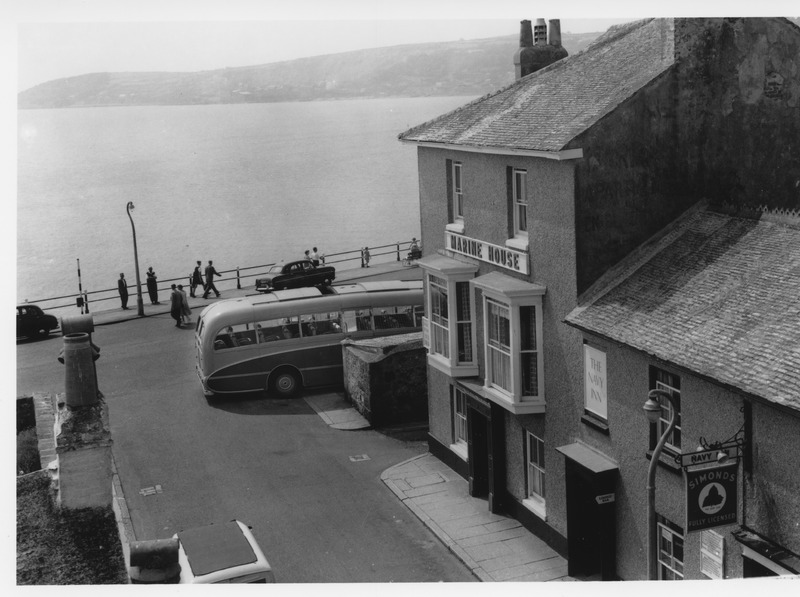
Located near the bottom of Queen Street, the Navy Inn is a 19th century building made from granite and stone. The name of the Inn derives from when the Royal Navy maintained a local depot nearby. The Inn is adjacent to Marine Place, the notorious location of the Marine Place murders in 1886 by James Hawke. The image below show the pub during the Ash Wednesday floods of 1962.
The Yacht Inn
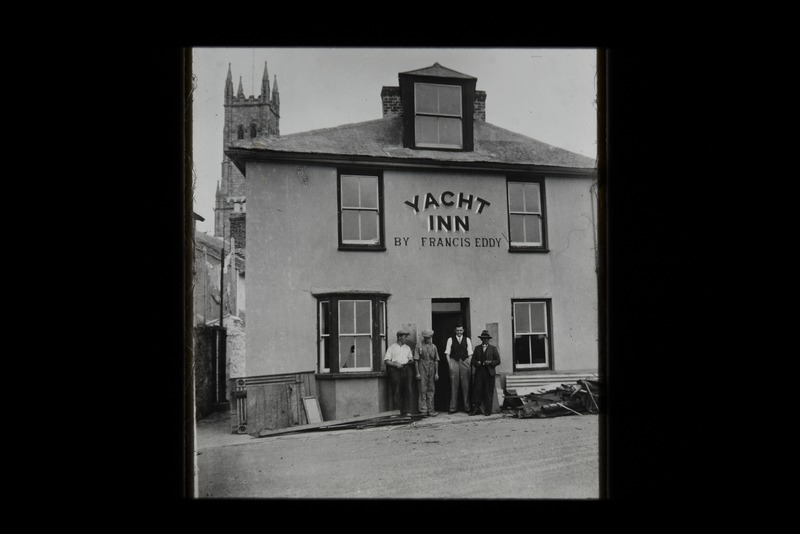
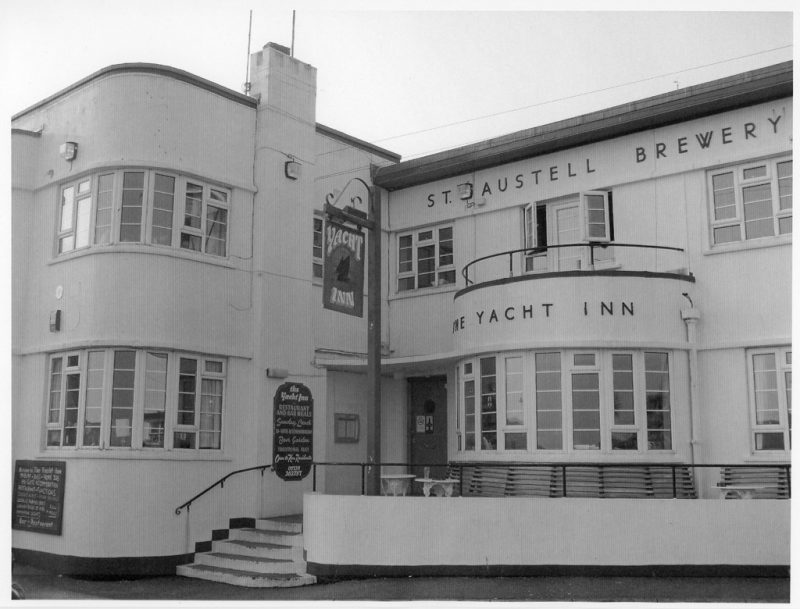
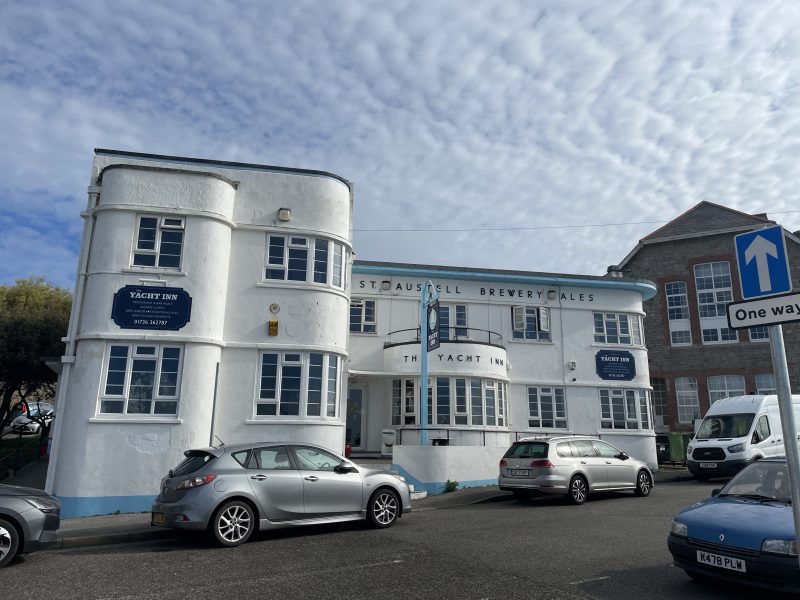
The images below show both iterations of the Yacht Inn. The first photo shows the original building, which was a notable drinking spot for the seaweed gatherers of the town. After the construction of the Jubilee Pool in 1935, the Yacht Inn reopened with a new structure designed by Collins Minor Drewitt to resemble a bridge of a luxury cruiser.
The Dock Inn
Located at the bottom of Quay Street, the Dock Inn is an historic pub and B&B that has stood on the quay since the 18th century. It would have been a popular drinking spot for the sailors, fishermen, and townsfolk of old.
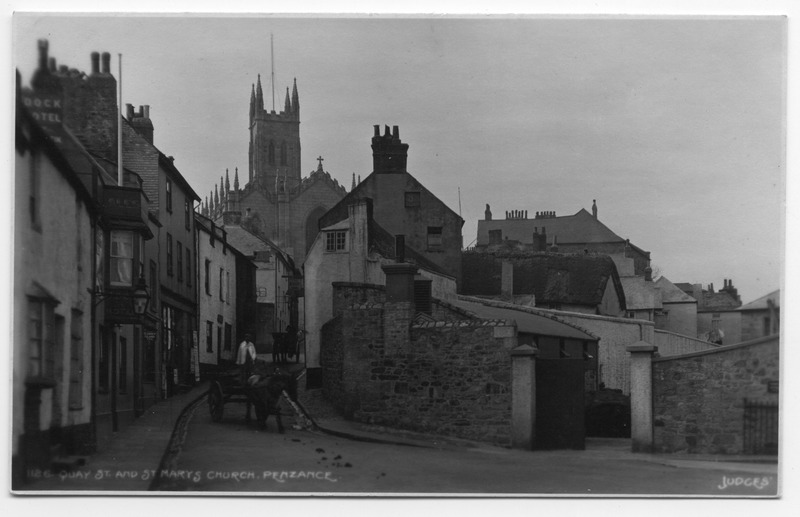
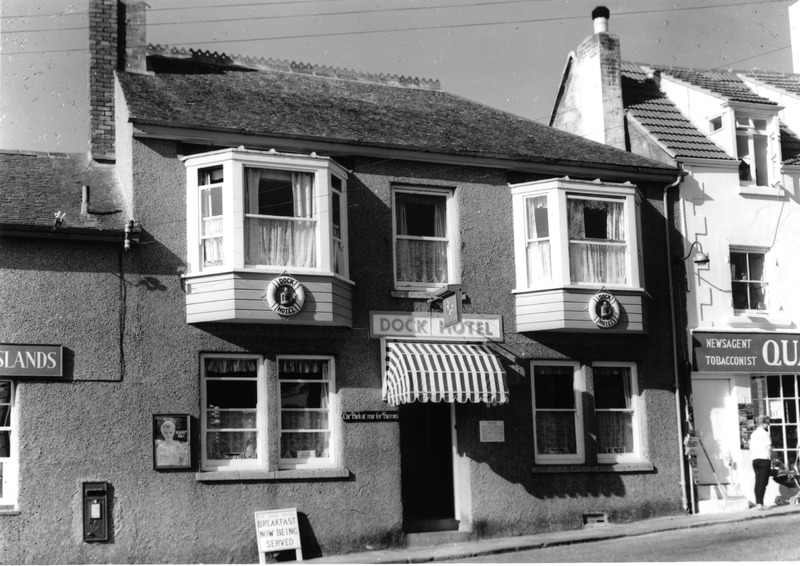
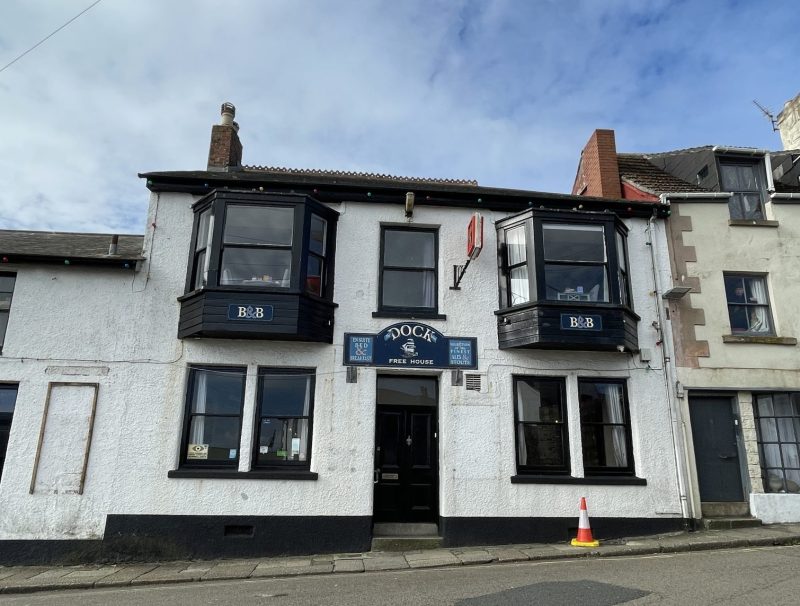
The Dolphin Tavern
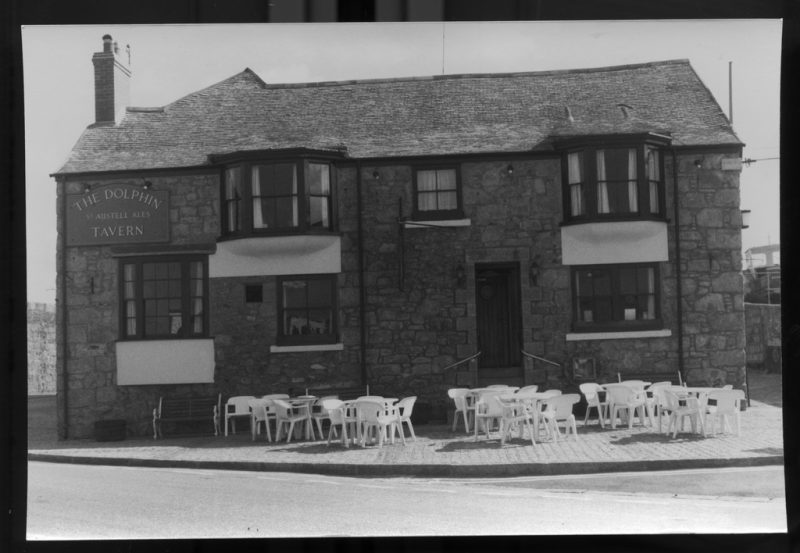
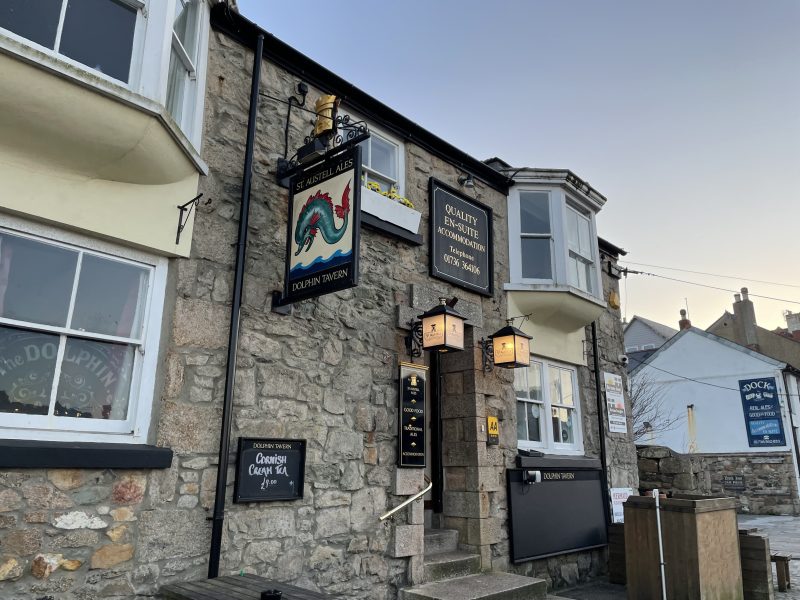
One of Penzance’s most famous pubs, the Dolphin Tavern has a long and fascinating history. A building has been present on site since the 14th century, firstly being used as a recruitment centre by Vice Admiral John Hawkin before the Spanish Armada, and later, a local courthouse. The infamous Judge Jeffreys handed out severe sentences against smugglers and other criminals, with the ‘hanging room’ located in the basement. The tavern has reported numerous supernatural apparitions, with a young fair-haired man, a young Victorian woman, and a sea captain called George being seen.
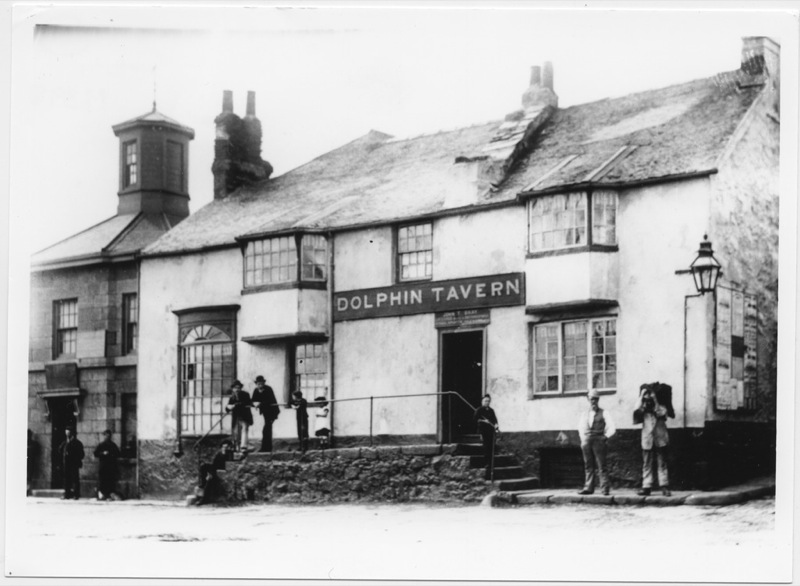
The Turks Head
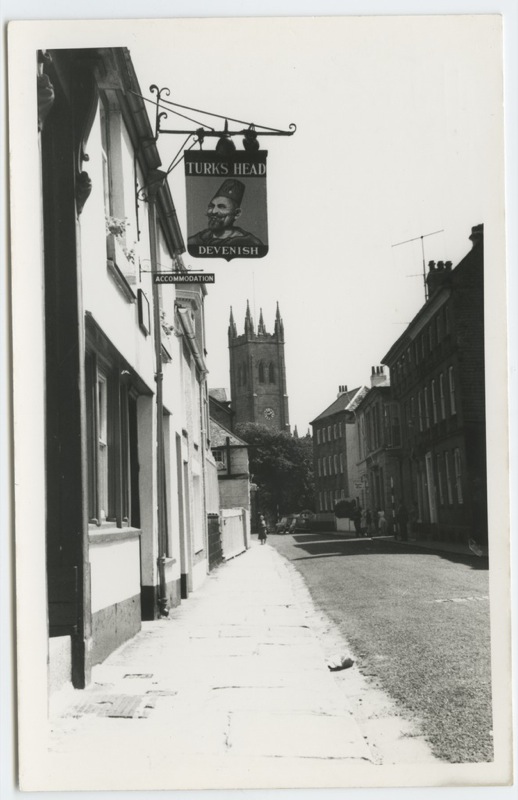
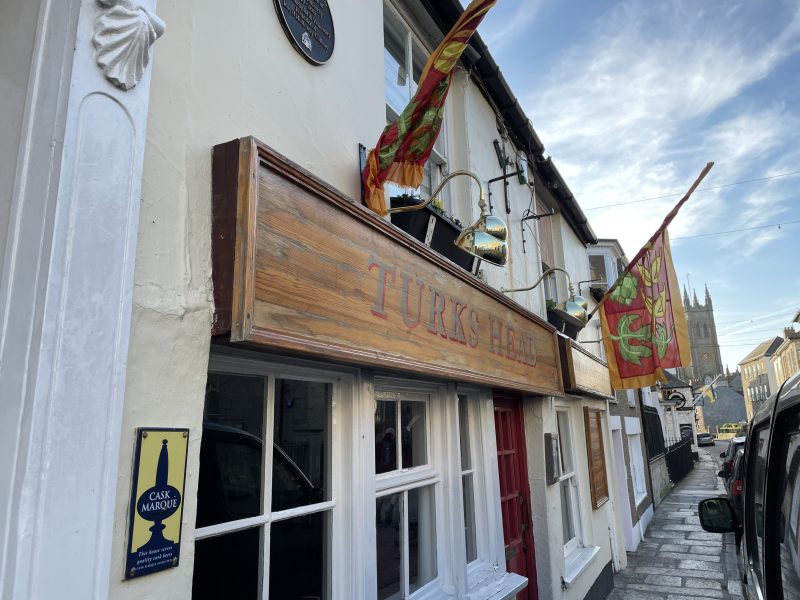
Supposedly the oldest pub within the town, the Turks Head is one of the first in England to bear its name after the Saracens, whom Christian Knights fought in the Crusades. After the Spanish burnt down most of Chapel Street during their Raid on Penzance in 1595, the Turks Head was one of the few stone buildings to have survived the blaze.
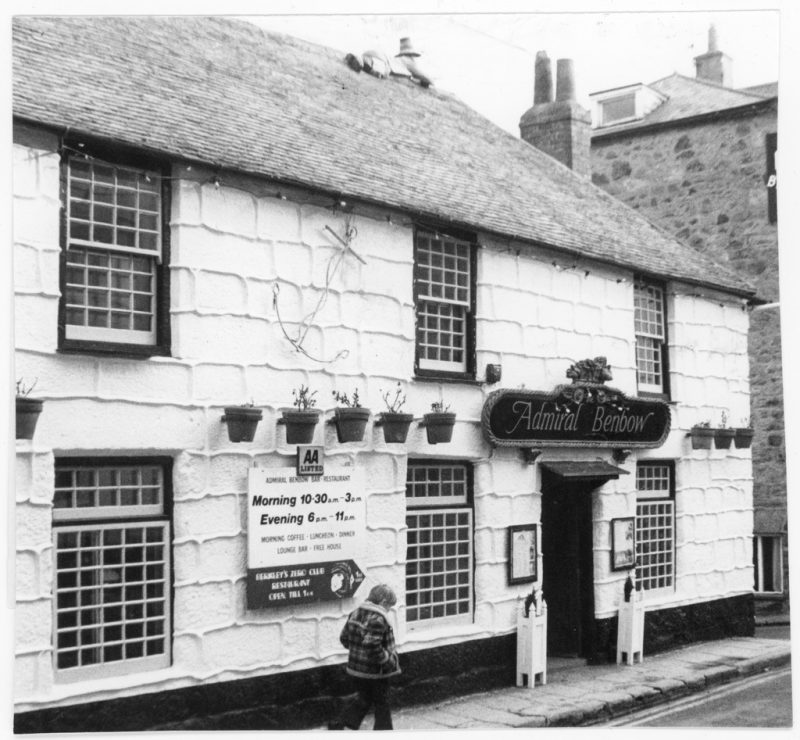
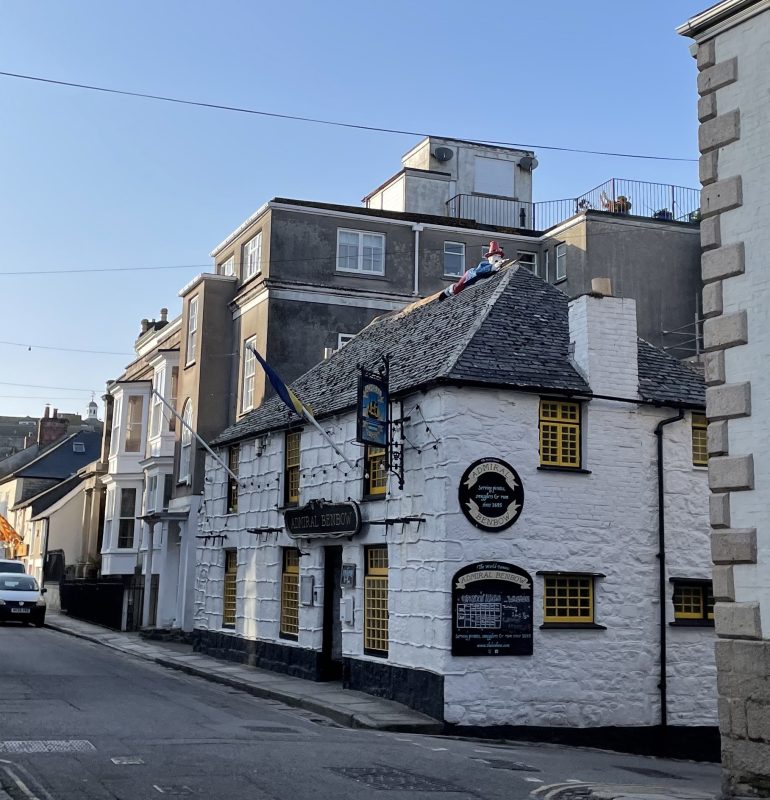
The Admiral Benbow
This pub was built by local legend and maritime salvager, Roland Morris, by combining two old cottages. The pub is home to an array of nautical paraphernalia, including ship figureheads, lanterns, and flint lock pistols. Local legend says that when it was a sailor’s rest during the 18th century, the building supposedly possessed an underground tunnel that ran down to the harbour to allow smugglers to move contraband product. One of the armed smugglers has been immortalised on the roof of the pub.
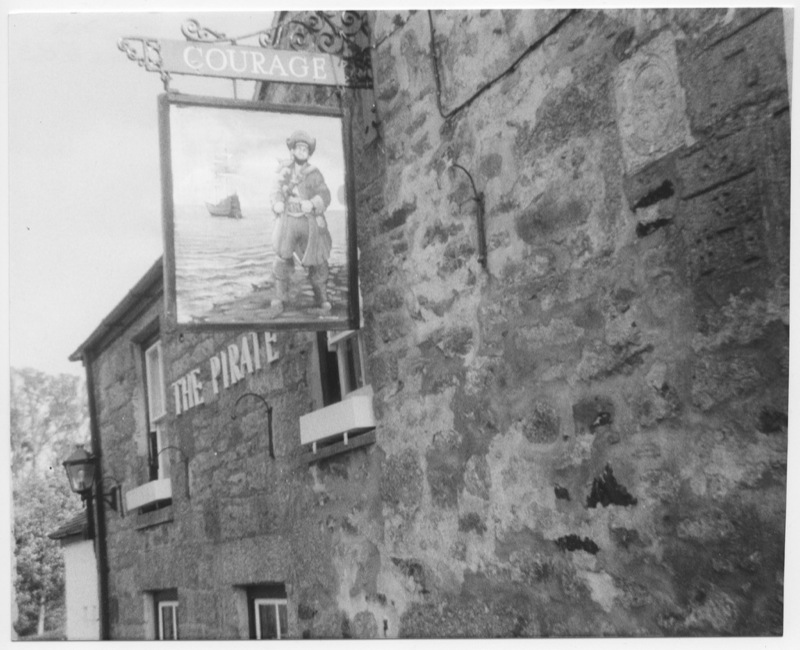
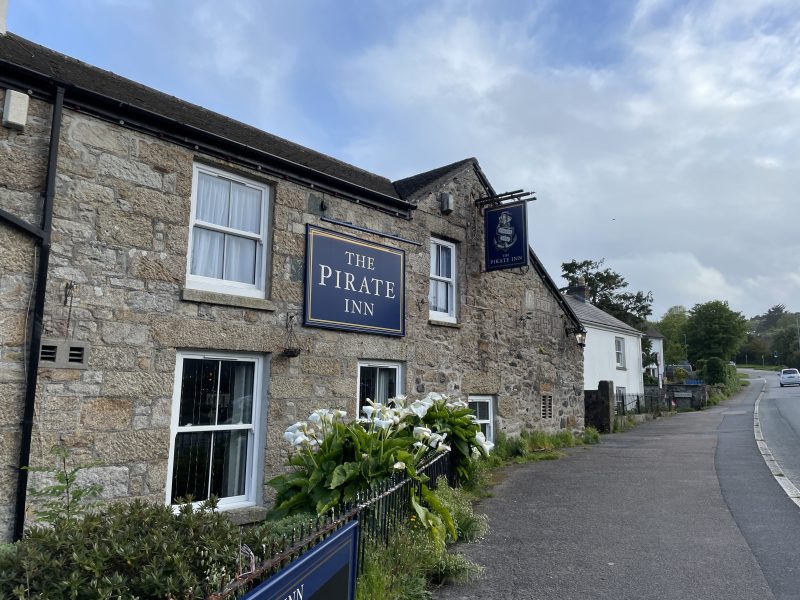
The Pirate Inn
The Pirate Inn on Alverton Road was originally a traditional farmhouse built either in 1674 or in 1701. These dates are known from two dates carved directly into the stonework. The building did not become a public house until 1953, in which the name of the pub most likely derived from Gilbert and Sullivan’s comic opera The Pirates of Penzance.
I hope you have enjoyed this visual pub crawl of some of the pubs of Penzance!
All the photos used in this post are accessible from the Morrab Library’s Photographic Archive, the link to which is here: https://photoarchive.morrablibrary.org.uk/
Penzance Then and Now (Part 3): Alverton and Western areas of the town, by Sam Hill
Join our Photo Archive intern, Sam Hill for his latest blog, written during his time with us…
In the third instalment of the “Penzance Then and Now” series, I shall be using the Morrab’s Photo Archive Collection and some contemporary images for comparison to explore the history of Alverton on Penzance’s western side.
The area of Alverton has a long history, first being named within the Domesday Book of 1086, when the manor of Alverton was owned by a Saxon called Alward. The name Alverton stems from the name ‘Alward’ and the ‘tun’ meaning town or important settlement.
Hawkes Farm is a notable building along the road, with the farmhouse being in constant use throughout the 18th and 19th centuries. The name of the farm derives from Richard Hawke, a flour storekeeper, who lived there with his wife and son in 1841.
One of the most notable residents at Hawkes Farm was Samuel Pellow, whose family moved to Penzance in 1746. Pellow or later the Admiral Lord Exmouth had a longstanding career in the British Navy and saw action in conflicts during the French Revolutionary Wars. He was portrayed by Robert Lindsay in the late 1990s television show Hornblower.

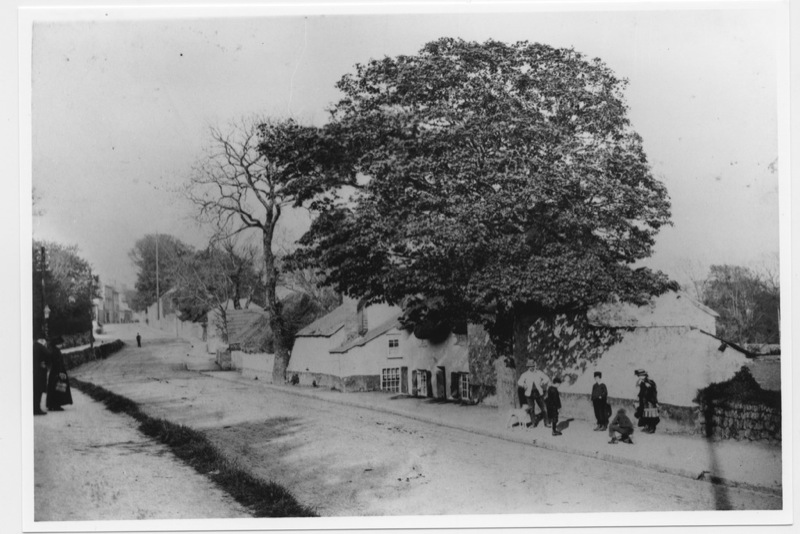

Images 1,2,3
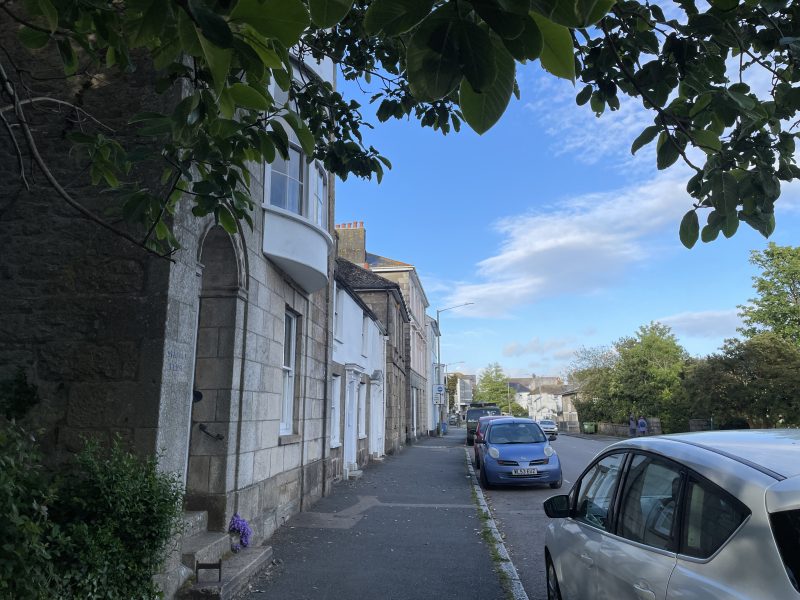
Polwithen Lodge was built to serve the nearby Polwithen House, which was built in 1870 by William Bolitho. The house was home to the gardener of the grounds, and recent discoveries have unearthed an underground tunnel that connected to the cellar of the Lodge and Polwithen house. This would have been used in the daily commercial and domestic lives of the Bolitho family.
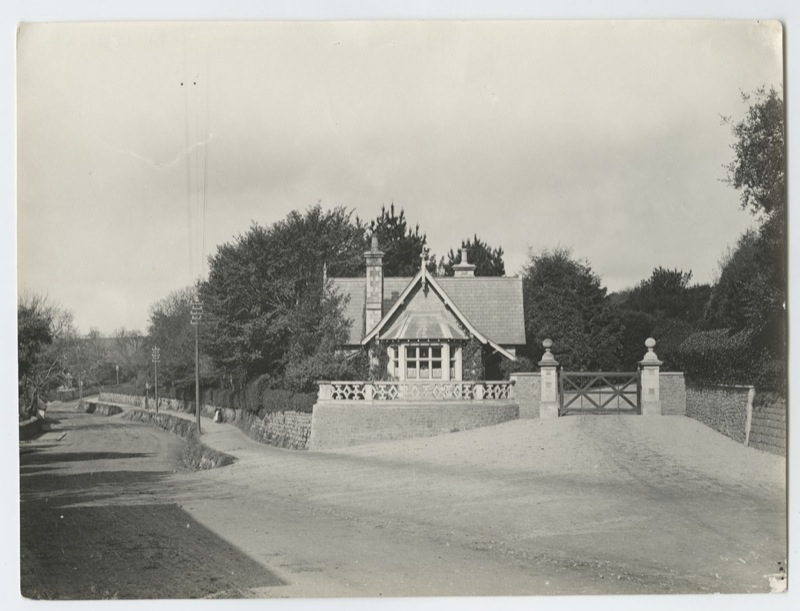

Images 4 and 5
The area of Alverton starts at the First and Last Inn, which served as a carrier’s and jaunting car house, serving the Royal Mail Coaches and travellers to the Land’s End and the surrounding area.
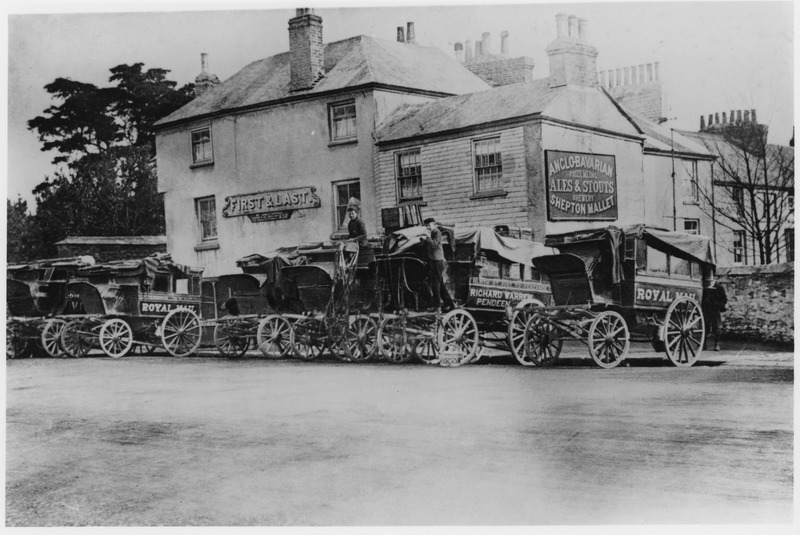

Images 6 and 7
For most of Alverton’s history, the area had been open countryside with a few cottages and farms seen along the lane out of Penzance. The land on the North side of Alverton Road was referred to as Alvern-Weith or Alvern-Weeth. This was due to the number of willow trees that were being grown for the local production of basketwork.
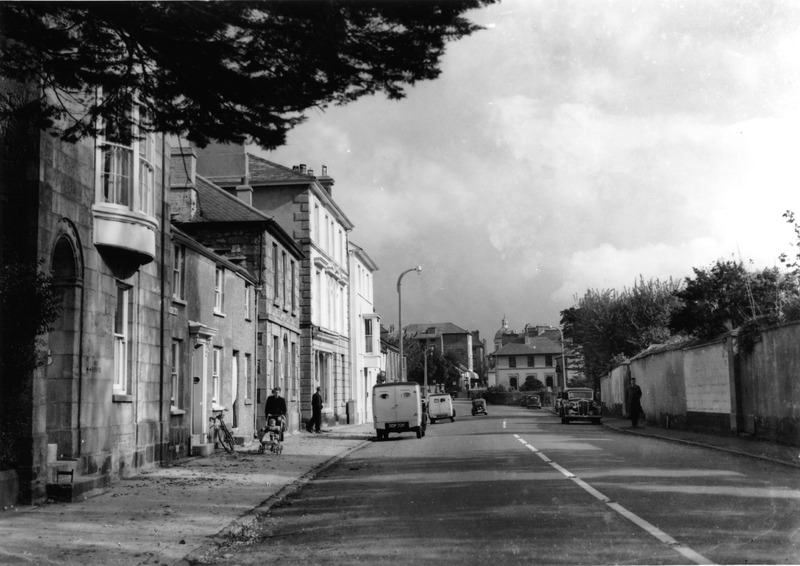
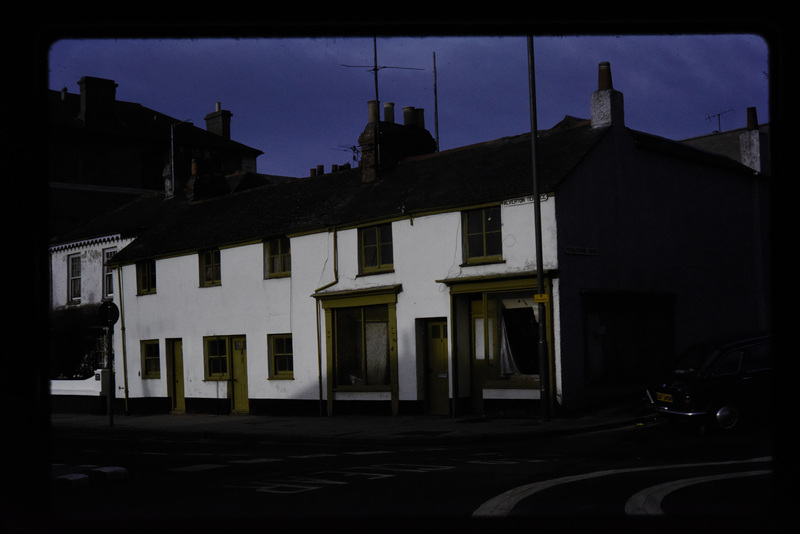
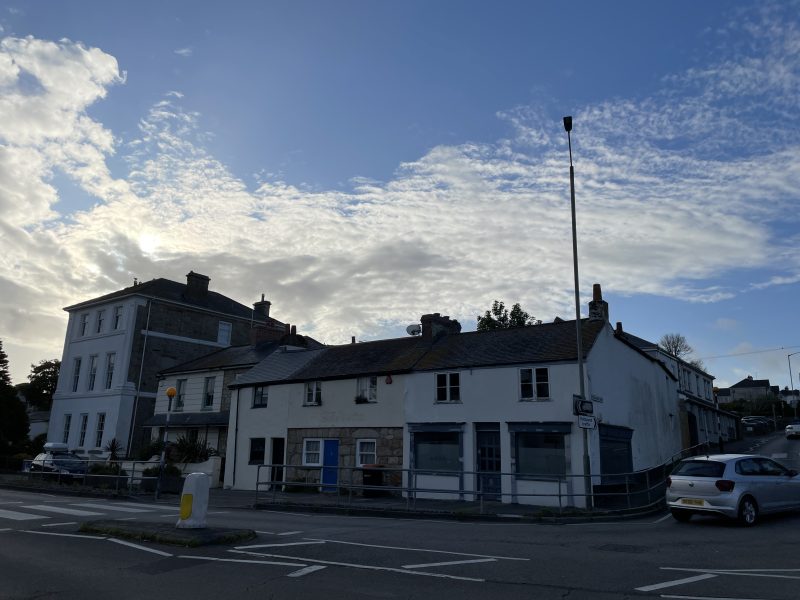
Images 8, 9, 10, and 11.
I hope that you have enjoyed this scenic look at Alverton. Its long history is too broad to detail in this blog, but if you are interested in seeing more, please use the Morrab Photographic Archive, using this link: https://photoarchive.morrablibrary.org.uk/
Penzance Then and Now (Part 2): Promenade and Alexandra Road, by Sam Hill
Join our Photo Archive intern, Sam Hill for his latest blog, written during his time with us…
In the second instalment of the “Penzance Then and Now” series, I shall be using the Morrab Photo Archive Collection and some contemporary images for comparison to explore the history of the Promenade and Alexandra Road.
During the late 19th and early 20th century, Penzance faced an immense period of change. Enlargements to the harbour in 1825, the building of the new Market House in 1838 and the construction of the Public Buildings in 1867 were notable changes to the town. The seafront underwent the grandest changes, as the arrival of the railway and tourism led to the construction of both the Promenade in 1844 and Alexandra Road in 1865. These changes drastically altered the economic focus and social conditions of the town.
Alexandra Road was designed by 1865 by John Matthews, with the aim that it would connect Alverton to the Sea. It was opened by the Prince of Wales later in the same year. The road opened with a pair of houses, which later became the Beachfield Hotel.
After the destruction of the cottages on the opposite side of the road to the Beachfield hotel, the ornate ‘Bijou house’ was built in 1880 by Sidney Wright and was later demolished in 1950. This is now where Wherrytown car park is.
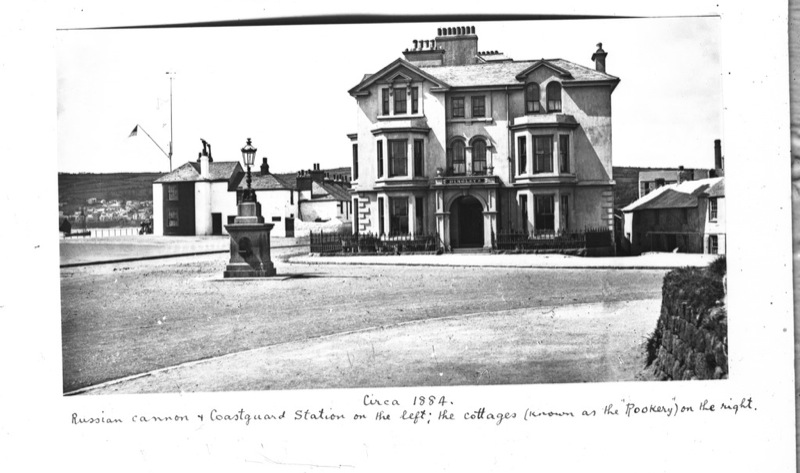
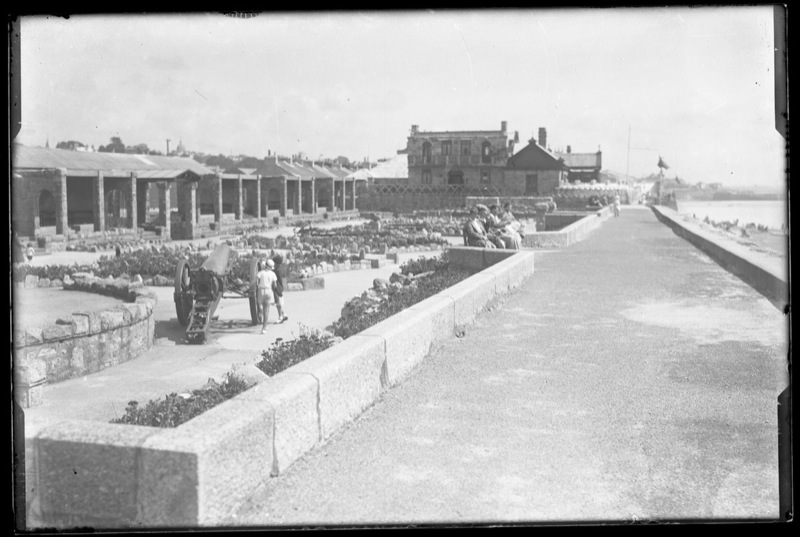
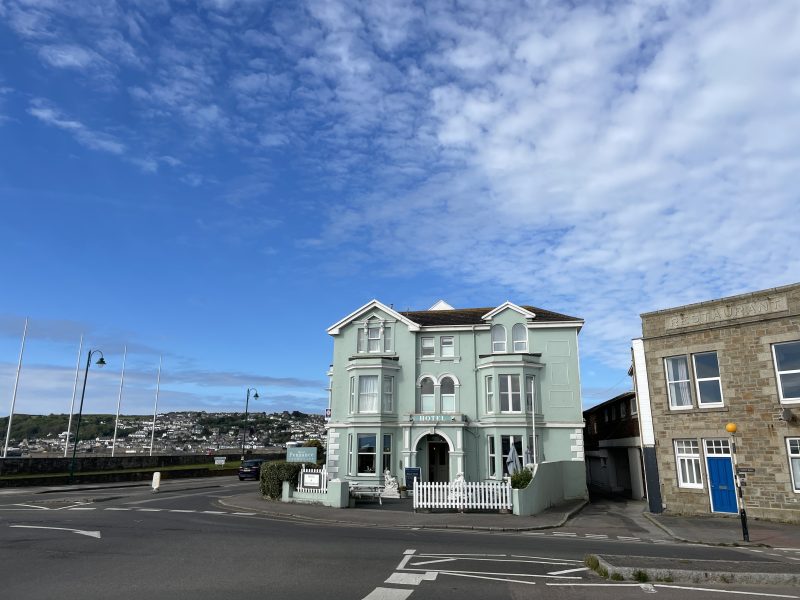
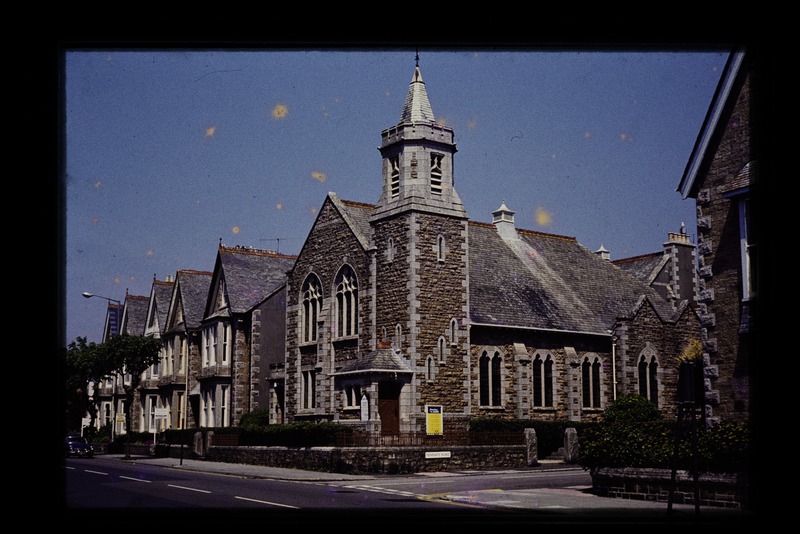
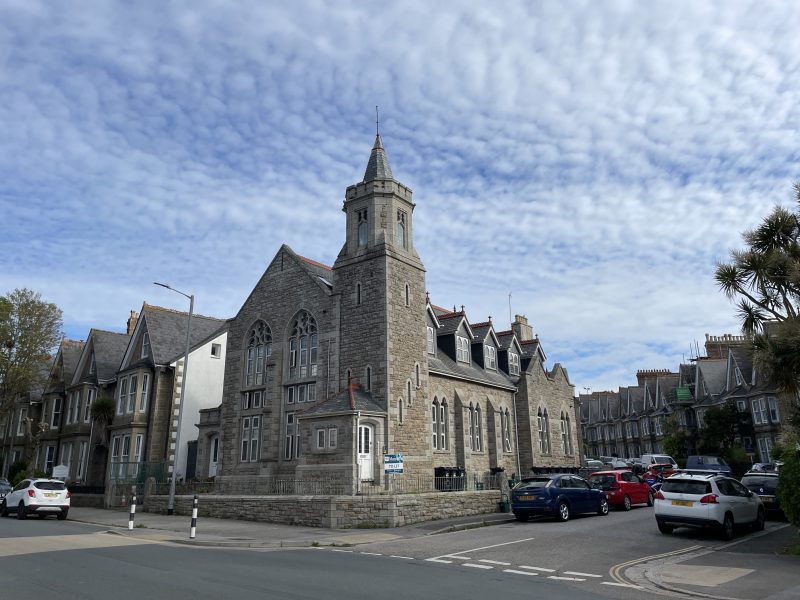
It was later in July of 1903 that the Alexandra Grounds were opened on the promenade, with the area being a designated ‘green space’ for the town. By the 1920s, a bowling green and a tennis court were built next to the St. Mary’s Church of England School. The spaces around the road eventually became the rugby pitch, Mennaye fields in 1934 and the Rotary Boating Lakes in 1955.
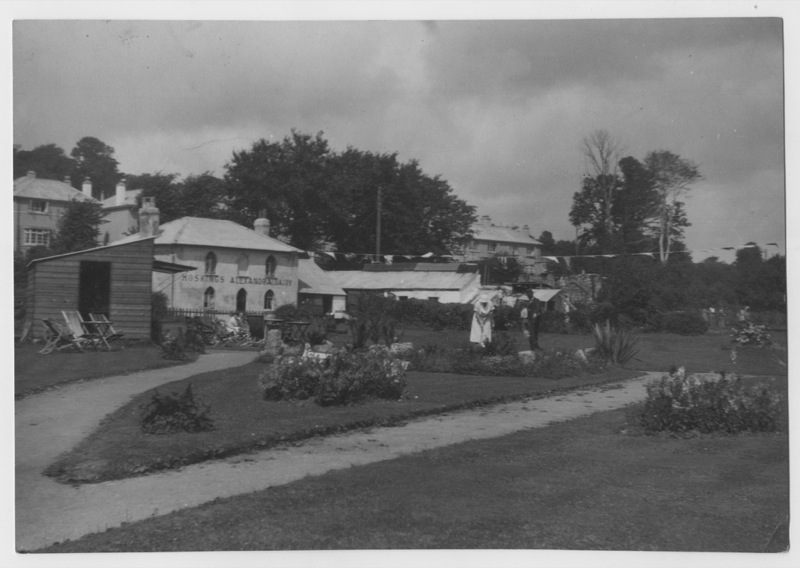
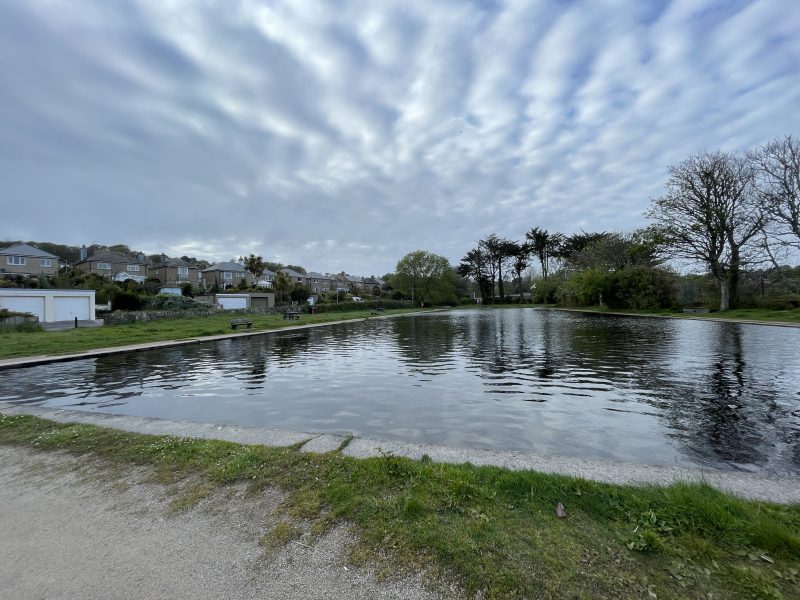
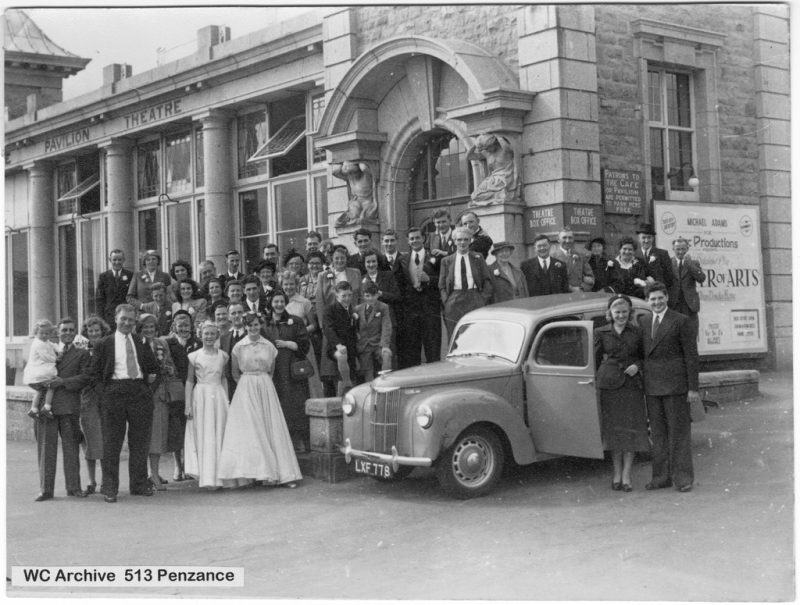
The Pavilion (now the arcade) was built in 1911 to serve the flourishing tourist industry. It held a restaurant, theatre, and ballroom. During the Second World War, concert parties were held within the building to keep wartime morale high.
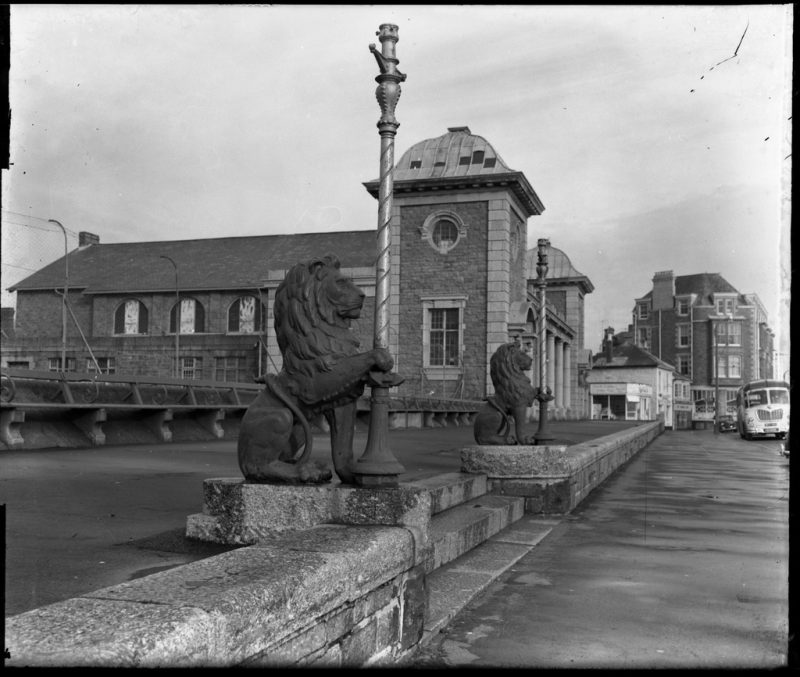
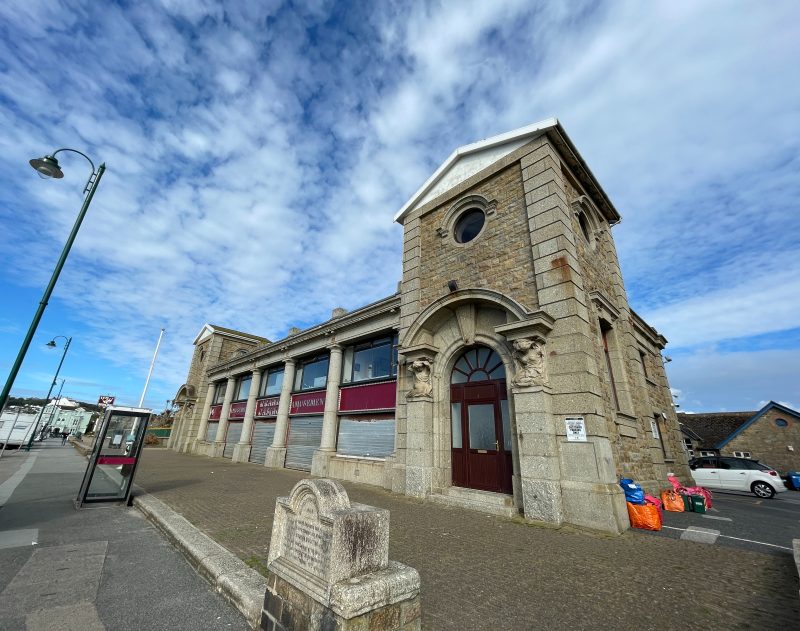
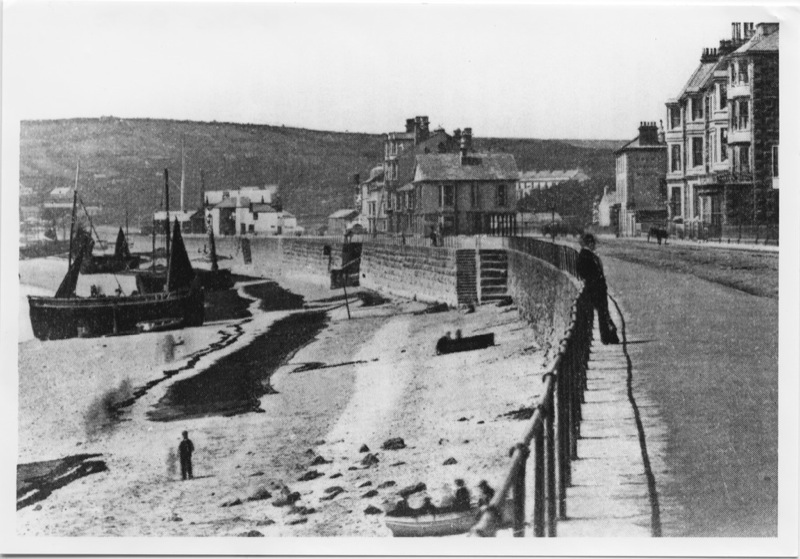
The construction of the promenade or Marine Esplanade in 1844 drastically changed the vision of the town’s industry, as the space now catered for a tourism trade brought about by the Cornish Riviera trainline. The occupation of such space was a facet in the diminishment of the local fishing industry
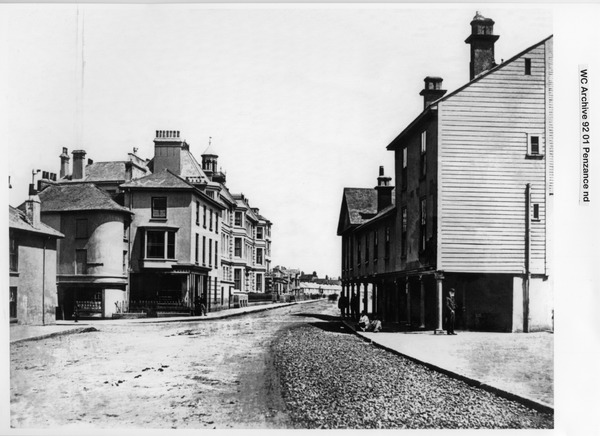
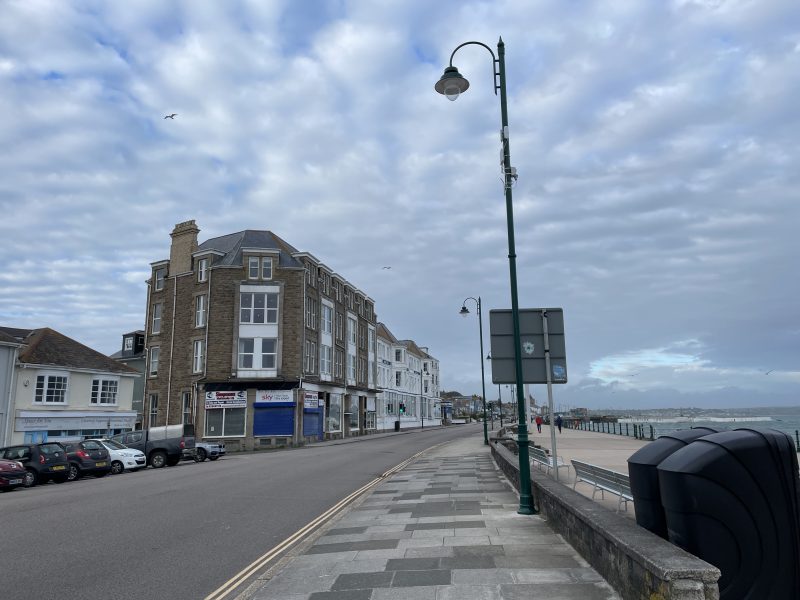
Both the Mounts Bay Hotel and the Queen’s Hotel were built to accommodate the tourist trade brought about by the train line from Penzance to London. The buildings were constructed in the 1860s.
The construction of the Bathing pool, now Jubilee Pool on Battery Rocks in 1935 was one of the first achievements of the reconstructed town council. The pool was built with a distinctive Art Deco style.
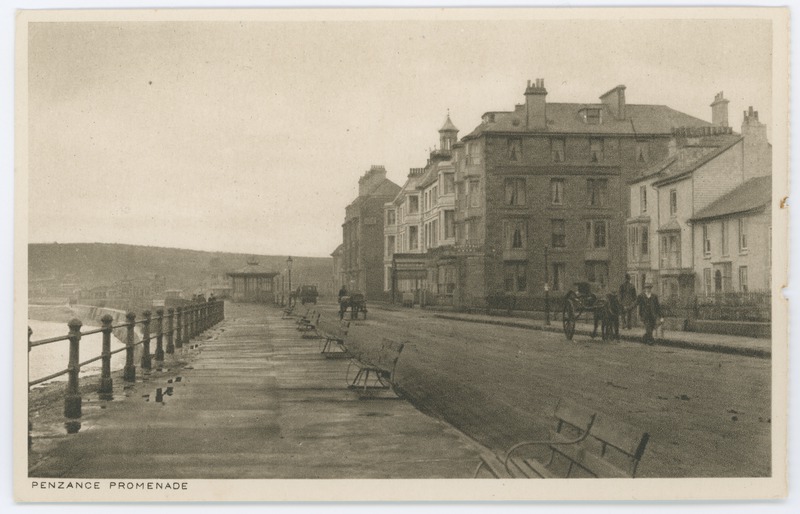
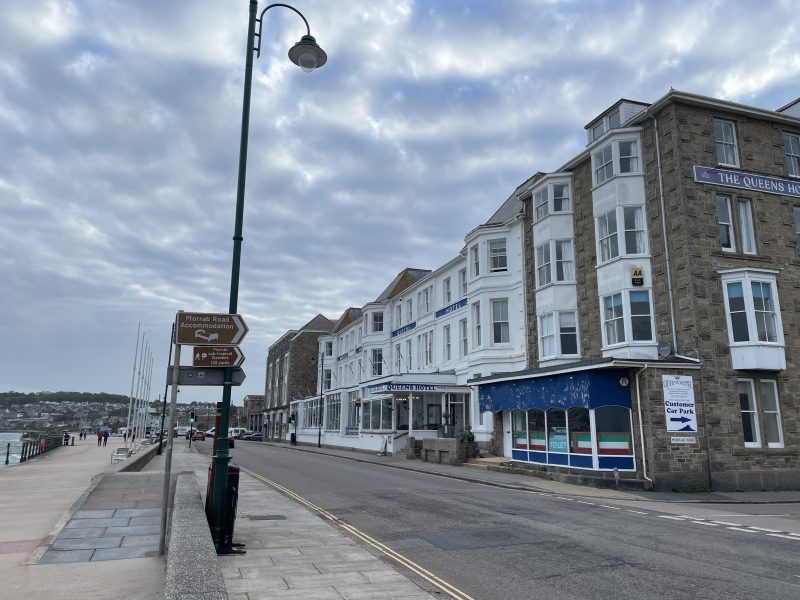
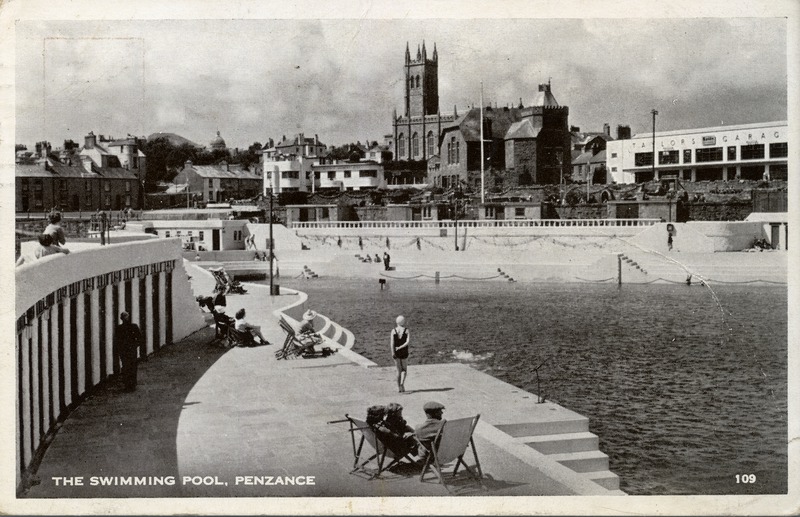
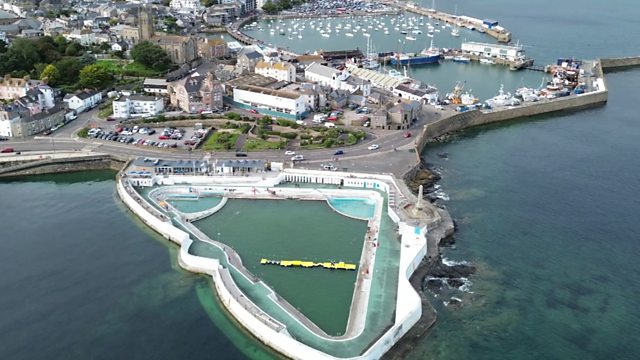
I hope this blog has infused you with a great summer feeling and that it has brought back fond memories of times“promenading” along the seafront. These photos are incredibly useful for understanding how tourism and leisure changed the physical landscape, economic focus, and social conditions within Penzance.
More photos of the promenade, the town centre, the harbour, and everything in between are available on the photo archive online collection, the link to which is here: https://photoarchive.morrablibrary.org.uk/
Penzance Then and Now: Market Jew Street and Chapel Street (Part 1) – a blog by Sam Hill
Join our Photo Archive intern, Sam Hill for his latest blog, written during his time with us…
During my time exploring the Morrab Library’s Photo Archive, I have come across so many wonderful pictures of Penzance that can truly transport you back in time. As such, I thought it would be worthwhile to write the “Penzance Then and Now” blog post series, which will explore snippets of the town’s history using the library’s photo archive collections and some contemporary images I have taken for comparison. In our first instalment, I shall display a range of photos that show the history of Market Jew Street and Chapel Street.
Walking up Market Jew Street is often a daily occurrence for the people of Penzance, with its cafes, shops, and pubs being frequented by locals. The street’s name, “Market Jew Street,” derives from the Cornish words for market, marghas, and Thursday, yow, which together made marghas yow and thus “Thursday Market.”
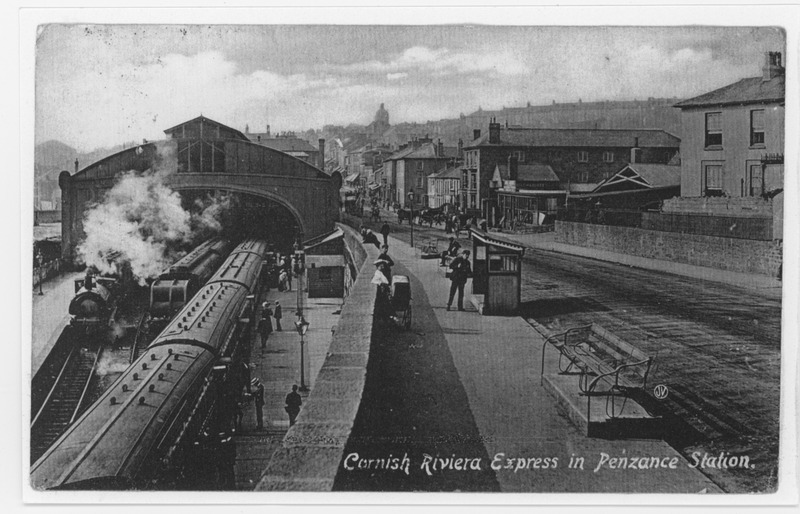
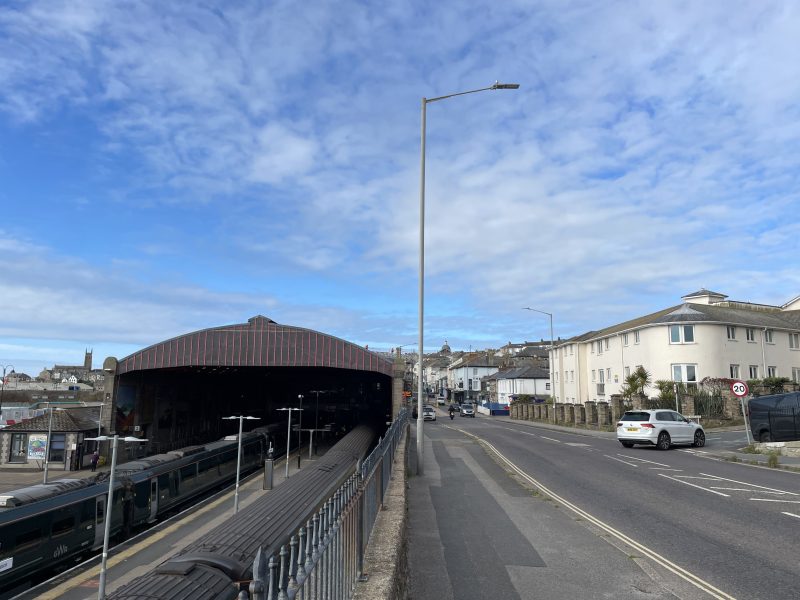
Image 1 and 2- Train station looking up towards Market Jew Street
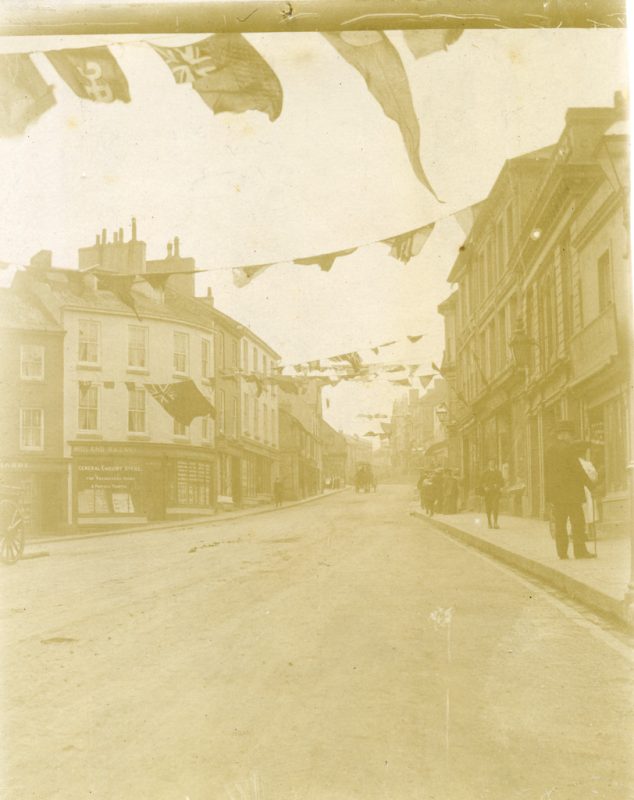

Image 3 and 4- Albert Street looking up towards Market Jew Street https://photoarchive.morrablibrary.org.uk/items/show/22673
At the top of the street, the Market House towers over the main artery of Penzance. The space has been occupied by a market house and a guildhall since the Penzance Corporation bought the three-cornered plot of waste land in 1614.
The current Market House is a replacement of the 17th-century counterpart, as the town’s corporations wanted to replace the old and inadequate building. The new Market House was the product of an architectural competition held by the New Corporation in 1835. The winner was H. J. Whiting, but the commission was given to William Harris. The building took two years to build and was officially opened by the Mayor, Richard Pearce, on 28th June 1838, on the day of Queen Victoria’s Coronation.

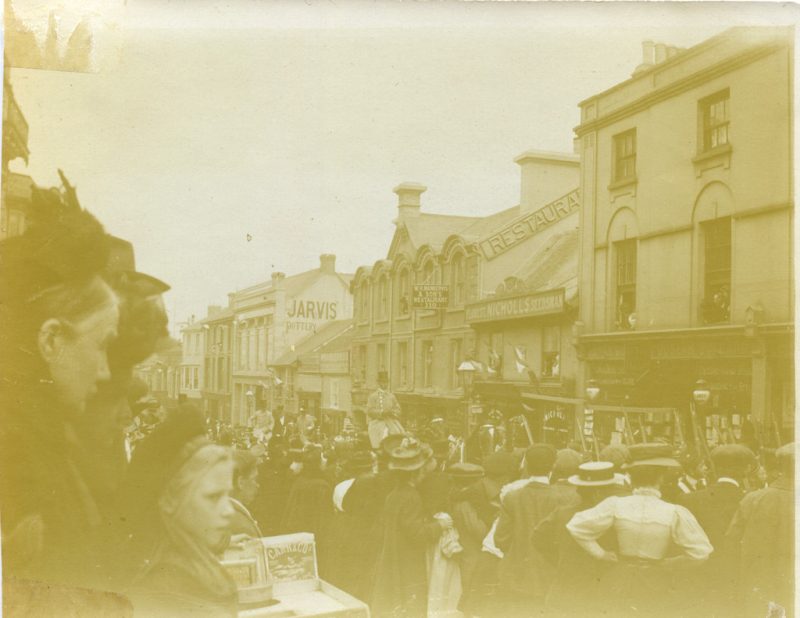
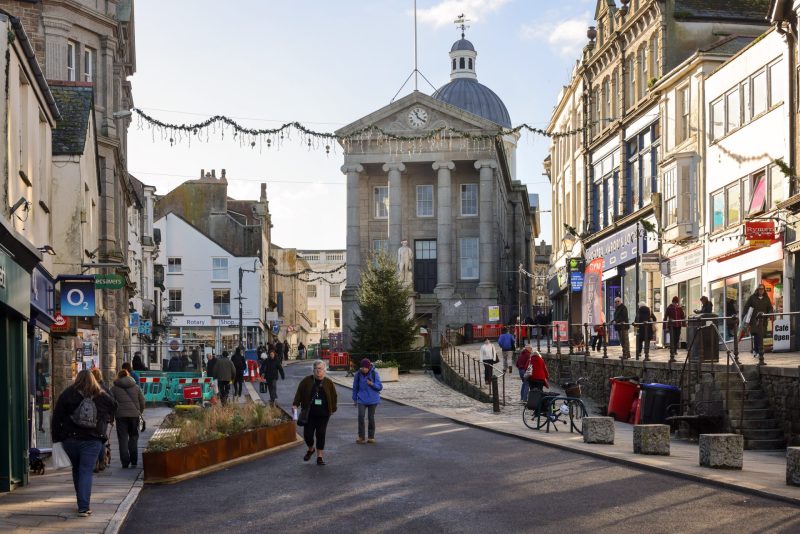
Image 5, 6 and 7- Around the top of Market Jew Street – https://photoarchive.morrablibrary.org.uk/items/show/22829 / https://photoarchive.morrablibrary.org.uk/items/show/22789
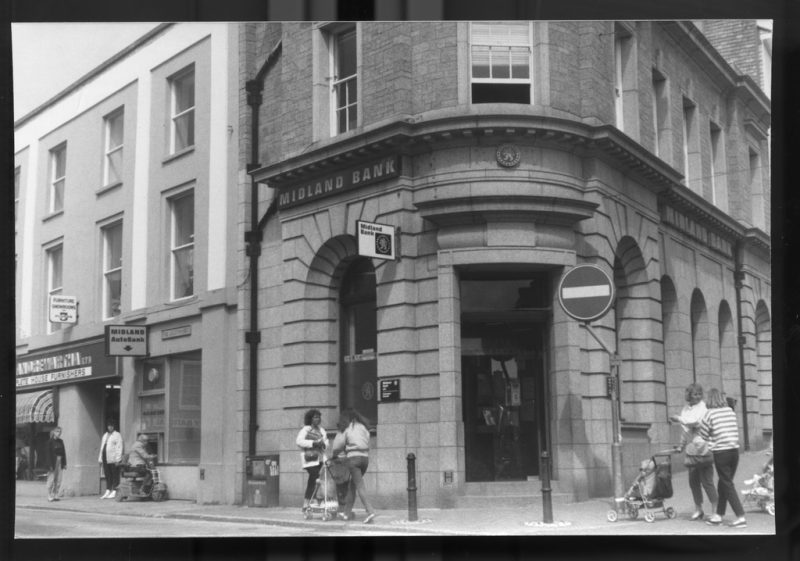

Images 8 and 9
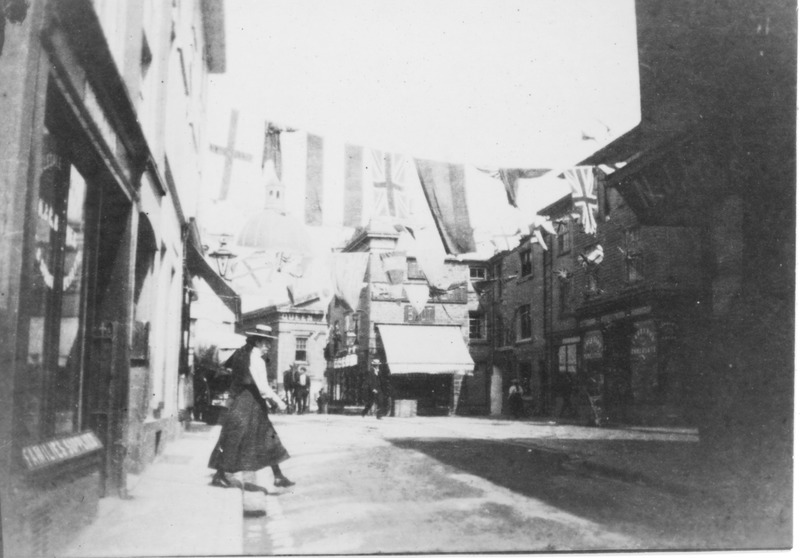

Images 10 and 11
The adjoining street, “Chapel Street”, derives from the Chapel of St. Mary, not from the Methodist Chapel erected on the street in 1814, which is often assumed. The street is named as “Our Lady Street” in 1549 and “Lady Street” in 1665.
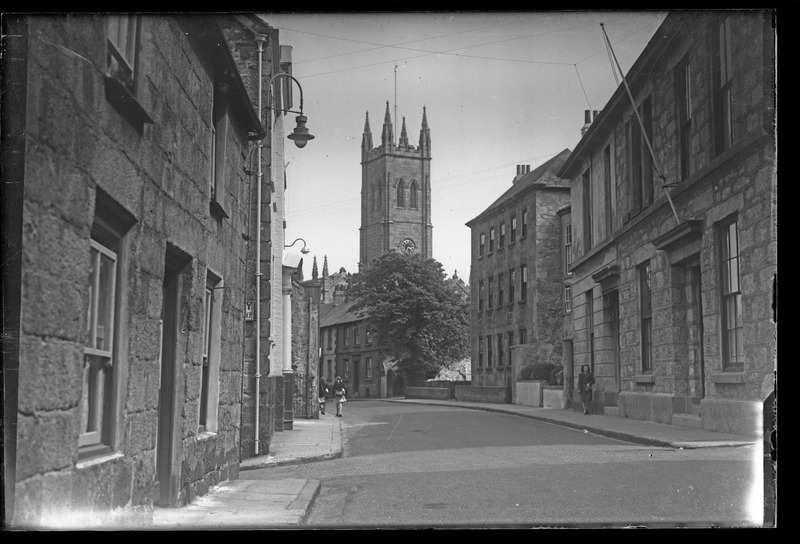
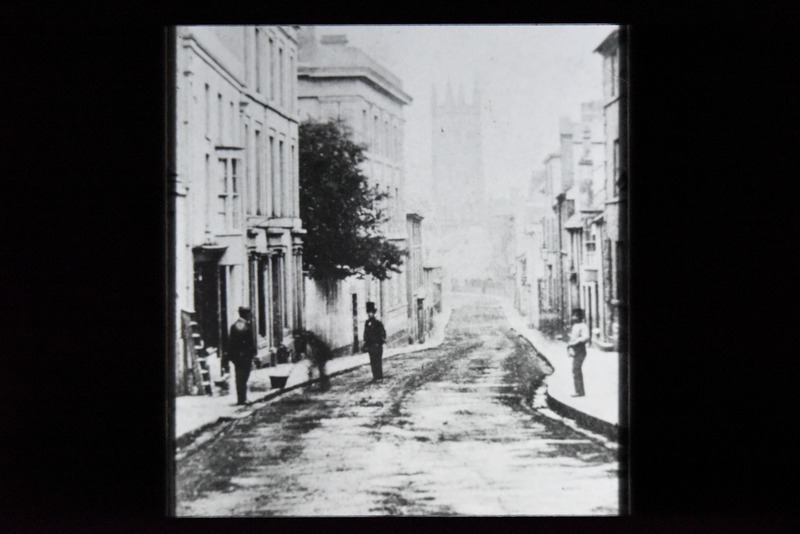

Image 12, 13 and 14
In the 18th century, the street began to reflect the period of steady growth of the town through the construction of various attractive buildings. These buildings were unique for the area as they were built in brick with granite dressings, with good examples being No.15 “Crownley”, No.16 “Trevelyan Hotel”, No.18, No.19, No.20 and No.45.
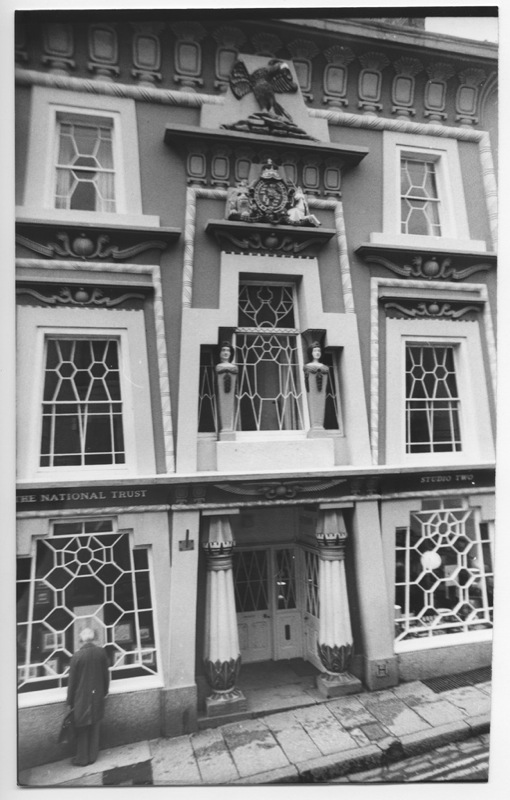
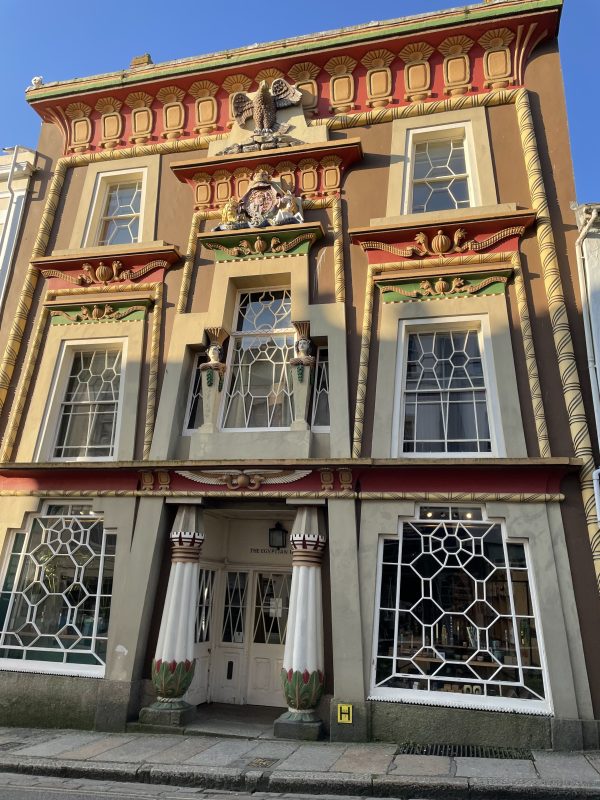
Image 15 and 16
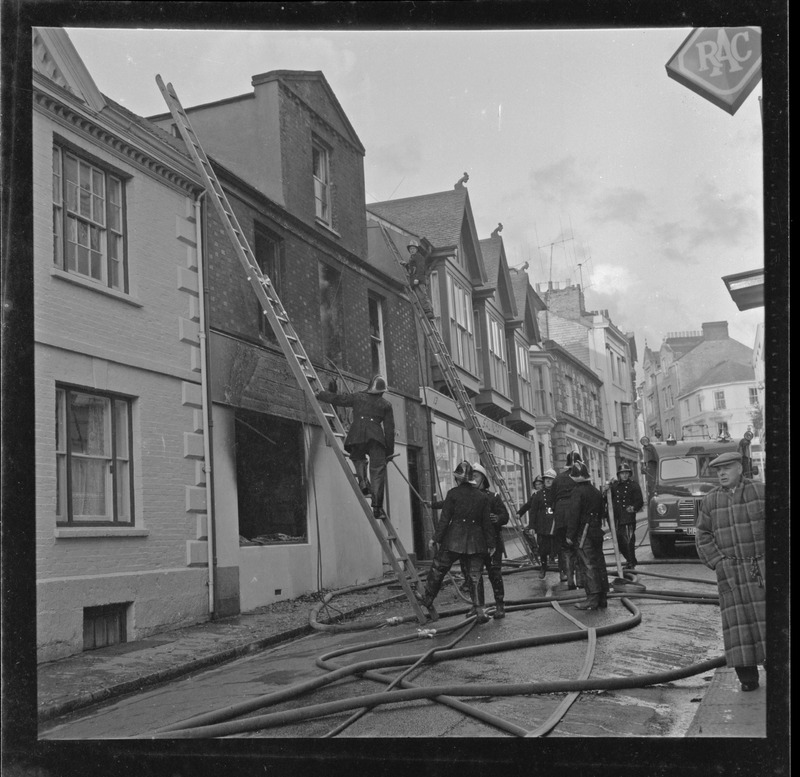

Image 17 and 18
Much of Chapel Street building was undertaken in the latter 18th century, but the main front of the Union Hotel is early- 19th century stucco, with fluted Ionic pilasters and volutes. Nowadays, Chapel Street is one of the many jewels of Penzance, and is the home of a range of amazing shops, pubs and eateries.
I hope you have enjoyed looking through some of the amazing photos of Penzance held at the Morrab Library. It is impossible to cover all the areas of Penzance, but if there is a place you are particularly interested in, then please do contact the Morrab Library Photographic Archive collection or visit the website to search the archive online: https://photoarchive.morrablibrary.org.uk/
Our next display: Notable Appellations – famous signatures in our collections
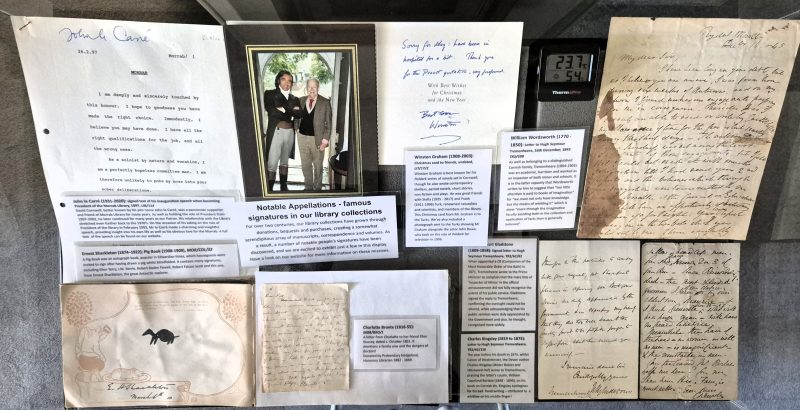
After our first display of the library’s copy of the Great Bible in our new exhibition case over the last few months, it is now time for it to return to storage and be rested, while we unveil our second exhibition.
For over two centuries, our library collections have grown through donations, bequests and purchases, creating a somewhat serendipitous array of manuscripts, correspondence and volumes. As a result, a number of notable people’s signatures have been discovered, and we are excited to exhibit just a few in this display.
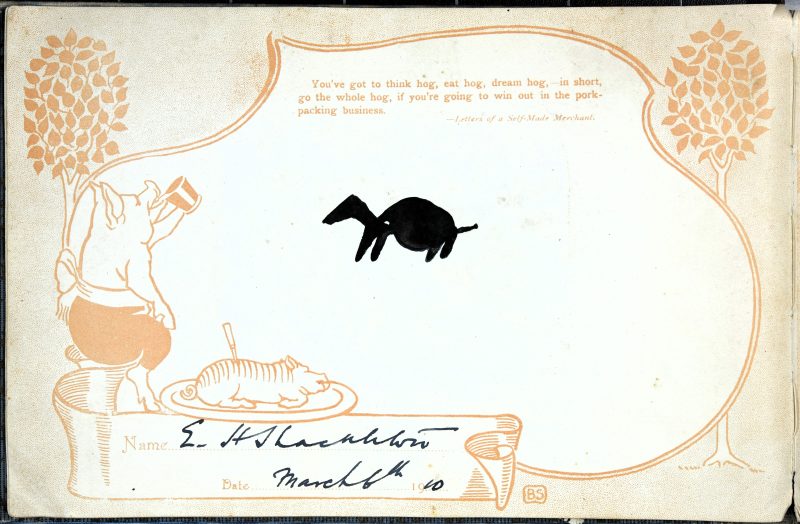
Ernest Shackleton: Pig Book (1908-1909), MOR/COL/32
A Pig Book was an autograph book, popular in Edwardian times, which houseguests were invited to sign after having drawn a pig whilst blindfolded. It contains many signatures, including Ellen Terry, J.M. Barrie, Robert Baden Powell, Robert Falcon Scott and this one, from Ernest Shackleton (1874–1922) , the great Antarctic explorer.
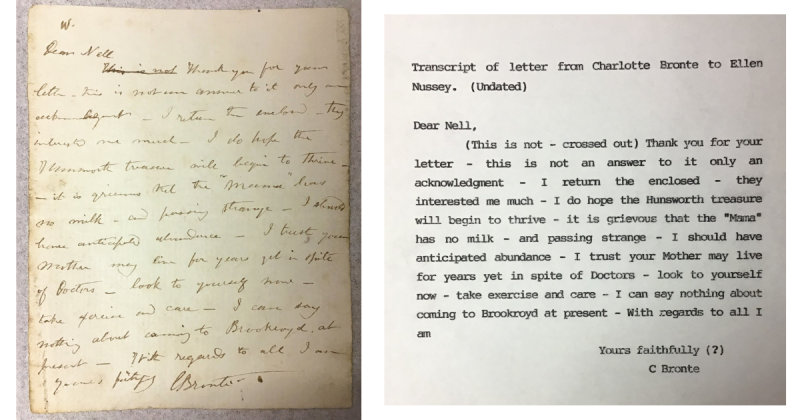
Charlotte Bronte (1816-55), MOR/BRO/1
A letter from Charlotte to her friend Ellen Nussey, dated c. October 1851. It mentions a family cow and the dangers of doctors!
Donated by Prebendary Hedgeland, Honorary Librarian 1882 – 1889.
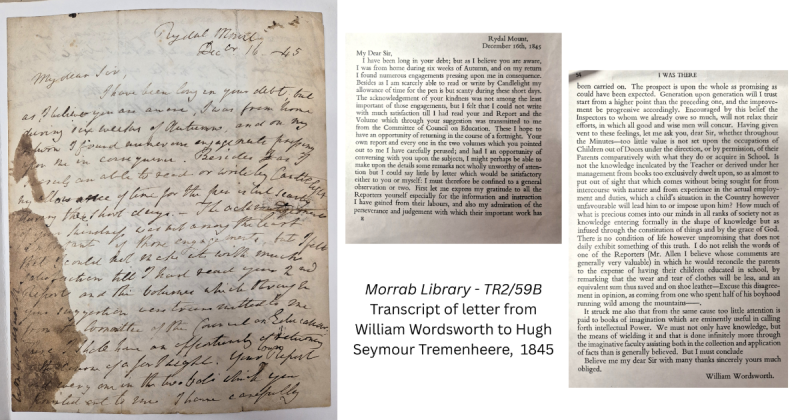
William Wordsworth (1770 – 1850): Letter to Hugh Seymour Tremenheere, 16th December, 1845 TR2/59B
As well as belonging to a distinguished Cornish family, Tremenheere (1804-1903) was an academic, barrister and worked as an inspector of both mines and schools. It is in the latter capacity that Wordsworth writes to him to suggest that “Knowledge inculcated by the Teacher or derived under her management from books” may be “too exclusively dwelt upon, so as almost to put of sight that which comes without being sought for from intercourse with nature”. And he goes on to say that “too little attention is paid to books of imagination” for “we must not only have knowledge, but the means of wielding it” which is done “more through the imaginative faculty assisting both in the collection and application of facts than is generally believed”. The importance of the imagination and experiencing the natural world, particularly for children, is ever present in Wordsworth’s oeuvre, and in his own poetic and personal growth as depicted in works like The Prelude.
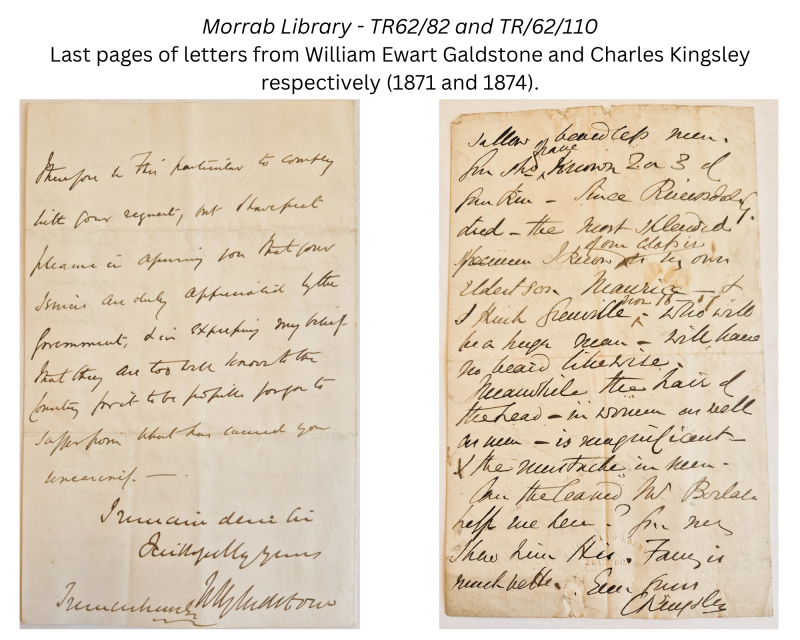
William Ewart Gladstone (1809-1898): Signed letter to Hugh Seymour Tremenheere, TR2/62/82
When appointed a CB (Companion of the Most Honorable Order of the Bath) in 1871, Tremenheere wrote to the Prime Minister to complain that the mere title of ‘Inspector of Mines’ in the official announcement did not fully recognise the extent of his public service. Gladstone signed the reply to Tremenheere, confirming the oversight could not be altered, while acknowledging that his public services were duly appreciated by the Government and also, he thought, recognised more widely.
Charles Kingsley (1819 to 1875): Letter to Hugh Seymour Tremenheere, TR2/62/110
The year before his death in 1875, whilst Canon of Westminster, the Devon author Charles Kingsley (Water Babies and Westward Ho!) wrote to Tremenheere, praising the latter’s cousin, William Copeland Borlase (1848 – 1899), on his book on Cornish tin. Kingsley apologises for his bad hand writing – attributed to whitlow on his middle finger!
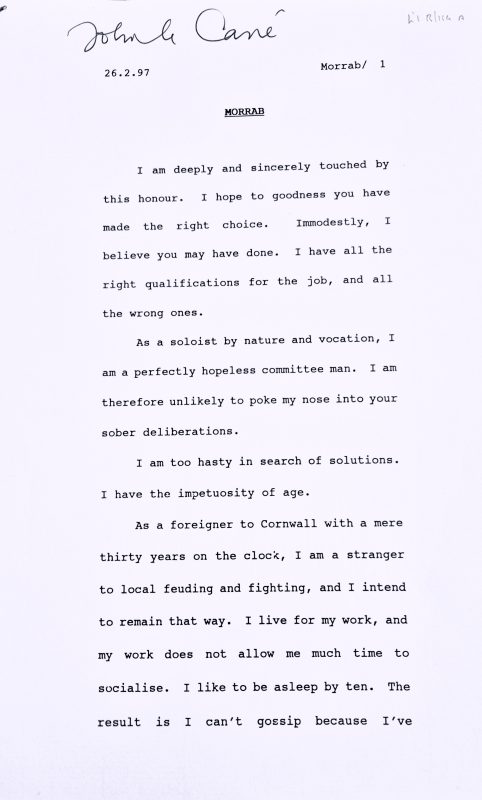
John le Carré (1931-2020): signed text of his inauguration speech when becoming President of the Morrab Library, 1997, LIB/114
David Cornwell, better known by his pen name John le Carré, was a passionate supporter and friend of Morrab Library for many years. As well as holding the role of President from 1997-2002, he later continued for many years as our Patron. His relationship with the Library stretched even further back to the 1970’s. On the occasion of his taking on the role of President of the library in February 1992, Mr le Carré made a charming and insightful speech, providing insight into his own life as well as his obvious love for the Morrab. A full text of the speech can be found John Le Carre President speech 1997.
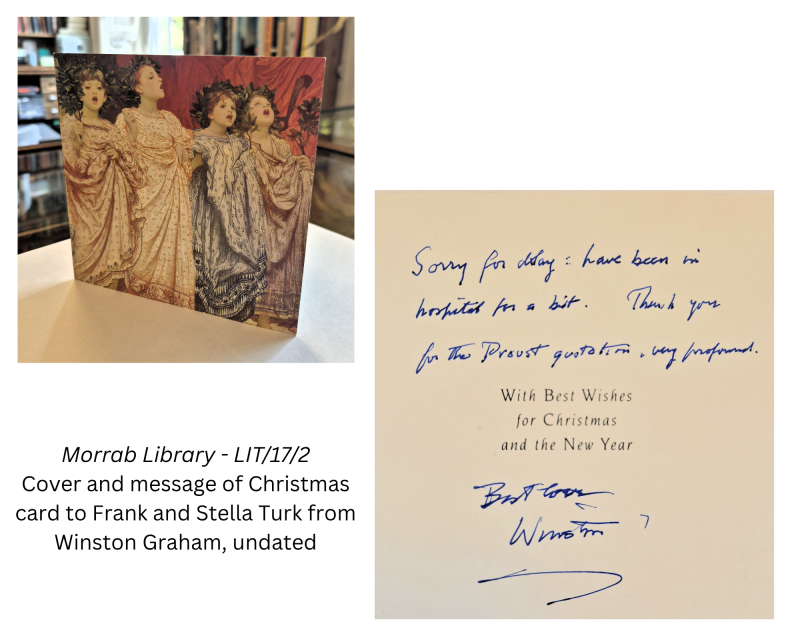
Winston Graham (1908-2003): Christmas card to friends, undated, LIT/17/2
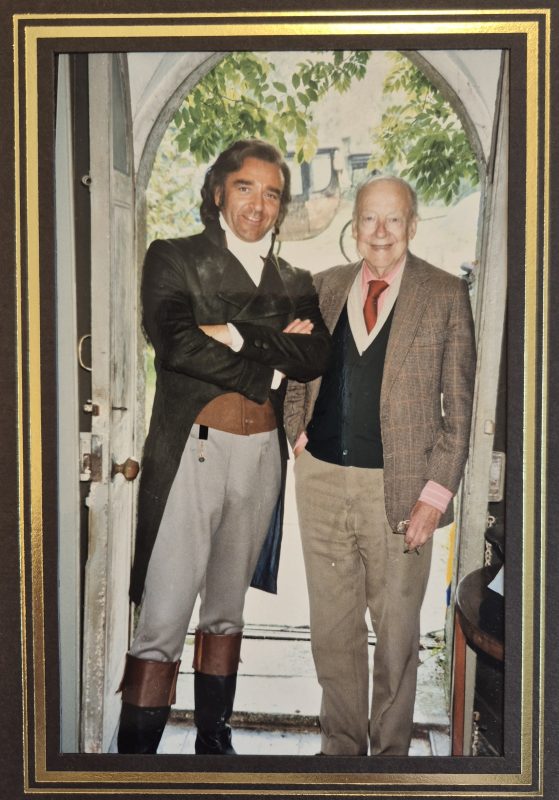
Winston Graham is best known for his Poldark series of historical novels set in Cornwall, though he also wrote numerous other works, including contemporary thrillers, period novels, short stories, non-fiction and plays. He was great friends with Stella (1925 – 2017) and Frank (1911-1996) Turk, renowned naturalists and scientists, and members of the library. This Christmas card from Mr. Graham is to the Turks. We’ve also included a photograph sent to the Turks showing Mr Graham alongside the actor John Bowe, who took on the role of Poldark for television in 1996.