Blog
Long-Vanished People: J.T. Blight Re-imagined in the Context of 19th Century Psychology
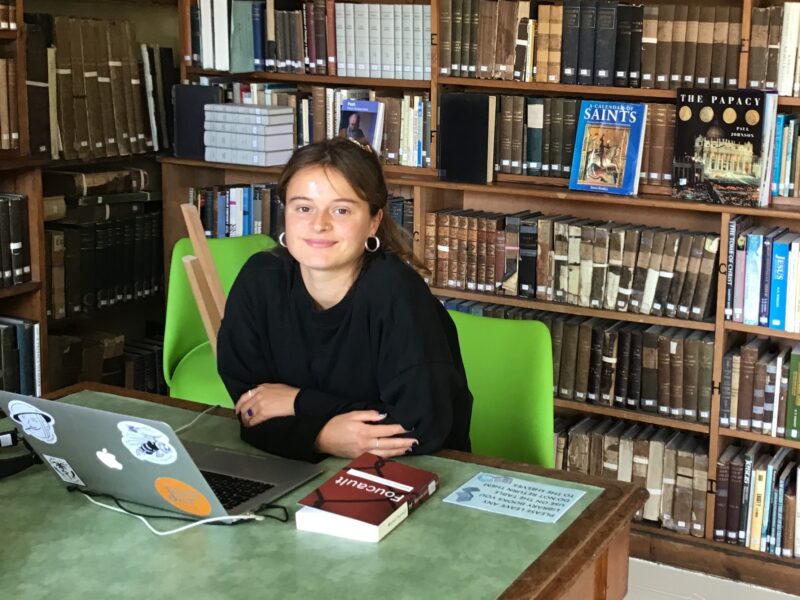
In the summer of 2021, Morrab Library hosted Eliza McCarthy, an intern from the Penryn campus of Exeter University who funded Eliza’s project through their Access to Internships programme. Eliza is an English Literature student and spent her time exploring the library’s archive relating to John Thomas Blight (1835-1911), Cornish archaeologist and artist. Blight found himself incarcerated in the Bodmin Mental Asylum, and Eliza’s paper explores Blight’s life and the wider issues around the care of people with mental health problems at that time.
It was a delight to host Eliza, and the results of her hard work are evident in the paper she wrote, which is reproduced here, and will be added to the JT Blight Archive collection for future researchers.
Click here to read Eliza’s Blog
A remarkable discovery in our Archive collection
In the midst of lockdown over 2020 and 2021, Morrab Library was contacted by Alison Shell, Professor of Early Modern Studies at University College London. She had come across a brief citation to an item in our Archive collection, created by the late John Simmonds, who, over twenty years, had created a record on paper of all our holdings – an extraordinary piece of work when you consider we hold more than 5,000 records.
Alison’s curiosity was piqued by this record – all John, and his colleague the notable author and historian P.A.S Pool, had been able to unearth about this unassuming slim volume:
MOR/MAN/5 – ” a volume written in Latin of the texts of several religious plays in the 17th or early 18th century hand. The subjects include King Canute, Earl Godwin and the prophet Mahomet (portrayed as the Antichrist). A gift of the Reverend James Halliwell (1862). Brown leather, bound, 16cm”
She made the long journey from London to visit the library and examine the volume, and her efforts were rewarded with a truly remarkable discovery. Read Alison’s blog to find out more…
A volume of 17th-century Latin plays written by English Catholics, almost certainly at the English College at St Omer, has recently been discovered in the Morrab Library collections (1).
During the reign of Elizabeth I, when it became clear that England would remain Protestant for the foreseeable future, expatriate English Catholics grew increasingly concerned to preserve their faith for successive generations. To this end, they set up educational institutions in continental Europe, of which the English College at St Omer, or ‘St Omers’ – the forerunner of Stonyhurst College in Lancashire — is one of the best-known. Catering mostly for school-age boys, it was run by the Jesuit order, well-known across Europe for its educational efforts. Jesuits knew how effectively drama could develop oral fluency, confidence and memory skills in their charges, and — anticipating present-day educators — made considerable use of it as a teaching aid. Their productions also functioned as a public relations exercise when mounted for distinguished visitors or the local community, often deploying music, dance and spectacle to show off the students’ abilities. Most of all, they promoted the ideals of Counter-Reformation Catholicism in an attractive and imaginatively compelling manner – not least among the young actors themselves. (2)
An important part of the Order’s missionary endeavour, Jesuit drama had an international reach through Catholic Europe and even beyond. Yet it was very much coloured by national concerns, as the present volume demonstrates. Even though its English writers and actors were living and working outside England, they were passionately committed to bringing their mother country back within the Catholic fold. Two plays in the present compilation draw on English history: the tragedy Canutus magno maior (Canute, greater than the great) dramatizes the life of King Canute, the other, Godwinus, is shaped round historical anecdotes about Godwin, Earl of Wessex. The volume also features another tragedy, Clearchus furens (Clearchus raging); an apocalyptic play in which Christ clashes with Mohammed; an untitled dialogue with characters including an angel and a poet; and the allegorical drama Philander, sive Angelus custos (Philander, or The Guardian Angel) (Fig.1). The latter play is signed by Francis Biddulph, a student at St Omers between 1664 and 1670. (3) (Fig.2). Since English Jesuit plays rarely travelled between colleges and had relatively little currency outside them, this makes it overwhelmingly likely that the manuscript was a St Omers production. The inclusion of Biddulph’s work also suggests that the volume was compiled in the mid- to late 1660s, though Philander might still have been read after Biddulph had left St Omers.
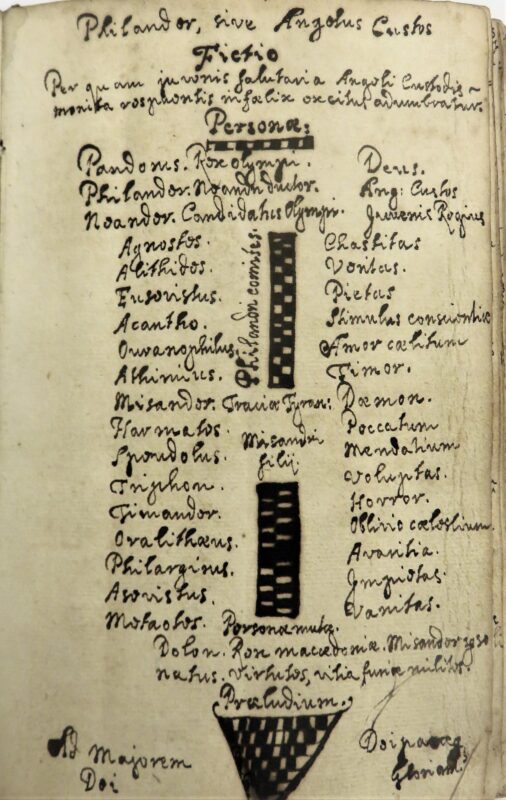 Figure 1
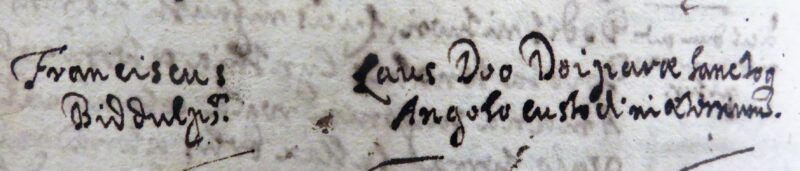
Figure 2
The volume was most probably compiled for reading rather than performance, though it is likely that the plays themselves were put on in some form. The play about Christ and Mohammed may be the apocalyptic drama of which the St Omers register records a performance in 1669, another reason to attribute it to the College (4). No evidence has yet been found of the other plays’ production, but this is not surprising; the dramatic culture of St Omers encompassed everything from classroom performance upwards, and much of it was ephemeral. The more prestigious a production, the more likely it was to be recorded, but even for plays of this kind, records are incomplete and unsystematic. It is unusual, though, for more than one copy of a St Omers play to survive, and the fact that a British Library manuscript also contains copies of Canutus and Clearchus suggests that these particular dramas were relatively high-profile and well regarded (5).
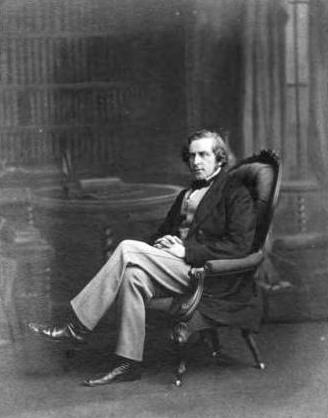
The manuscript came into the Morrab Library as part of a donation of seventeenth- and eighteenth-century playtexts from the Shakespeare scholar James Orchard Halliwell (later Halliwell-Phillipps) (Fig.3, above). One item in his correspondence with the library contains an undated list of books and manuscripts that mentions Canutus and Clearchus (6). Halliwell-Phillipps was a generous donor to repositories, including the Shakespeare Birthplace Trust in Stratford-upon-Avon, Chetham’s Library in Manchester and the Smithsonian Institution in Washington; he had a particular love of Penzance, where he frequently holidayed. He was awarded the freedom of the borough for his patronage, and a bookcase in the Morrab Library bears his name to this day (7) (Fig.4). Seven decades after his death, in 1964, the Library put the bulk of his collection up for sale at a time of financial difficulty, and the collection was dispersed: mostly to Edinburgh University Library, another institution that had benefited from Halliwell-Phillipps’s patronage (8). The St Omers plays were not included, most likely because they were not considered worth selling. Perhaps they were thought to be extraneous to English dramatic history, or peripheral within Halliwell-Phillipps’s collection — or perhaps the Latin was off-putting. But the oversight has had the happy result of preserving this rare and compelling find within the Morrab’s own collections.
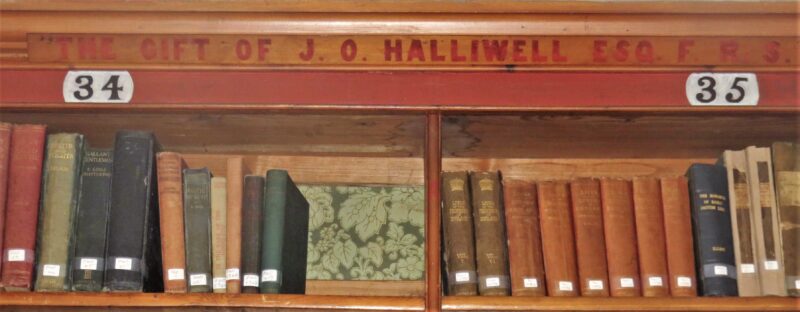
Figure 4
(With thanks to Lisa Di Tommaso; Arnold Hunt; Joe Reed, Archivist at Stonyhurst College; and the Leverhulme Trust for funding my archival research through a Major Research Fellowship.)
Alison Shell (Professor)
Department of English
University College London
FOOTNOTES
1: Morrab Library, MOR/MAN/5.
2: William H. McCabe, SJ., An Introduction to the Jesuit Theater. Ed. Louis J. Oldani, SJ. (St Louis: Institute of Jesuit Sources, 1983), and Paul Shore, ‘Counter-Reformation Drama’, ch.19 in The Ashgate Research Companion to the Counter-Reformation, ed. Alexandra Bamji, Geert H. Janssen and Mary Laven (Farnham: Ashgate, 2013).
3: Geoffrey Holt, SJ. St Omers and Bruges Colleges, 1593-1773: A Biographical Dictionary (S.l. Catholic Record Society, 1979), p.36. For biographical details of another, earlier Francis Biddulph, see Thomas M. McCoog, S.J., English and Welsh Jesuits, 1555-1650: Part 1, A-F, Catholic Record Society, vol.74 (London: Catholic Record Society, 1994), p.170.
4: McCabe, p.99.
5: BL Add MS 41182.
6: Morrab Library, Halliwell-Phillipps correspondence (MOR/LIB/20a).
7: Arthur Freeman and Janet Ing Freeman, ‘Phillipps, James Orchard Halliwell- (1820–1889), Oxford Dictionary of National Biography, online; The Cornishman, 19 October 1893, p.6.
8: Cyril Noall, The Penzance Library, 1818-1968 (Penzance: Penzance Library, 1968), pp.28-9; ‘In the Saleroom’, Times Literary Supplement, 30 July 1964.
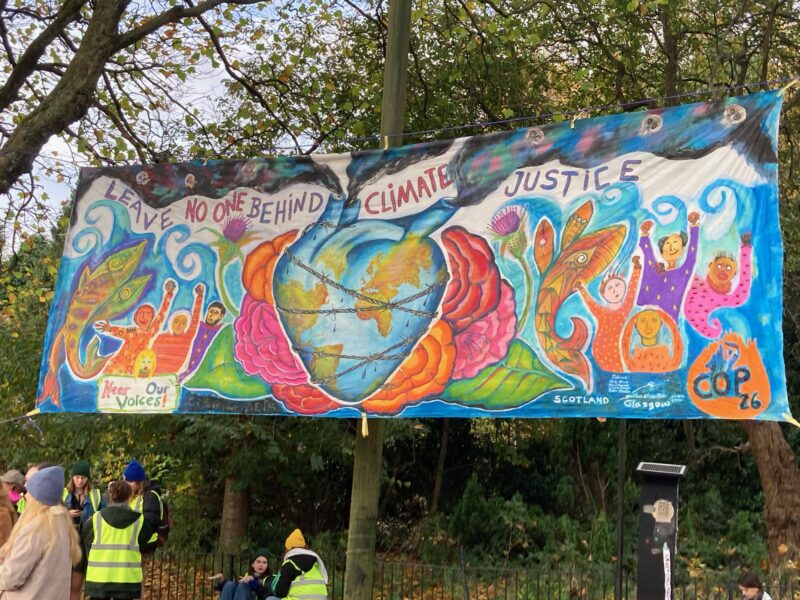
Reflections from COP26
We contacted Alison as we felt that the voice of a Penwith resident on the ground at COP26 would be an invaluable addition to the Penwith Futures Book project. As Alison journeyed north, and during her time on the ground in Glasgow, she kindly shared daily photos and diary entries with us to paint a picture of how it felt to be part of this pivotal moment in history.
Alison will be contributing to the Penwith Futures Book which you will be able to read in a year’s time. In the meantime, we thought we would share excerpts from her daily thoughts live from COP26. Perhaps they might inspire you to reflect upon COP26 and the changes you hope to see here in Penwith. And to think about your ideas for the future and get creative in your entries to the Penwith Futures Book.
30th October
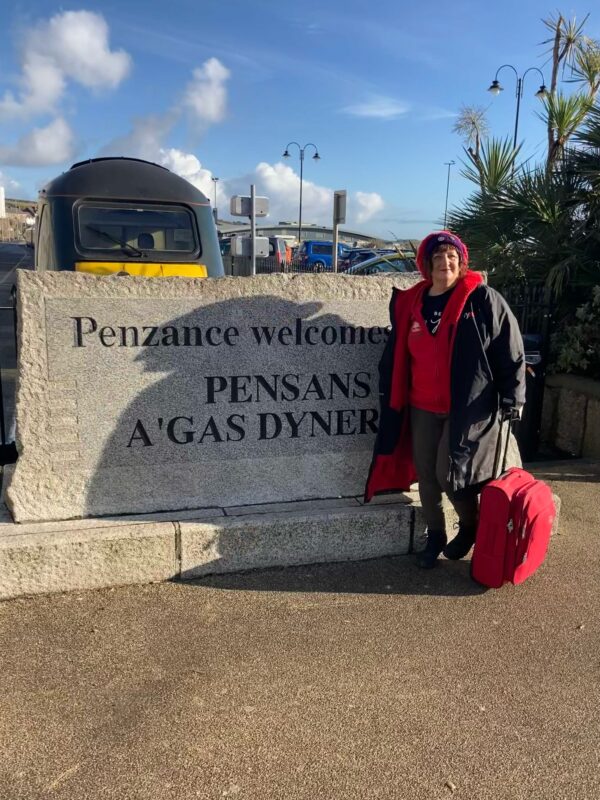
“I am embarking on a 560-mile train journey to Glasgow with my case crammed full of banners, flags and thermals. Leaving balmy Penzance, dressed for comfort rather than style, I am overheating. Glasgow is significantly colder and I’ve been advised to prepare for wet weather. On the train my phone is constantly showing new messages with requests for people to join marches, prayer vigils, actions and visit art events. This feels like a holiday but I know there is a serious purpose. I am going to COP26 to bear witness to the climate emergency. I am driven to be there to show the world leaders and decision makers that individuals, the worker ants, demand real action with commitments to limit global temperature rise to 1.5°C. They are accountable to us and our future generations.”
31st October
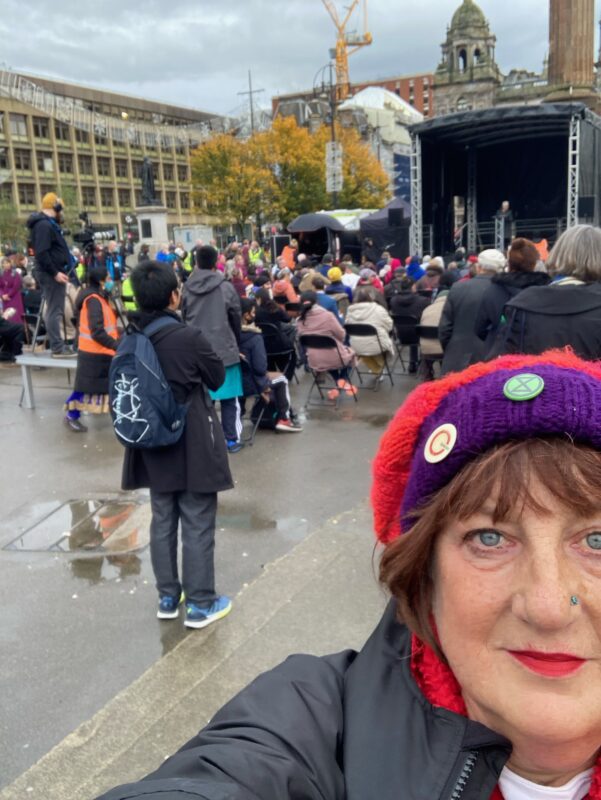
“I walk on the pedestrianised grid of streets orientating myself in this unknown city. I notice a few activists, recognisable by their rucksacks and badges. There is a large interfaith vigil with representatives leading prayers and meditations for those making decisions at COP26.
Glasgow Quaker Meeting House is providing a space to mentally and physically replenish oneself. I join a FWCC (Friends World Committee for Consultation) event hosted by Quakers in Glasgow.
Quakers from around the world share what is happening in their countries with the climate emergency and their hopes for the future. The Quaker from the Philippines speaks of the need for the world leaders at COP26 to listen to the scientists, to follow the science and stop blaming individuals, rather than the fossil fuel companies, for the dangerous position the earth is in.
I stay for the early evening reflection which steadies and calms my thoughts.”
31st November
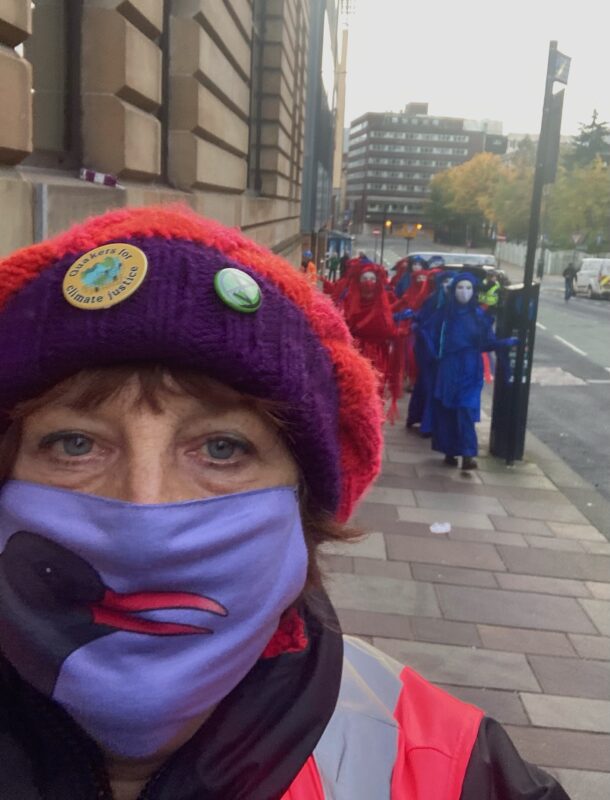
“The Red Rebels are arriving. These enigmatic figures appear without warning, moving silently among humanity.
“Red Rebel Brigade symbolises the common blood we share with all species,
That unifies us and makes us one.
As such we move as one, act as one and more importantly feel as one.
We are unity and we empathise with our surroundings, we are forgiving
We are sympathetic and humble, compassionate and understanding,
We divert, distract, delight and inspire the people who watch us,
We illuminate the magic realm beneath the surface of all things and we invite people to enter in, we make a bubble and calm the storm, we are peace in the midst of war.
We are who the people have forgotten to be!”
I am asked to help steward to keep performers safe and to ensure clear pathways for the public when in crowded places. We walk to a meeting point and the Red Rebels, accompanied by the Scottish Blue Rebels, glide out onto the pavement. Slowly, with purpose, the Red and Blue figures advance along the pavements, looking neither left or right accompanied by a single drummer. They advance with the stewards skittering around them to clear pathways, halt traffic and reassure police
Somehow the media is awakened and camera crews appear eager to film and photograph the Red and Blue tableau as they reach Glasgow Central station. Without warning the figures regroup and glide to a new resting place. And move again. Like a restless but slow-moving sloth. All the while the insistent rhythm of the drum sounds throughout the building.
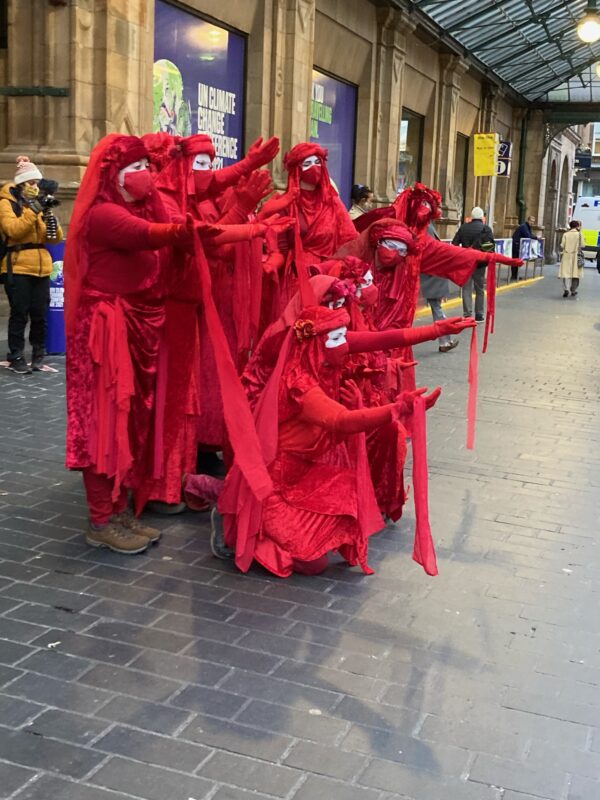
At a signal we stewards are sent off to meet the Euston train. Emerging from the crowd of travellers is a second group of Red Rebels making their stately way to the main concourse. We scurry ahead to clear a path and the 2 groups meet, create new arrangements and then without a sound turn and retrace their steps out of the station.
What an experience.”
5th November
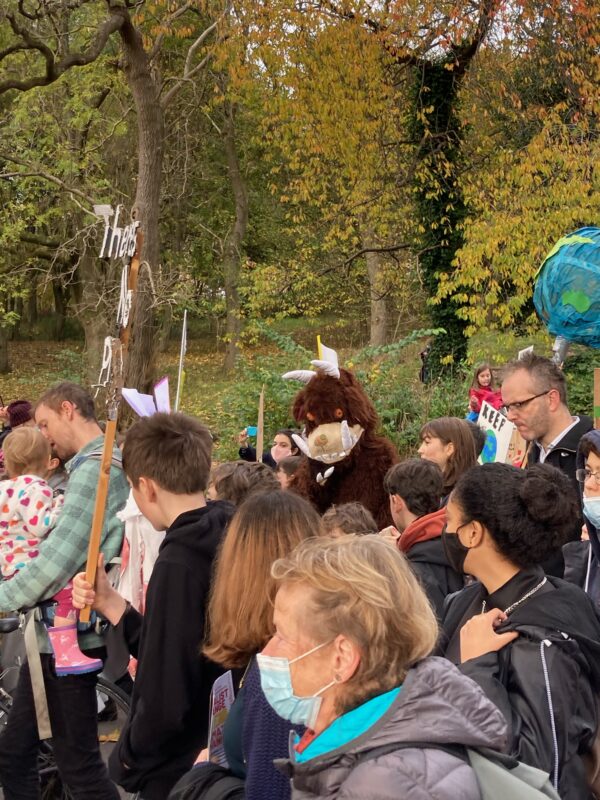
“This is the young adults and children’s march Fridays For Future and Extinction Rebellion are there to support them.
Three of us take the subway to the centre of Glasgow. We are met by the stage manager who needs three people to stand by the barriers to monitor who is coming in and out of the backstage area.
Delegates begin to arrive. I am not briefed on who is allowed in but a helpful Spanish speaking steward from another activist group works with me. I defer to him as it is a Fridays For Future event, not Extinction Rebellion. Another steward joins us and we share biscuits and climate activism stories. We muddle through with a lovely Glaswegian man who came to find out what the fuss was about and ended up staying for the whole event, moving the metal fence open and shut as needed.
We hear the march arriving before we see anyone. The samba band is playing, rhythms that enthuse, inspire, call to the soul. A sea of flags and placards advances and the square fills. Climate activists from around the world including, Ayidha Saddiqa, Chris Mitchel, Mikaela Loach, Sofia Gutierrez, Vanessa Nakate and Greta Thunberg speak calling on global governments to commit to real climate action. And then it is over. Greta Thunberg is whisked away and I say goodbye to my new friends; the Glaswegian, the Spanish speaking steward and the student from Preston who travelled up for the day to join the march.”