After our first display of the library’s copy of the Great Bible in our new exhibition case over the last few months, it is now time for it to return to storage and be rested, while we unveil our second exhibition.
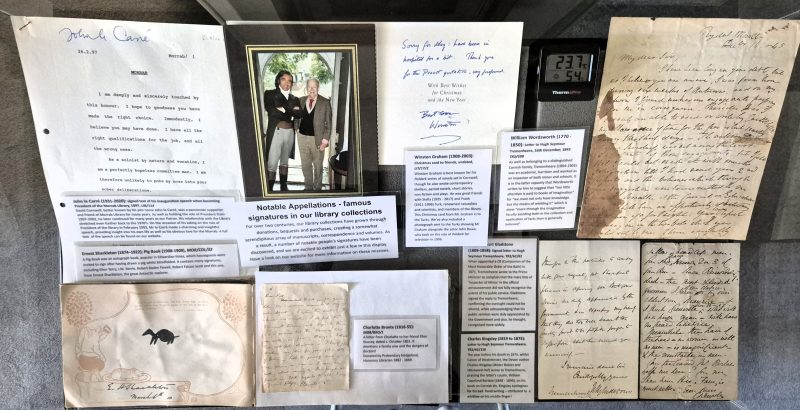
For over two centuries, our library collections have grown through donations, bequests and purchases, creating a somewhat serendipitous array of manuscripts, correspondence and volumes. As a result, a number of notable people’s signatures have been discovered, and we are excited to exhibit just a few in this display.
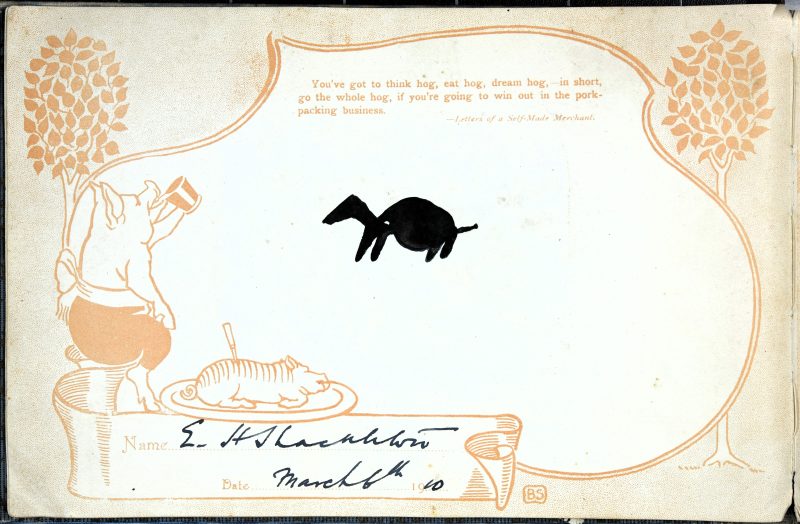
Ernest Shackleton: Pig Book (1908-1909), MOR/COL/32
A Pig Book was an autograph book, popular in Edwardian times, which houseguests were invited to sign after having drawn a pig whilst blindfolded. It contains many signatures, including Ellen Terry, J.M. Barrie, Robert Baden Powell, Robert Falcon Scott and this one, from Ernest Shackleton (1874–1922) , the great Antarctic explorer.
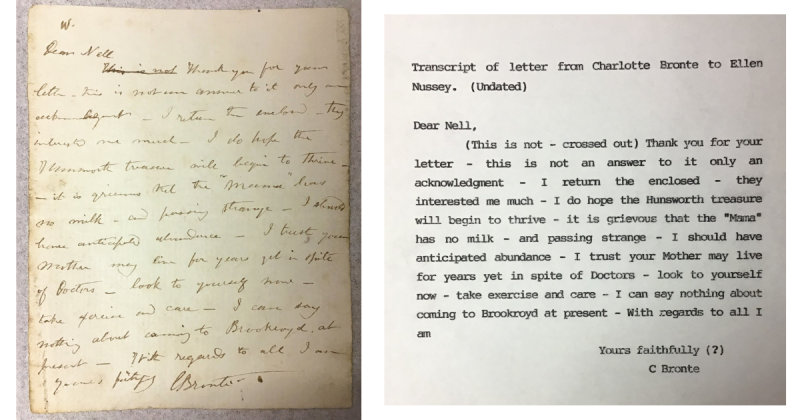
Charlotte Bronte (1816-55), MOR/BRO/1
A letter from Charlotte to her friend Ellen Nussey, dated c. October 1851. It mentions a family cow and the dangers of doctors!
Donated by Prebendary Hedgeland, Honorary Librarian 1882 – 1889.
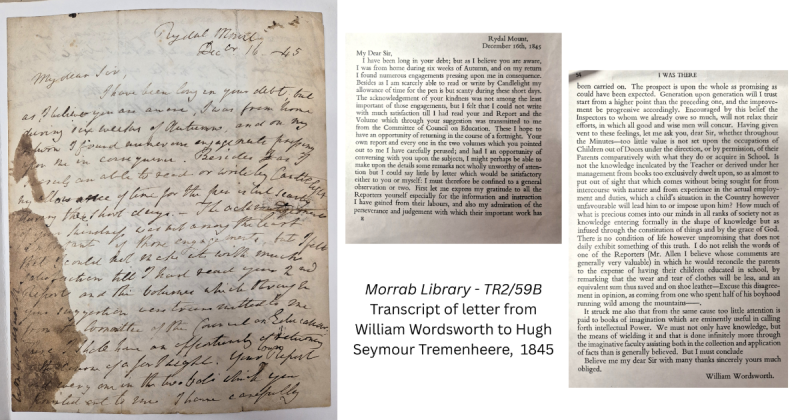
William Wordsworth (1770 – 1850): Letter to Hugh Seymour Tremenheere, 16th December, 1845 TR2/59B
As well as belonging to a distinguished Cornish family, Tremenheere (1804-1903) was an academic, barrister and worked as an inspector of both mines and schools. It is in the latter capacity that Wordsworth writes to him to suggest that “Knowledge inculcated by the Teacher or derived under her management from books” may be “too exclusively dwelt upon, so as almost to put of sight that which comes without being sought for from intercourse with nature”. And he goes on to say that “too little attention is paid to books of imagination” for “we must not only have knowledge, but the means of wielding it” which is done “more through the imaginative faculty assisting both in the collection and application of facts than is generally believed”. The importance of the imagination and experiencing the natural world, particularly for children, is ever present in Wordsworth’s oeuvre, and in his own poetic and personal growth as depicted in works like The Prelude.
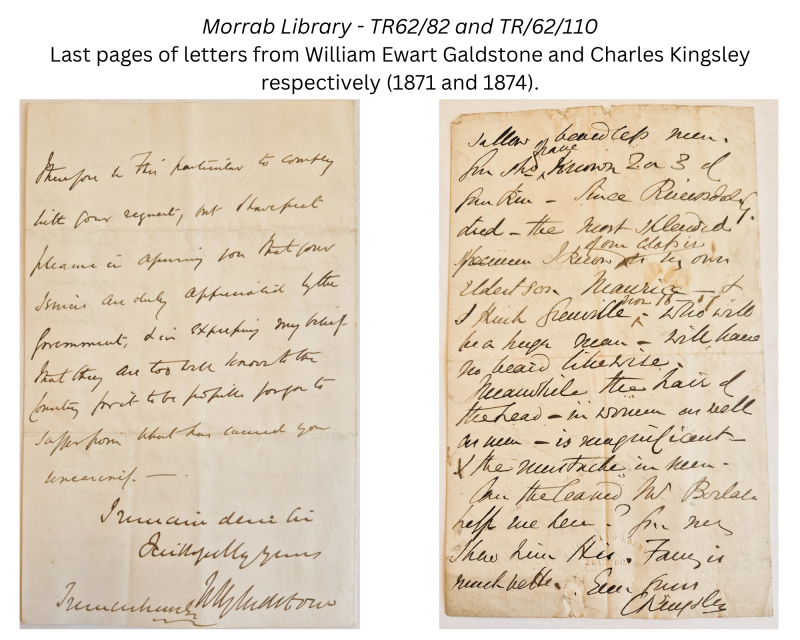
William Ewart Gladstone (1809-1898): Signed letter to Hugh Seymour Tremenheere, TR2/62/82
When appointed a CB (Companion of the Most Honorable Order of the Bath) in 1871, Tremenheere wrote to the Prime Minister to complain that the mere title of ‘Inspector of Mines’ in the official announcement did not fully recognise the extent of his public service. Gladstone signed the reply to Tremenheere, confirming the oversight could not be altered, while acknowledging that his public services were duly appreciated by the Government and also, he thought, recognised more widely.
Charles Kingsley (1819 to 1875): Letter to Hugh Seymour Tremenheere, TR2/62/110
The year before his death in 1875, whilst Canon of Westminster, the Devon author Charles Kingsley (Water Babies and Westward Ho!) wrote to Tremenheere, praising the latter’s cousin, William Copeland Borlase (1848 – 1899), on his book on Cornish tin. Kingsley apologises for his bad hand writing – attributed to whitlow on his middle finger!
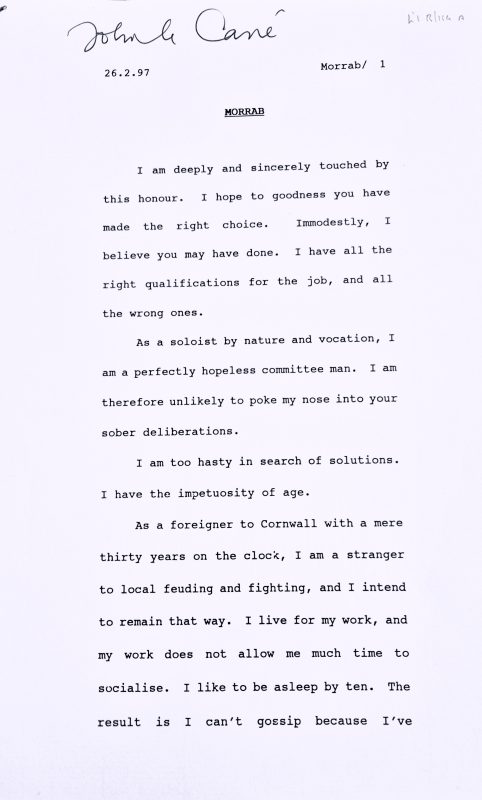
John le Carré (1931-2020): signed text of his inauguration speech when becoming President of the Morrab Library, 1997, LIB/114
David Cornwell, better known by his pen name John le Carré, was a passionate supporter and friend of Morrab Library for many years. As well as holding the role of President from 1997-2002, he later continued for many years as our Patron. His relationship with the Library stretched even further back to the 1970’s. On the occasion of his taking on the role of President of the library in February 1992, Mr le Carré made a charming and insightful speech, providing insight into his own life as well as his obvious love for the Morrab. A full text of the speech can be found John Le Carre President speech 1997.
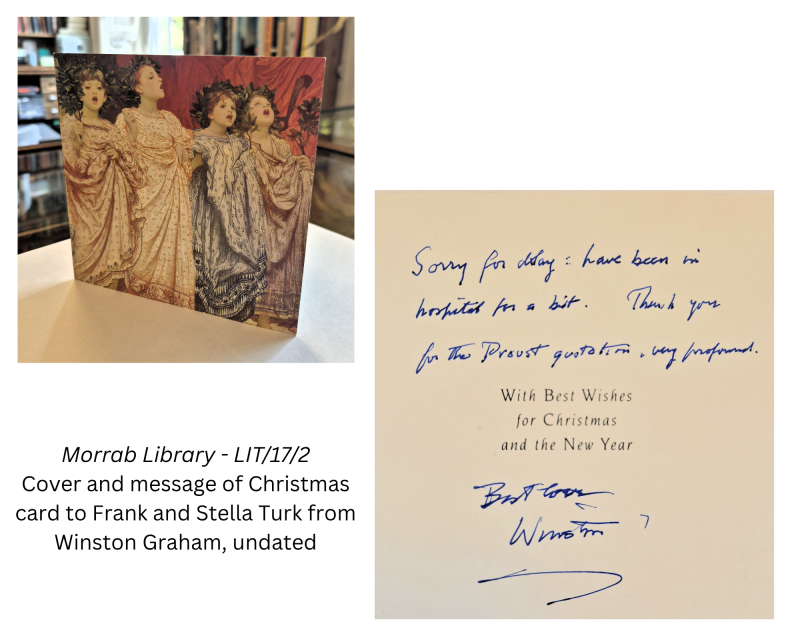
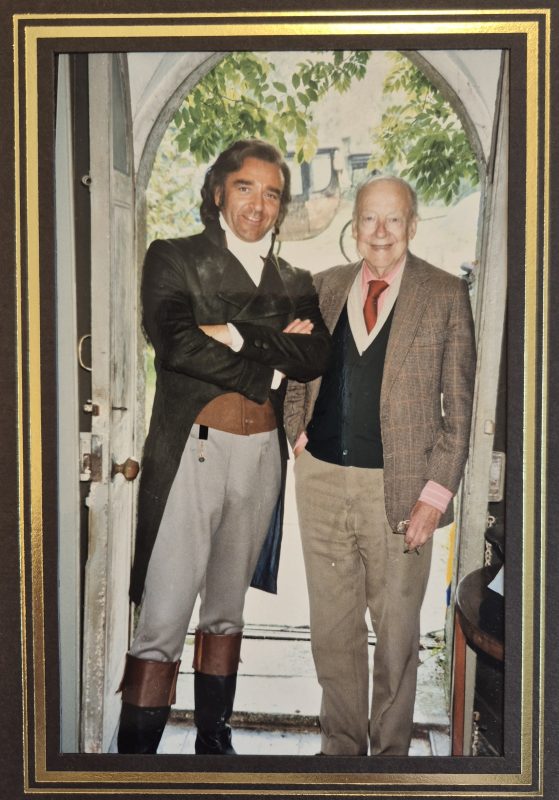
Winston Graham (1908-2003): Christmas card to friends, undated, LIT/17/2
Winston Graham is best known for his Poldark series of historical novels set in Cornwall, though he also wrote numerous other works, including contemporary thrillers, period novels, short stories, non-fiction and plays. He was great friends with Stella (1925 – 2017) and Frank (1911-1996) Turk, renowned naturalists and scientists, and members of the library. This Christmas card from Mr. Graham is to the Turks. We’ve also included a photograph sent to the Turks showing Mr Graham alongside the actor John Bowe, who took on the role of Poldark for television in 1996.