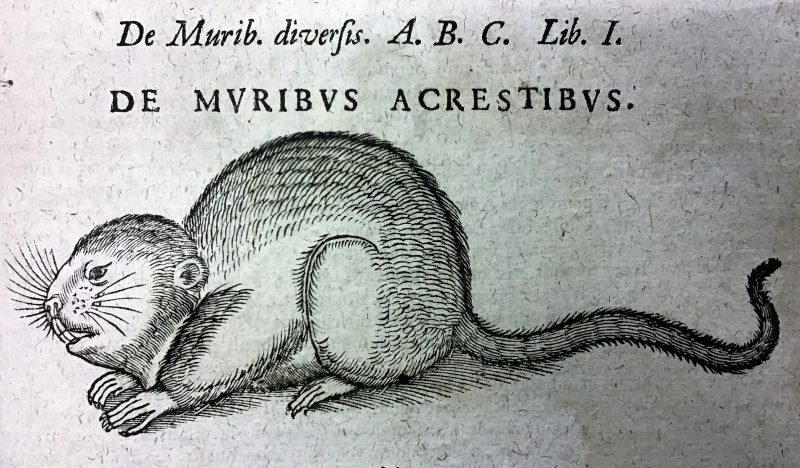
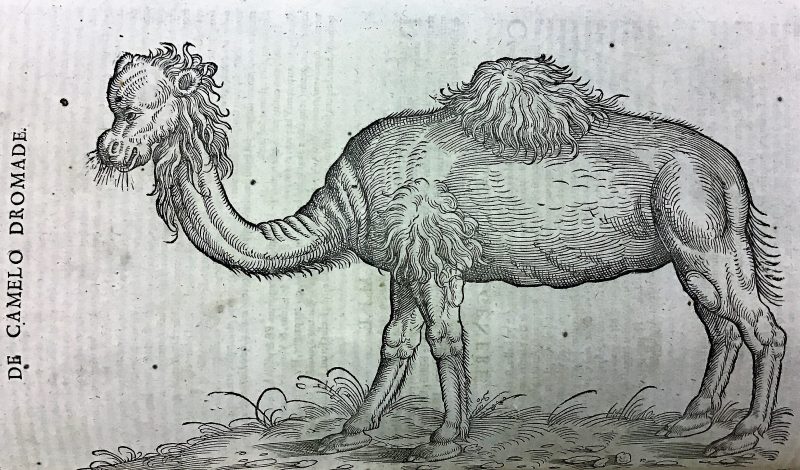
The third display in our new exhibition case on the first floor takes you back to the 17th century, and a very special natural history book…
Conrad Gesner (1516–1565), Historia Animalium, 2nd edition, 1617-1620. Volumes 1 and 2. (E596)
This large volume comprises two of a set of five written by Swiss naturalist Conrad Gesner. Our library holds later editions of Volumes I and II, published between 1617 and 1620, the originals were published between 1551 and 1558. Through these books, Gesner became the first naturalist to attempt to describe all the known animals (and some unknown) of the world, even though he would not have seen the majority of them in the flesh.
Born in Zurich in 1516, Gesner was one of many children, and was sent to spend his childhood in the care of a grand-uncle, where Gesner’s keen interest in natural history began. He was awarded a scholarship to study in Bourges University in France, in 1533, later taught Greek in Lausanne, and then Aristotelian philosophy back in Zurich, where he spent much of the remainder of his life.
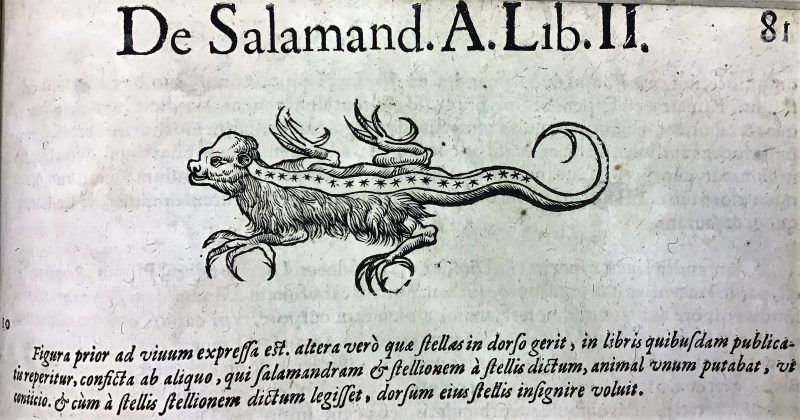
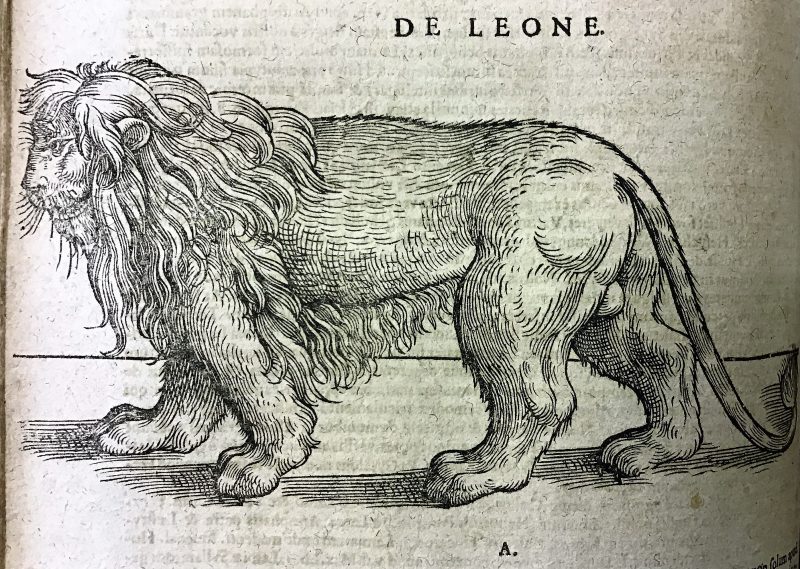
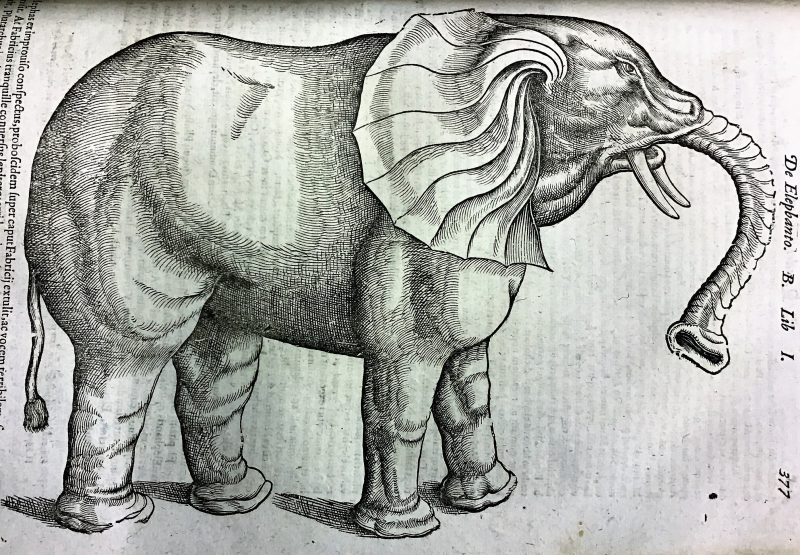
Gesner could be described as an ‘armchair naturalist’, working primarily from his study and acquiring his knowledge from reading and correspondence, as well as with actual animals and animal specimens. He used the literature of early naturalists such as Pliny and Aristotle for many descriptions, and significantly, he tried to gather as much physical evidence as he could by using traveller’s descriptions and specimens. Gesner amassed such a collection of zoological specimens he created a museum in house for them. Despite his best efforts for accuracy, his methodology saw a few ‘interesting’ descriptions and illustrations of animals, including a unicorn and even a hydra.
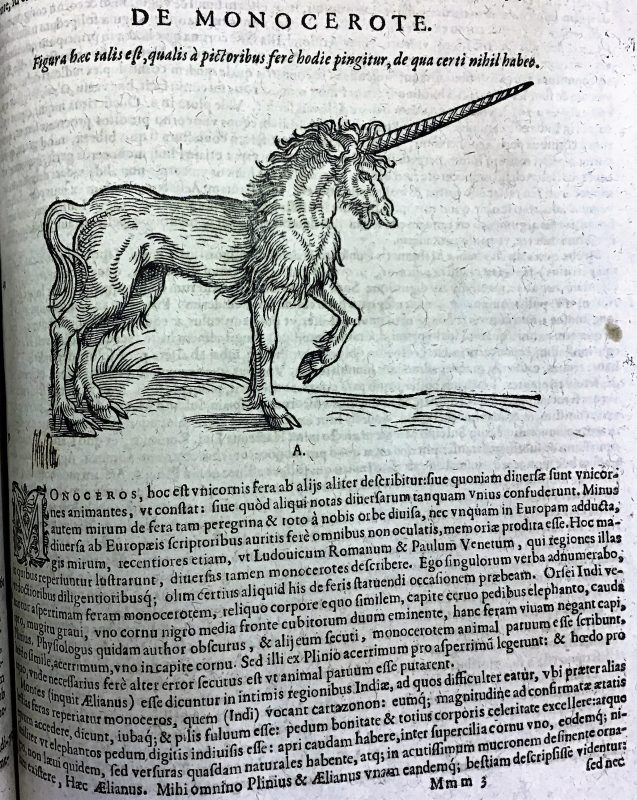
The writing of Historia Animalium proved a monumental task, comprising more than 4,500 pages. The first two volumes describe mammals, the third birds, the fourth aquatic mammals, and the fifth, published posthumously, describes serpents. It was published in the two recognised scientific languages of the day – Latin and Greek.
Gesner’s work was groundbreaking and forged a new path in scientific description. Each species in his work is described in great detail, broken down into eight topics, including all the known names of the animal in living and dead languages, the animal’s physical description, geographical range, uses in medicine, and even any mentions in history and literature. Most animals have an accompanying woodcut to illustrate them.
Sadly, Conrad Gesner was to die from the plague at the age of just 49. He left an important legacy to our understanding of the natural world and scientific research.