by Lisa Di Tommaso | Dec 14, 2021 | Blog
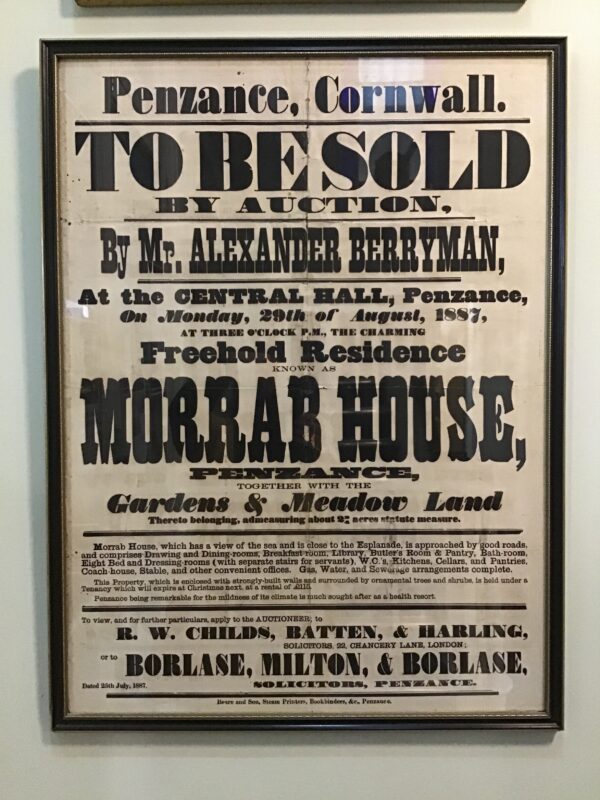
Among the many fascinating items displayed inside the Morrab Library is a bill of sale dated 1887, detailing the accommodation offered at Morrab House. Some of the rooms and stairways are easy to identify, some not, and there seems to have been a certain amount of double counting with regard to bed and dressing rooms… but hey, that’s the property business.
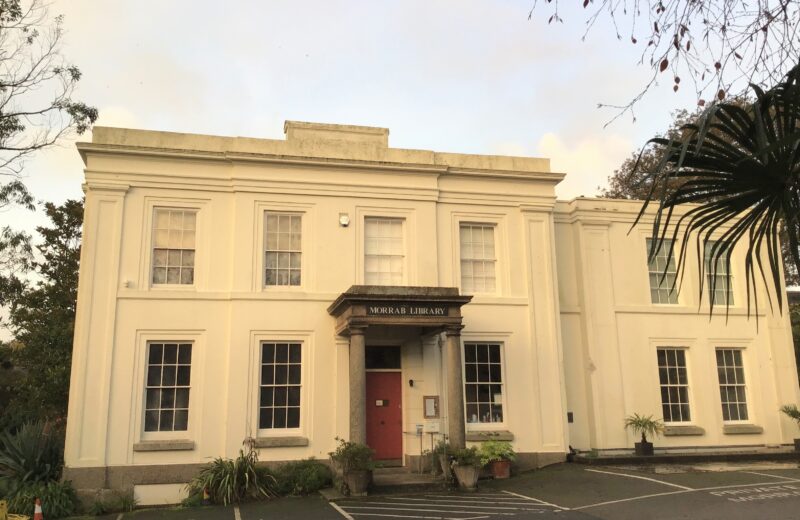
This was the building and land that would later be purchased by Penzance Town Council, keen to establish a garden for the pleasure of residents and the better class of tourist – and in the process acquiring the house, more or less by accident.
The original owner, Samuel Pidwell, had been a notable man. Educated at Oxford, in his youth he had made an early ascent – the 17th – of Mont Blanc. Back in Penzance, he married his cousin Ann Batten. The couple, two children (four more would follow later), Ann’s sister and four servants built themselves a brand new house in Morrab Fields, with a clear view out into the Bay and westwards to Penlee Point. Samuel Pidwell, although describing himself as a brewer, had considerable investments in mining. Before his death in 1854, aged only 46, he served twice as mayor, and was prominent in the Royal Geological Society of Cornwall.
Later, the house was owned by Charles Ross. 150 years on, he is known principally for the bridge that still bears his name, and his supporters would point to the development of Morrab Road as further evidence of his goodwill and forward thinking. But in his own time, Charles Ross had other claims to fame: as the developer of Newlyn harbour, thereafter as the Conservative MP for St Ives constituency, and finally – in 1896 – for misjudgements that led to the spectacular collapse of the Batten, Carne and Carne Bank.
And so the Corporation acquired – at a cost of £3,120 – a fine building and surrounding land. The Town Council enthusiastically set about developing the grounds, but decided that the house should be leased out. The YMCA – at this date, identified with education and the promotion of wholesome living rather than housing provision – was the only formal bidder. “It is hardly likely that a better tenant will come forward,” the Cornish Telegraph suggested, while acknowledging that the Penzance Library – then housed in the Public Buildings, now St John’s Hall – might still be on the lookout for a new home. “We shall see,” the newspaper added darkly, “what we shall see.” Sure enough, a bid from the Library arrived in due course, and although their offer was almost identical to the YMCA’s, it was the Library’s bid that was accepted.
Not everyone, however, was happy with the decision. There were objections about carriages driving through the Gardens (YMCA clients would presumably have arrived on foot or bicycle), and the perceived exclusiveness of the Library. A letter to the Cornish Telegraph later referred to “the ‘class’ legislation which installed a lot of wealthy people in Morrab House.
The Library moved to its new premises in August 1889. The Cornishman reported that “a number of members seemed unwilling to say goodbye” to the old St John’s Hall rooms, and “lingered an hour after closing time.” Anxiety about fire from theatrical shows had prompted their move, and this was not left entirely behind. On the fine September evening when an evening illumination provided a finale for the official opening of the new Gardens, Morrab House remained “shrouded in darkness, the one dismal spot” on account of the Library staff, and “that haunting dread which has driven them from their old home [and] seems to hang over them still.”
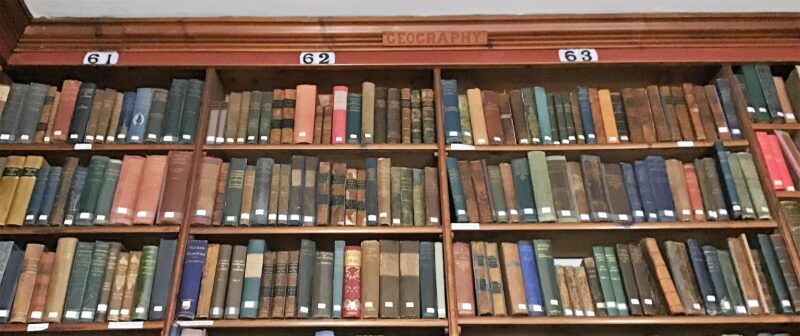
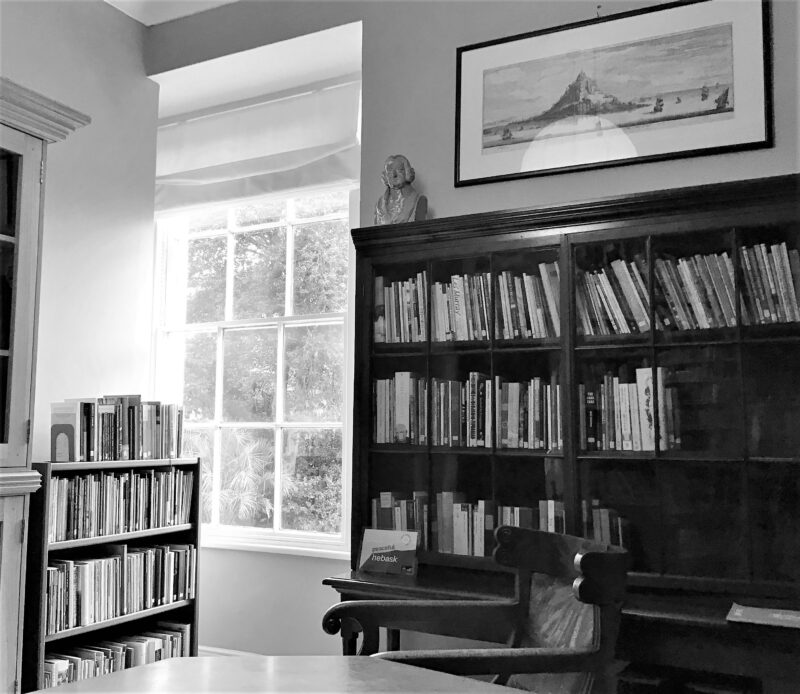
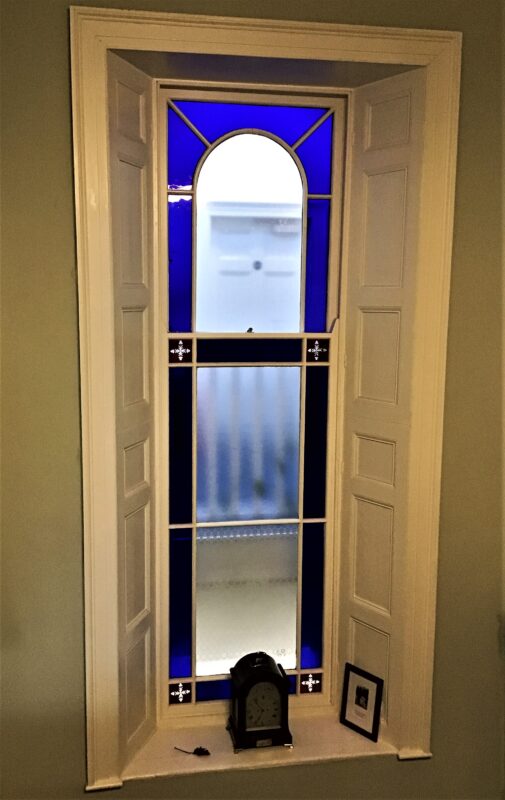
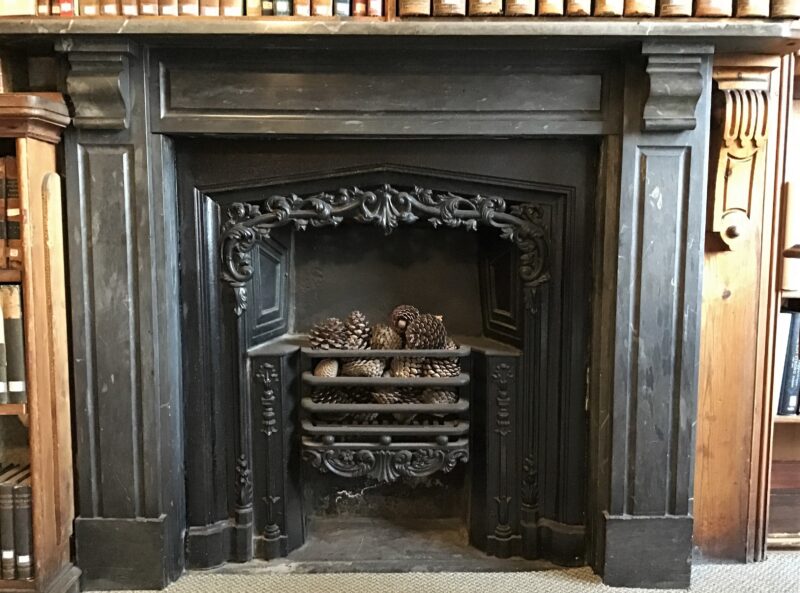
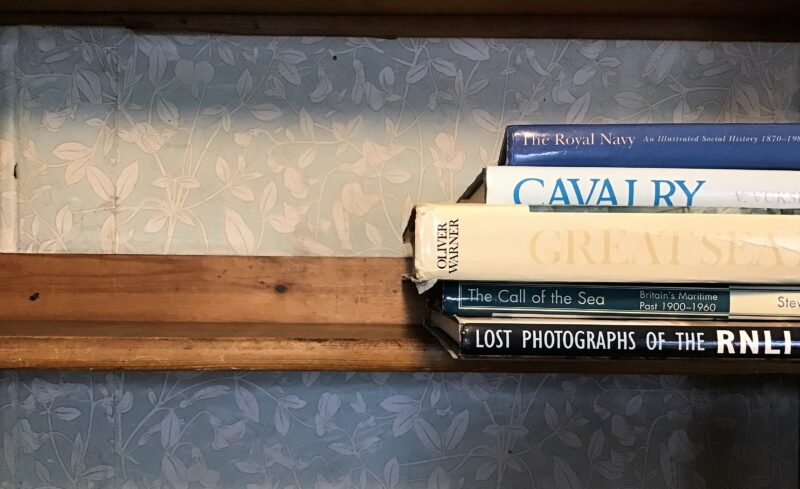
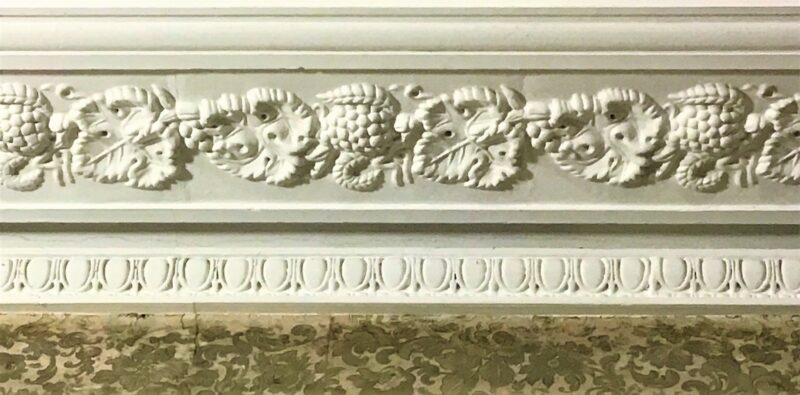
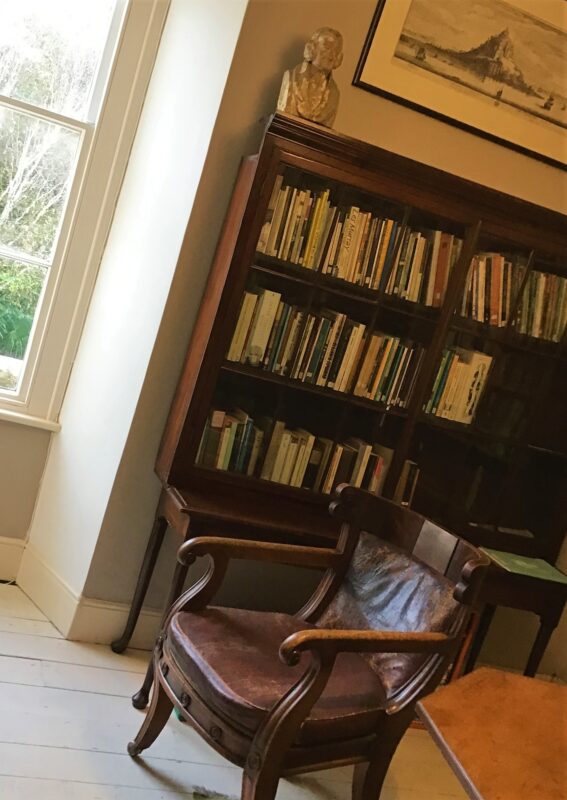
Despite this gloom, floor to ceiling shelves were constructed in most of the rooms. Most of these survive today, as do many of the original fittings throughout the house. You can still glimpse some of the Pidwell’s wallpaper on the walls behind the shelves, admire the marble fireplaces and the rose cornices on the ceiling, and still feel as though you are sitting in a beautiful family home.
But the real problem at the spacious new premises in 1889 was that the rooms had to be filled. William Bolitho of Ponsandane came forward with a substantial bequest, to be spent on books costing at least two guineas each. Other major bequests and donations followed, perhaps the most significant donor – certainly in terms of volume – being the 1911 bequest of Prebendary Philip Hedgeland, Vicar of St Mary’s Church. Pick books from the shelves in any room – science, literature, classical or modern languages – and you are likely to find that they once belonged to him.
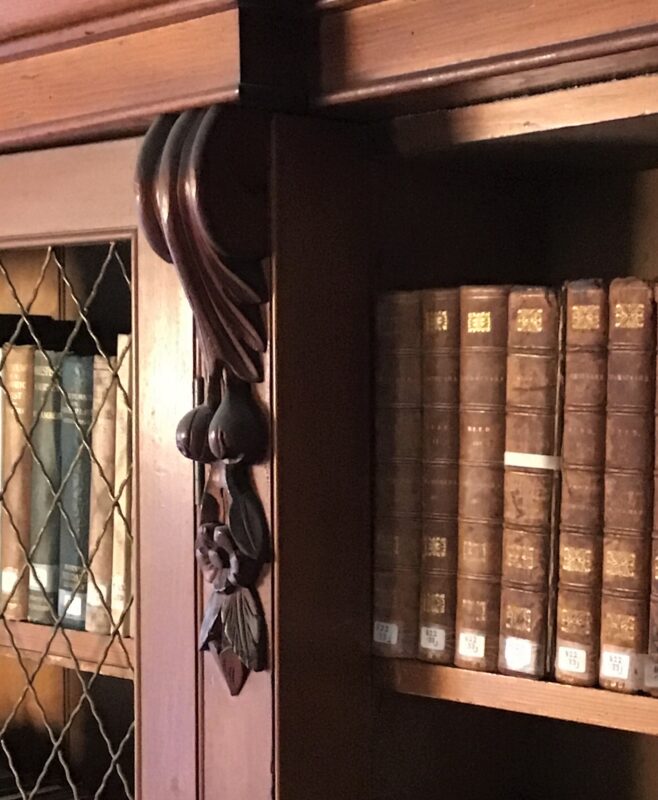
Since then, the Library has certainly had no problem filling its shelves – and although various changes have been made to the building, the original parts remain very much the same as they were in 1889. Lights and other fittings have been updated as times have changed, carpets have been laid (and taken back up again to reveal the wooden floors), wallpaper has been pasted on (and painted over) – and the books have migrated from shelf to shelf and from room to room; but Morrab Library’s quintessential essence remains. Even the major extension to the building in 2013, now housing our art room and Photographic Archive, served to only enhance this remarkable space: Samuel Pidwell’s Morrab House of 1841.
Perhaps the best way to end this blog is to quote the quintessential local author Arthur Quiller Couch:
‘There are hundreds of bigger and finer libraries, but few have a pleasanter tradition, and not one is so beautifully placed. Can a bookish man imagine anything more delightful than a library put together by the taste and care of generations of scholars and students, and set in a garden?’
We think not, Q; …we think not.
Linda Camidge
December 2021
by Lisa Di Tommaso | Oct 22, 2021 | Blog
Here’s a new blog from another of our incredibly talented library members, Karen Taylor, who has just published her latest novel – a thriller!
Penzance is the inspiration for my new thriller Fairest Creatures. And the Morrab Library is where I researched, wrote, and edited so much of it.
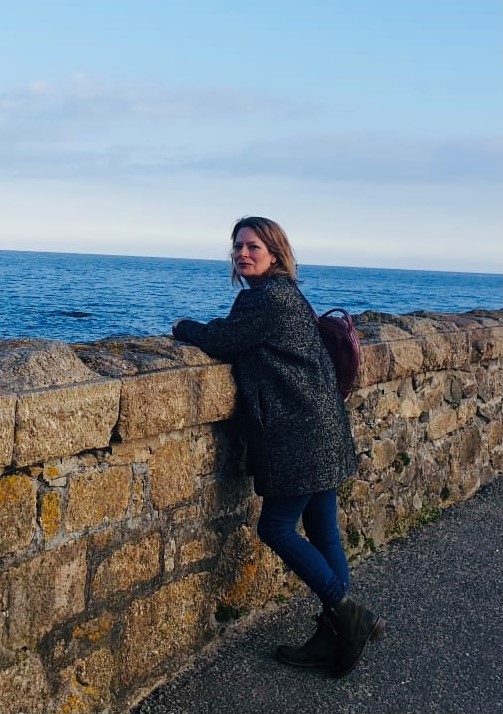
One of the things I learnt on the Creative Writing MA course I went on at the University of East Anglia was how place can be a character. I hope that this comes through in my writing. So many of my ideas were formed on early morning jogs by the sea – and later turned into prose and plot as I hit the keys in my Penzance apartment or in the Literature Room at The Morrab. The library gets a key scene in Dark Arts, the Crime Fiction book I wrote at UEA as my dissertation. But there are so many other places that Cornish readers will recognise in Fairest Creatures – from the Jubilee Pool café, Turks Head and Admiral Benbow to the small, terraced houses lining Bread Street and the panoramic Gurnard’s Head promontory.
Another key inspiration is the art world, so much a part of Cornwall. Although Fairest Creatures is about a serial killer — this is no ordinary predator. He’s someone more interested in wielding a paint brush than a knife. His obsession with the preservation of beauty is his driving force.
I would say that writing the book was one of the easiest parts. It’s a cliché, but once you get into a story and its characters the book almost writes itself. And I had the time. I came up the with the idea in February 2020 on a stormy night in Penzance. I sent the first pages off to the Crime Writers’ Association Debut Dagger competition and, within months, I had been longlisted for the prize, just after the shutters came down on life as we knew it. The first Lockdown. Keys and captivity feature in the book; being locked in my house made writing one of
my only escapes. But all things pass. Restrictions eased, my book found a publisher and I found the perfect local artist to illustrate my cover.
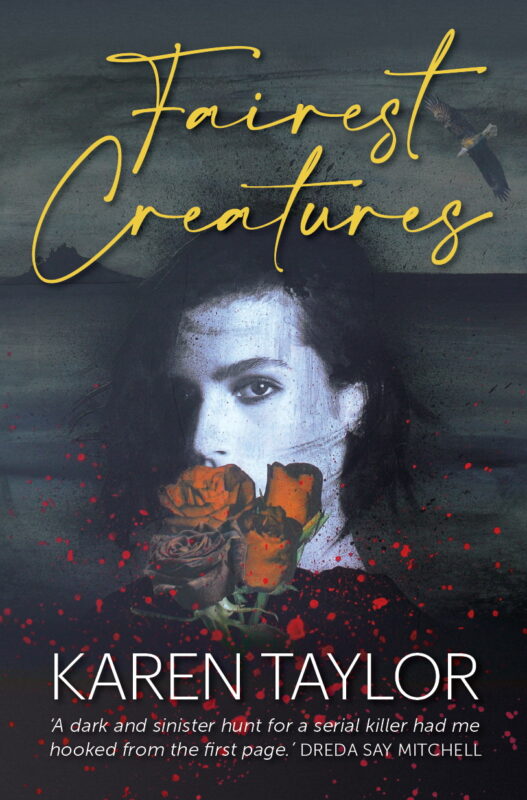
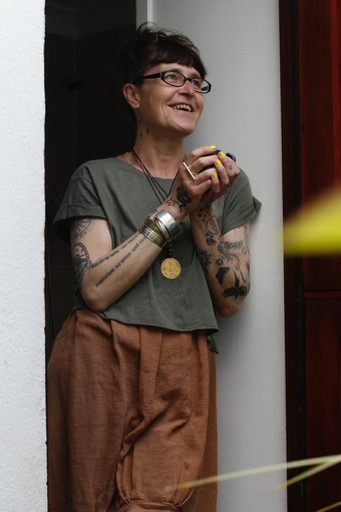 I knew that the right cover was crucial. My publisher and I had gone through 100s of stock photographs, and we couldn’t agree on any. And then in June this year I went to the Penzance Studios exhibition and discovered Janine Wing. Or, rather, one of her striking portraits caught my eye. The intensity of the look and the mystical style was perfect for a book about art and unknown and sinister forces. Janine agreed to create a new portrait reflecting the book’s central themes.
I have written for a living since my early twenties, as a journalist and editor. But Fairest Creatures realises a lifetime ambition to be a published author. It seemed only right that I would launch the book in Penzance and at the best Library in the whole world.
Fairest Creatures is available to borrow at the library and to buy at independent and major book sellers.
by Lisa Di Tommaso | Oct 7, 2021 | Blog
The 6th October is National Poetry Day and as Morrab Library has a close affinity to poetry we felt we should celebrate this with a special blog from one of our library members…
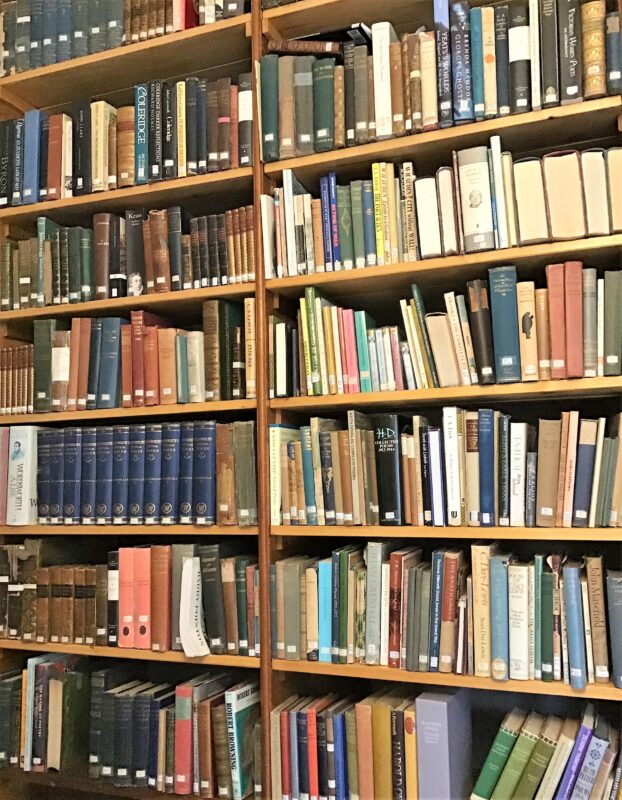
You cannot be a member of the library for very long before you notice a whole room dedicated to poetry, an extensive (and growing!) collection of poetry itself alongside biographies of poets. Furthermore there are many poets among the members and every fortnight a poetry reading group meets in Gods’ room.
Here are two poems which celebrate libraries…
My First Memory (of Librarians)
Nikki Giovanni, 1943 –
This is my first memory:
A big room with heavy wooden tables that sat on a creaky wood floor
A line of green shades—bankers’ lights—down the center
Heavy oak chairs that were too low or maybe I was simply too short
For me to sit in and read
So my first book was always big

In the foyer up four steps a semi-circle desk presided
To the left side the card catalogue
On the right newspapers draped over what looked like a quilt rack
Magazines face out from the wall

The welcoming smile of my librarian
The anticipation in my heart
All those books—another world—just waiting
At my fingertips.
And here are two modest haiku about our own library from the author of this blog:
Sixty thousand books
Rooms of calm
surrounded by Palms, magnolias
In twenty eighteen
He opened the Morrab door
To heaven on earth
by Lisa Di Tommaso | Sep 11, 2021 | Blog
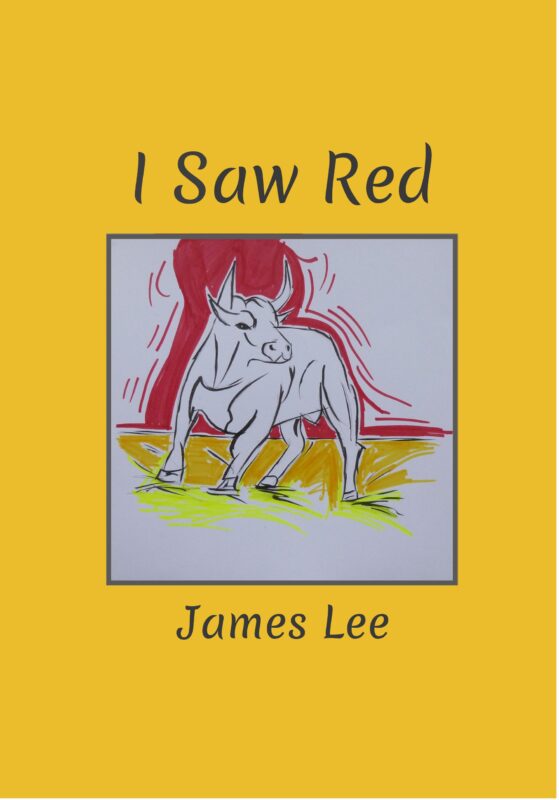
The latest novel by Morrab Library member, James Lee, was published earlier this month. I Saw Red is a retelling of the story of The Minotaur set in modern-day Spain. In this blogpost, James explains what inspired him to write this book, and reflects on why the wisdom within Greek myths is still as relevant today as it was thousands of years ago.
———–
Do you know the story of The Minotaur? The one about the monstrous creature who is conceived out of Queen Pasiphae’s lust for a beautiful white bull? And about how King Minos locks The Minotaur in a labyrinth? And then, with the help of his girlfriend, the Greek hero, Theseus, bravely confronts this terrifying creature, before disappearing off on another adventure (typical!), leaving Ariadne to while away the years with Dionysus instead?
The plot is so simple that most of us are taught it as children, but, like so many Greek myths, the story of The Minotaur is saturated in deeper meanings.
For example, the idea that a woman’s desires can lead to the conception of a monster says so much about men’s fear of female sexuality. And all of us know what it feels like to be imprisoned in a physical or psychological ‘labyrinth’. Also, if he really is such a hero then why does Theseus leave without Ariadne? Is the path of the hero/heroine ultimately a solitary one? And, after going through all that trauma, why would Ariadne hook up with a crazy-wisdom god like Dionysus? Madness!
Once you start to scratch beneath the surface, it becomes apparent that the insights and wisdom in this myth are as relevant today as they were three millennia ago.
But why did I set most of this novel in Madrid? Partly because I lived there during the noughties, so I have strong memories of that time. Also, because of everything that it has witnessed over the years (the Spanish Inquisition, the rise and fall of the Spanish Empire, the Napoleonic invasion, the civil war, the post-Franco burst of creativity etc), Madrid is a highly charged and slightly haunting place. Of course, the bull has an iconic status within Spanish society, so setting a retelling of the story of The Minotaur in Spain makes sense for this reason too.
I hope that you enjoy reading I Saw Red as much as I enjoyed writing it. Digital and paperback versions are now available on Kindle + Amazon.
And if you would like to keep up to date with my thoughts and work as a writer, then feel free to follow my Facebook page @jamesleeauthor
by Lisa Di Tommaso | Aug 21, 2021 | Blog
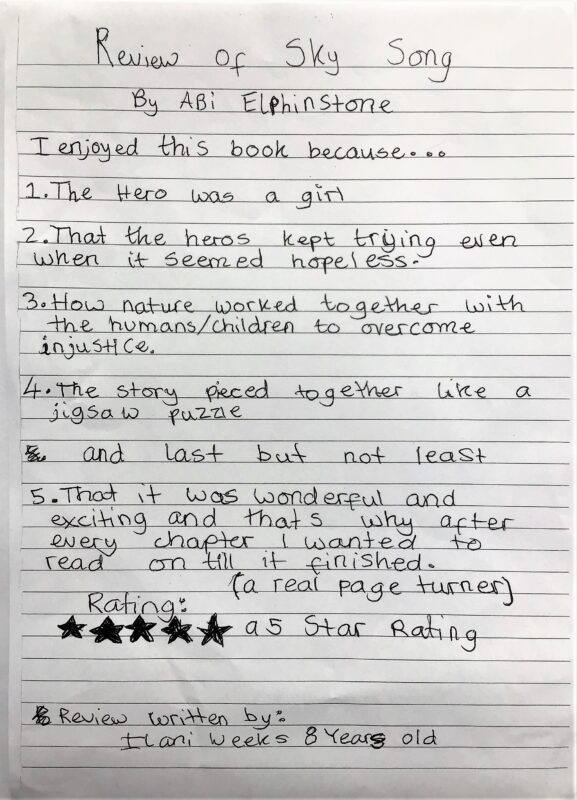
Our latest book review comes from one of our younger (and we must confess, favourite) members. Ilani has recently turned 9, and visits the library regularly to borrow books and ask the library staff challenging questions on all sorts of topics!
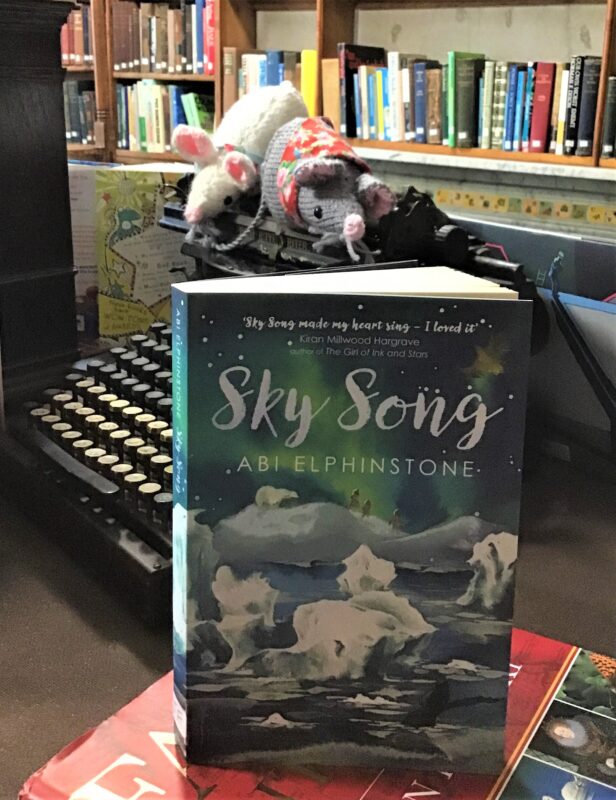
She recently read Abi Elphinstone’s magical book, Sky Song, and sent us a review, which we are delighted to share with you…
Thank you so much Ilani. We have a wonderful selection of children’s books (for all ages!) available to borrow from Morrab Library, so come in and have a look soon.