
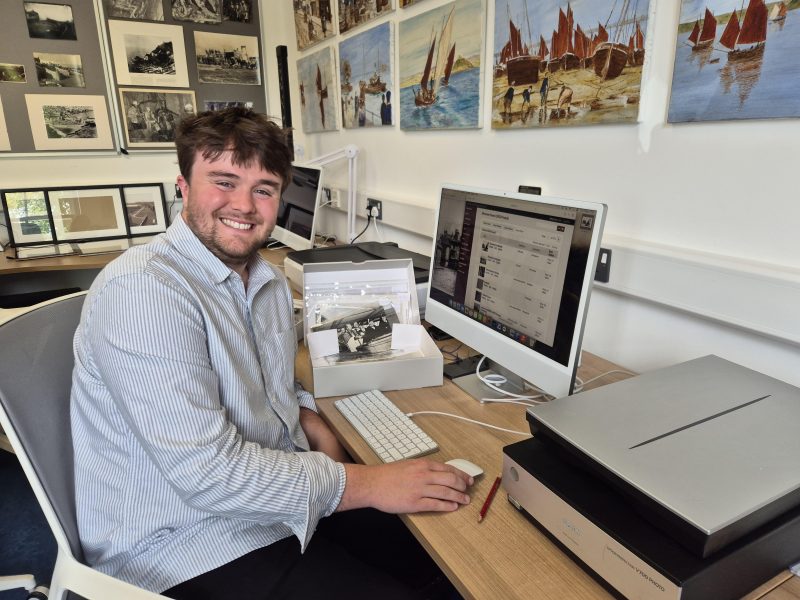
This week, I was looking through some brilliant pictures of the various occupations and livelihoods exhibited within the Morrab Library Photo Archive’s Working Lives book. It inspired me to undertake some research about the working lives of my family in the Isles of Scilly.
Although I was born, raised, and currently live in East Devon, my family heritage is deeply connected to the Isles of Scilly and West Cornwall. When I was born, my mum and dad wanted to honour the family connection to the Isles of Scilly by naming me after my third great-grandfather, Samuel Jenkins Guy.
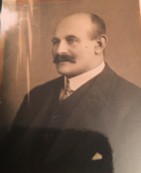
The reason why is apparently we had the same head shape…
A wonderful image of Samuel can be seen below (you can make your own minds up!):
I wanted to take the opportunity to use the library’s photo archive and its vast collection of reference material to further illustrate the working lives of people on the Isles of Scilly during the late 19th and early 20th century.
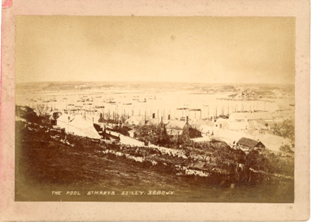
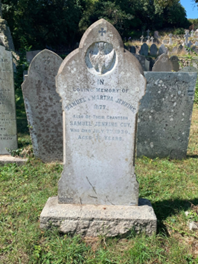
Samuel was born in 1858 on St. Mary’s, Isles of Scilly. He was raised by his grandparents Samuel and Martha Jenkins. He was later entombed with them both after his own death on July 7th 1930. The image below illustrates what Hugh Town, St Mary’s looked like during Samuel’s childhood and early adulthood.
Print of St. Marys, Hugh Town
Now Samuel’s life story has been immortalised by the people of Scilly… but sadly not for the right reasons. In a passage called “Old Sam” in the book, The Cassiterides: My Lovely Islands, Lis Hargreaves described the man as having “The reputation of being the biggest rascal of them all” and that after his death, his ex-wife regarded his burial under an Australian Yew tree as being fitting, as his afterlife would certainly be “down under.”
His reputation derived from ‘a notable career in and out of the local Courts of Justice. The charges were “minor” – like assault- and the magistrates were lenient as Scillonian tradition demanded ‘heavy fines on visiting crooks, leaving the local ones with a criminal record but no lasting charge of rates.’
This blog is not long enough to explore Samuel’s various criminal convictions. Instead, it is looking to understand his working life, and those of his Scillonian counterparts.
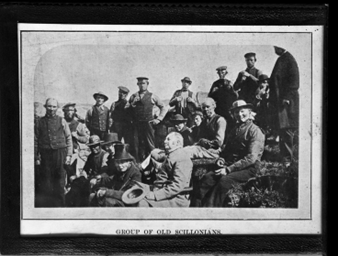
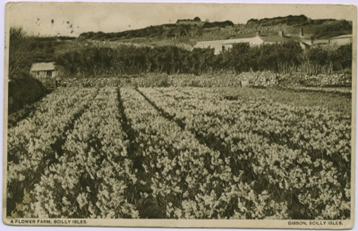
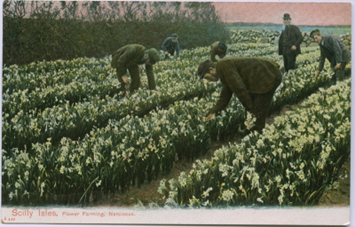
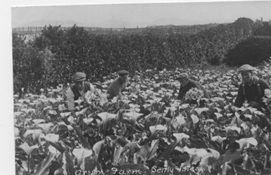
All surviving accounts show that Samuel was an agricultural labourer, which would have seen him work during the seasonal flower industry on the island. Due to the climate of the island, flowers such as cheesewood, speedwells, redclaws, spindle trees, arum lilies, and of course, the famous Isles of Scilly daffodils, all thrived. The collection of photos held by Morrab’s Photo Archive provides a vivid illustration of what the flower industry looked like on the island.
My great, great, great grandfather epitomised the idea of the ‘Economy of Makeshifts.’ This is a theory created by historians King and Tompkins and describes how labourers had to take on additional forms of employment to make up for poor wages.
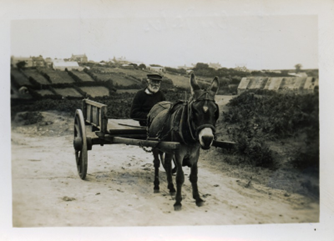
This theory is relevant for the labourers of the Isles of Scilly, as, for survival on the islands, people had to adopt a range of different seasonal occupations to make ends meet. In The Cassiterides it was noted that ‘Sam sold fresh vegetables- sometimes in error on Sundays when he woke up and forgot which day it was and took the cart out of habit round Hugh Town.’
On the Islands, this would have seen people engaging in fishing, shipbuilding, kelp burning, construction, pilot-shipping, and other small-scale occupations, all to make ends meet.
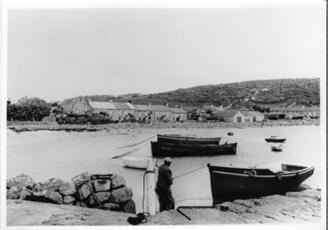
Fishing Boats in harbour
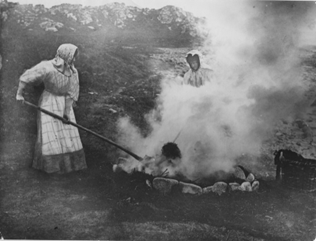
Kelp Burning on Farmland
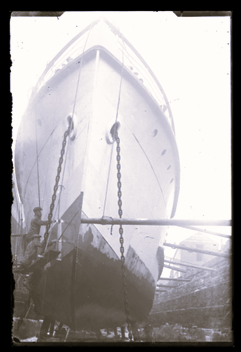
Men working on the hull of the Scillionian
He also demonstrated how dangerous “throwing yourself at any job” can be. It was reported in the Cornishman on June 15th 1905, that:
“On Monday morning whilst Samuel Jemkins Guy was at work in the Carn Thomas School playground, cleaving and blasting stone preparatory to the addition of a new wing to the school, a portion of a charge of dynamite (which had failed to explode with the remainder of the charge fired on Friday) suddenly exploded in the stone on which he was standing, blowing him down…”
“In the Afternoon he was taken on a stretcher to the pier and sent across by the Lyonnness to Penzance, and later he left of the Royal Cornwall Infirmary, Truro.”
After this near-death event, it was noted in the The Cassiterides that Sam then started to believe in the afterlife as “for years he slept by the coffin he’d made ready for his last exit.”
…. Now, with this said, I want to thank my mum and dad for naming me after a man of such an interesting calibre.
Not only have they made it impossible to live up to such a name, but you have greatly inspired my interest in exploring both nefarious sorts and the working lives of our forebearers.
I shall leave you with the beautifully written description from The Cassiterides that states that the present-day generation of Guys “acknowledge Sam as a forebear of the family- rather like an over-size family skeleton in a coffin-shaped box.”
Bibliography
Primary Sources
Cornishman. June 15th ,1905.
Secondary Sources
Bowley, R.L. The Fortunate Islands: The Story of the Isles of Scilly. St. Marys, Isles of Scilly: Bowley Publications LTD, 1990.
Hargreaves, Lisa. The Cassiterides: My Lovely Islands. Truro: Mary’s Walls, 1977.