Blog
Tags: Archeology, Conservation, Books, Cornwall, Archives, History, Collections
Looking for Christmas gifts?
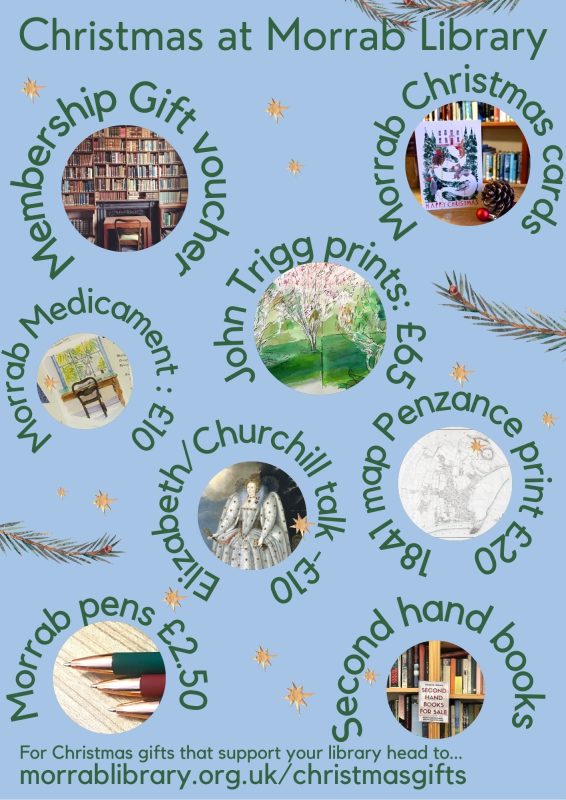
We have a variety of other uniquely ‘Morrab’ gift options which all help to support the work of the library –
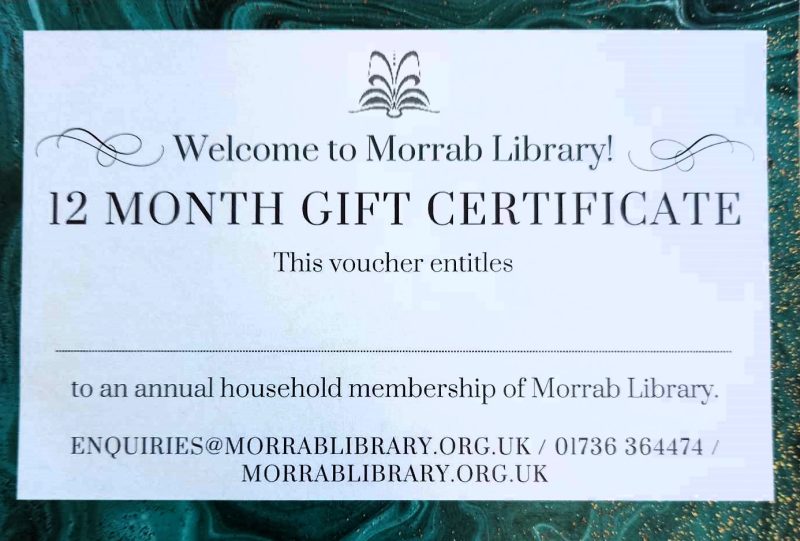 Gift Membership
Share your love of Morrab Library with friends or family – a gift that include access to 70,000 books(!), tranquil work spaces, our marvellous library community and more (£40 for a year’s household membership – we also offer a discounted student membership at £20).
 Morrab Library Christmas Cards
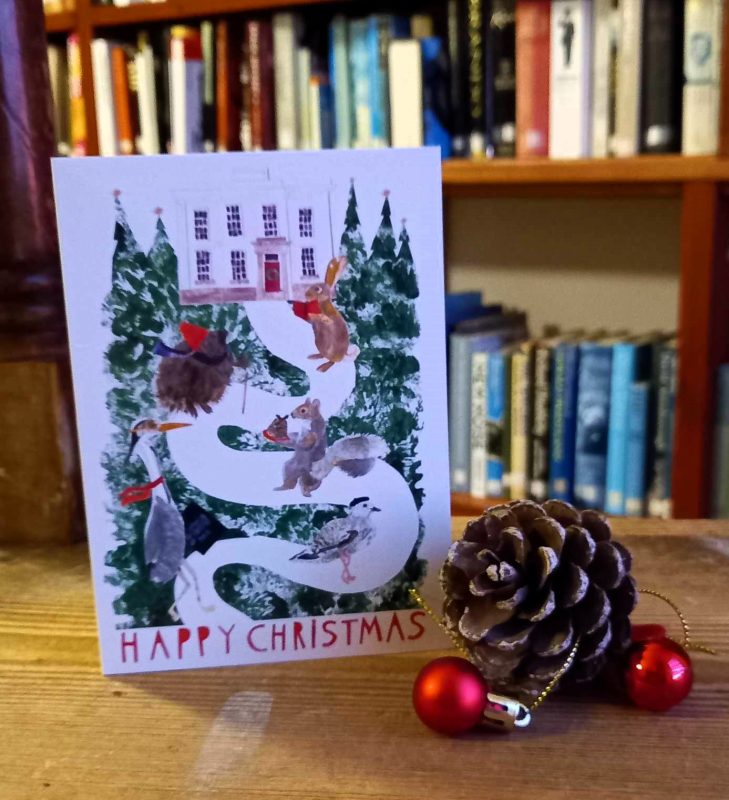
A beautiful design by our own staff member, Harriet-Jade Harrow. £1 each, £2.75 for 3 or £4.75 for a pack of 5.
 John Trigg prints
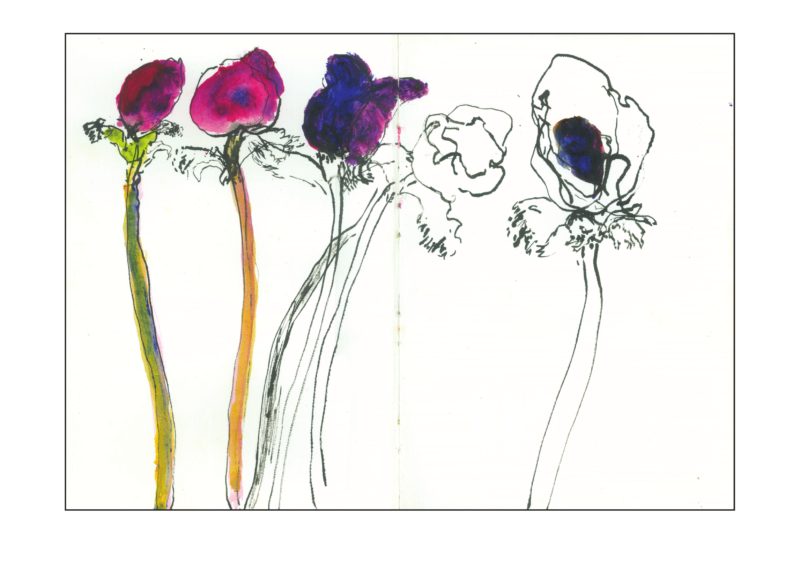
Choose a high quality print from one of twelve beautiful images, taken from the collection of drawing books donated to the library by the artist John Trigg (£65).
 Penzance Map
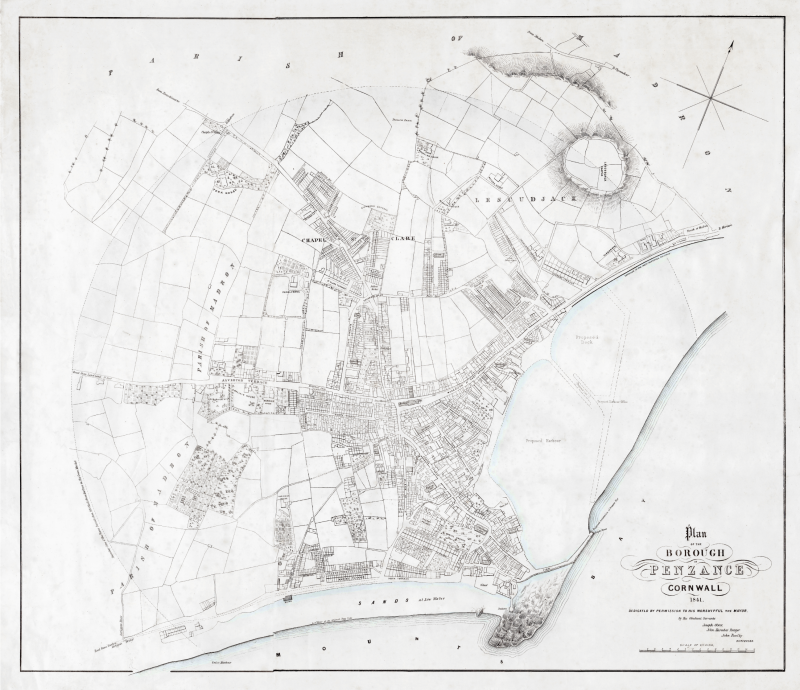
A high quality reproduction of the 1841 map of the Borough of Penzance (£20).
 Second hand books
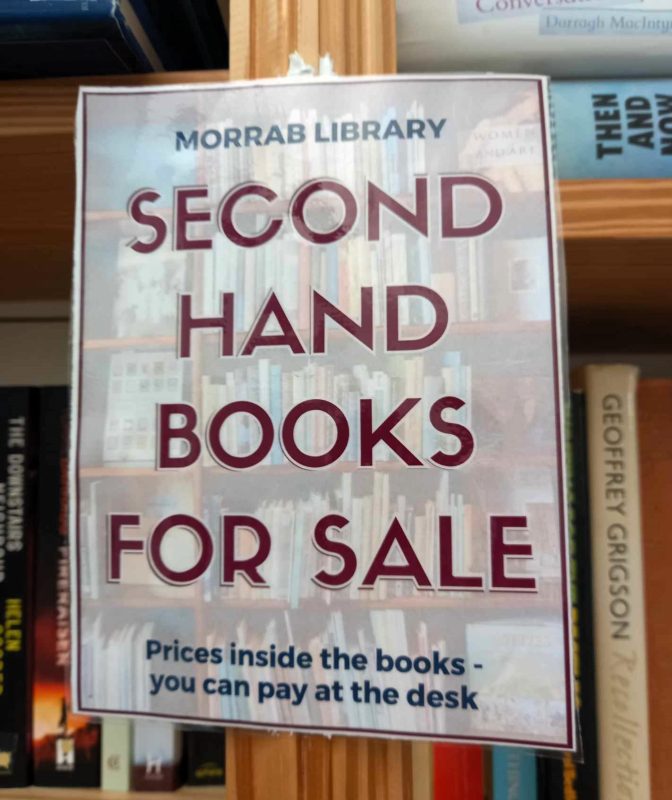
There’s a brilliant, eclectic selection of second-hand books for sale – a perfect Christmas gift for a like-minded book lover.
 Morrab Medicament
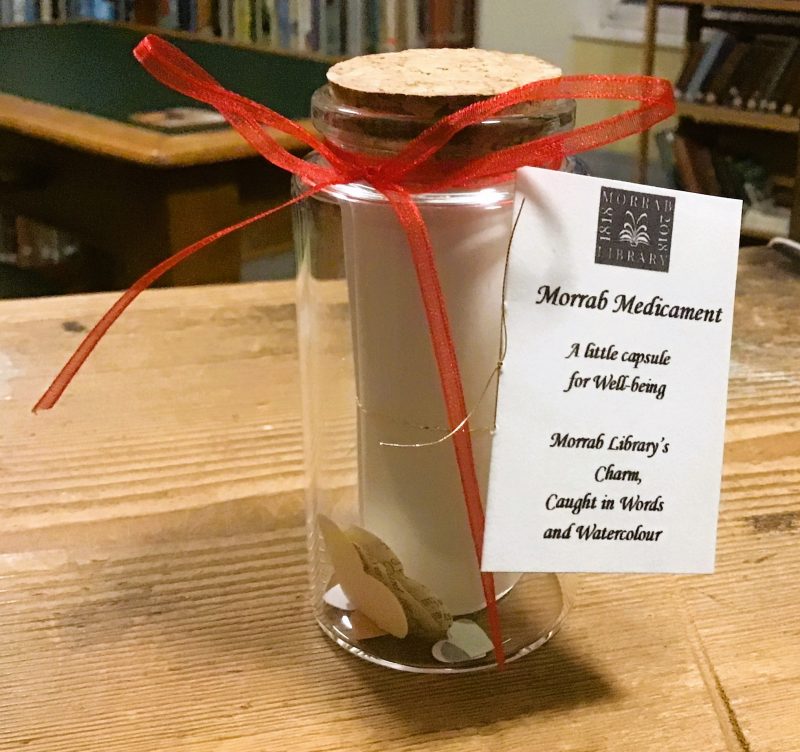
A whimsical creation by members Sue Lewington and Steph Haxton – it’s Morrab Library in a bottle! Each jar contains a library poem, a drawing of a library scene, as well as a charm. Limited edition (£10).
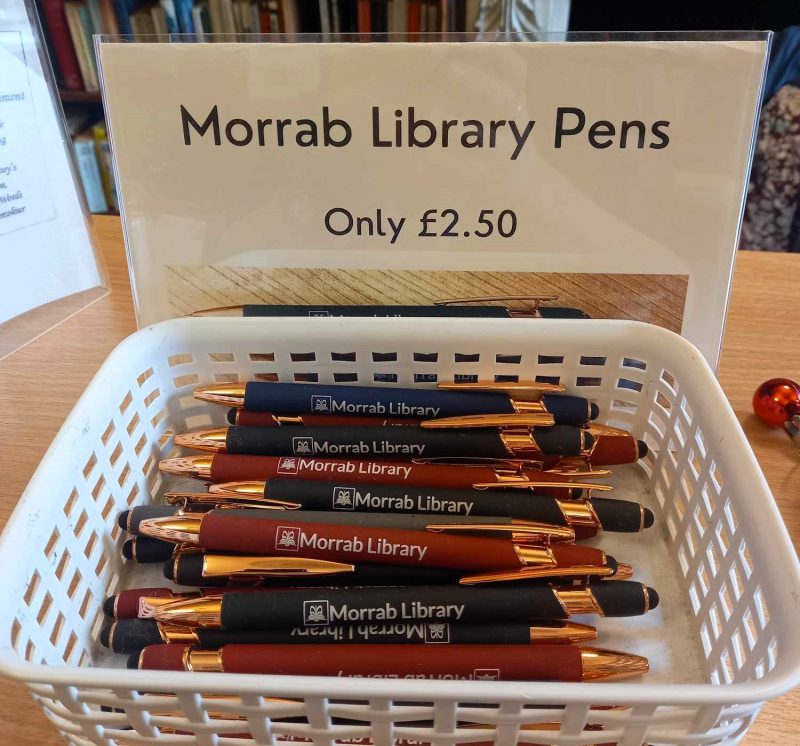 Morrab Library Pens
High quality black ink pens with the library logo and name embossed on it (£2.50).
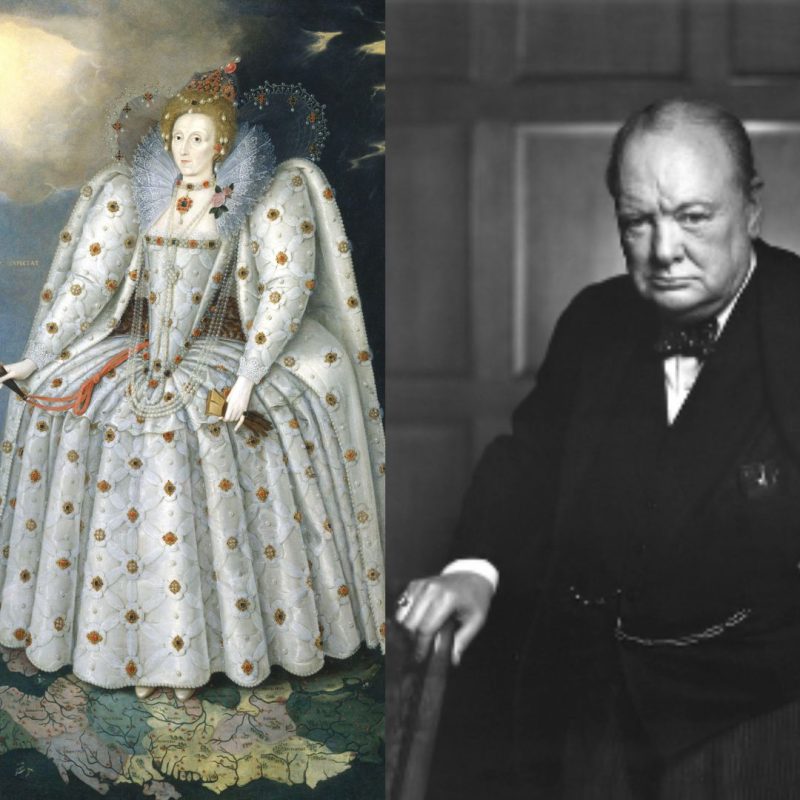 Acorn event with Morrab Library – Elizabeth I and Churchill talk
Tickets are on sale for the next talk by Mark Cottle on Feb 29th. Studies in Leadership – Elizabeth I and Churchill will focus on the life times and similarities of each leader. (£10 from the Acorn Theatre).
Get some Christmas shopping done and support the library at the same time!
Meet our new Artists-in-Residence
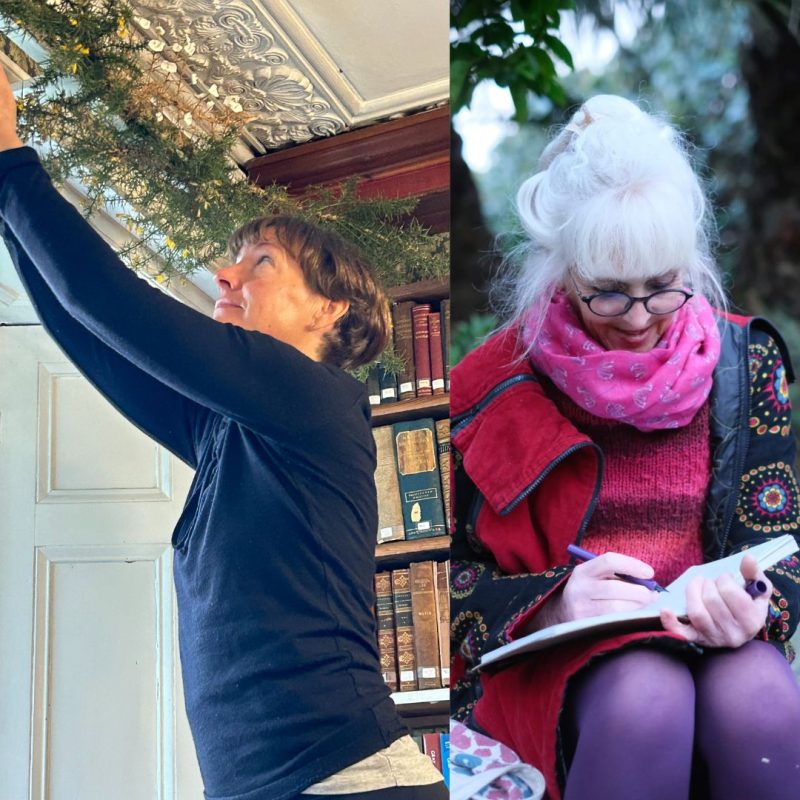
We are delighted to announce that Rebecca Harvey and Lucy Sparrow are our new Artists in Residence from November 2023 into 2024.
Their joint residency is titled “Revealing Morrab Library: Poetry & Porcelain” and will draw from their respective disciplines. Rebecca Harvey is an artist working in porcelain and Lucy Sparrow is a poet. They are both members of The Morrab Library and it was spending time amidst the bookshelves of the library which inspired them to work together. Their creative affinity has manifested in, as Lucy describes, “a collaboration of porcelain and poetry”.
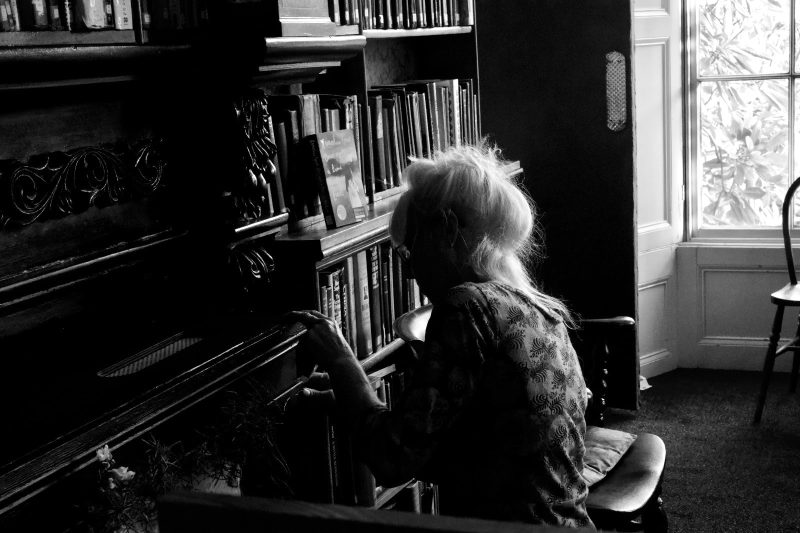
Over a period of time, members and visitors alike will spot installations taking shape and evolving in various unexpected places throughout the building. Work will draw on the themes of the different collections within each room, revealing and illuminating features of the spaces in which they are sited as well as their interplay with the surrounding gardens beyond the windows.
The pair agreed that “Morrab Library is More than Books. Whilst it is an archive of treasures revealing the past it also embraces the contemporary speaking to the future” (italics here are a reference to the Treasures of the Morrab: A Penzance Library That Has More Than Books (2005, p. 31) by Penwith Local History Group).
Through their residency they hope to “to raise awareness within the local community and beyond of the library’s rich diversity of resources and archive”.
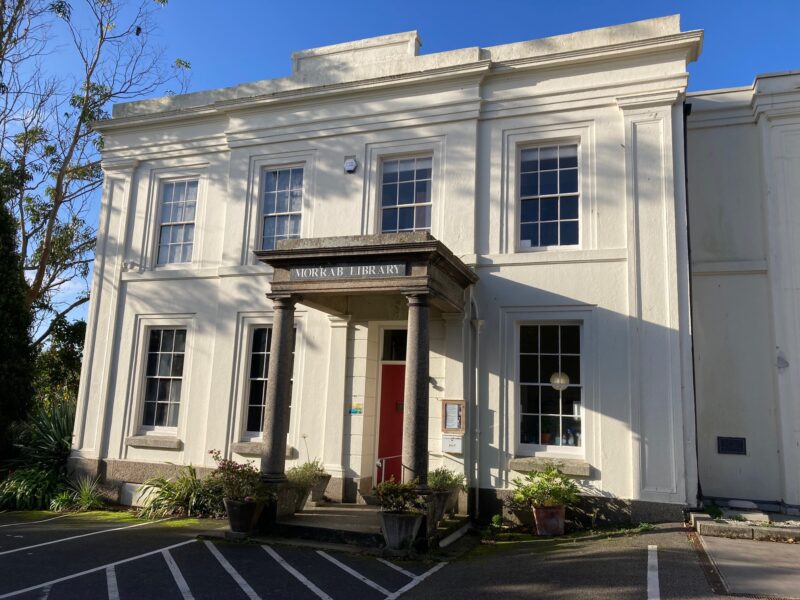
Lucy Sparrow evocatively describes the character of The Morrab:
“Morrab Library and Gardens is such a special place. The gardens are achingly beautiful in Spring and Summer and people picnic or read or just lie on the grass cloud watching. Inside the library rooms steeped in history buzz with members, volunteers and visitors attending workshops, lectures, residencies and exhibitions. Books are browsed, borrowed and bought. Laughter, chatter and silent corners co-exist, there is a warm, quiet energy. Morrab Library is a living library where the past can be preserved, examined and re-evaluated to inform and illuminate the present. This is made achievable by the commitment of the library staff who work tirelessly to keep this wonderful institution accessible and relevant.”
At the moment in the Reading Room (Ground Floor) Lucy’s poem is titled ‘Her Installation’. It is about a mother’s experience of war, loss and survival. She wrote it after attending writing workshops in the Reading Room, coupled with the experience of seeing Rebecca’s porcelain sculptures in her studio.
The installations seek to reveal spaces unseen or overlooked. Rebecca describes the way in which she hopes that their work will draw attention to things that people may not have noticed, “to stop and really look at something and think about the interlinked nature of things and that everything is interwoven”. Lucy adds, “In the history room, barely noticed between and beyond the spines of dictators is a rather ornate fire-place now cold, boarded up, blackened. Here, the energy of grief expressed in poetry hangs, visible, surrounded in the room by strung porcelain sculptures. This simple domestic space with its picture frames on the mantle-piece reveals the hidden history of an individual and yet has wider connotations contextualised by Auschwitz and the Crimea. In this first installation the past is revealed afresh in the present through the window of collaborative contemporary art.”
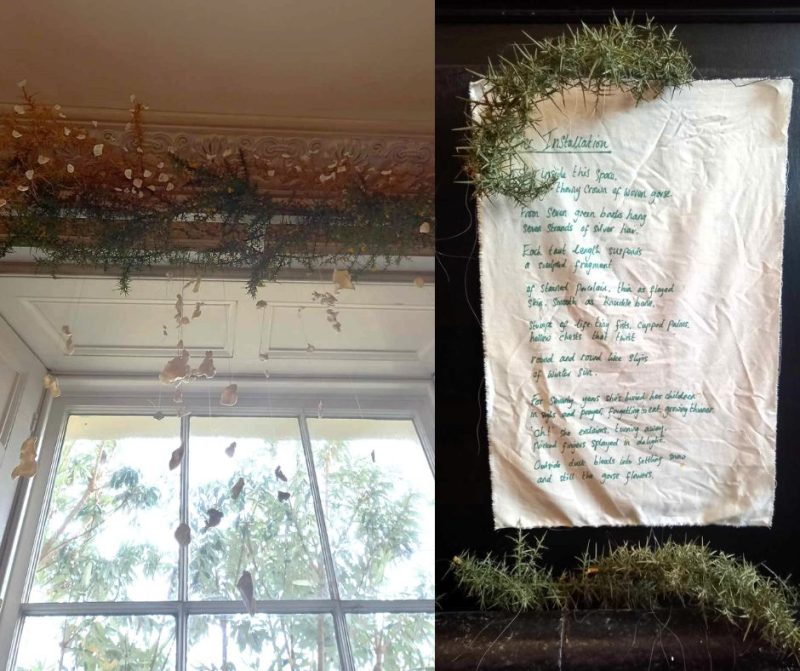
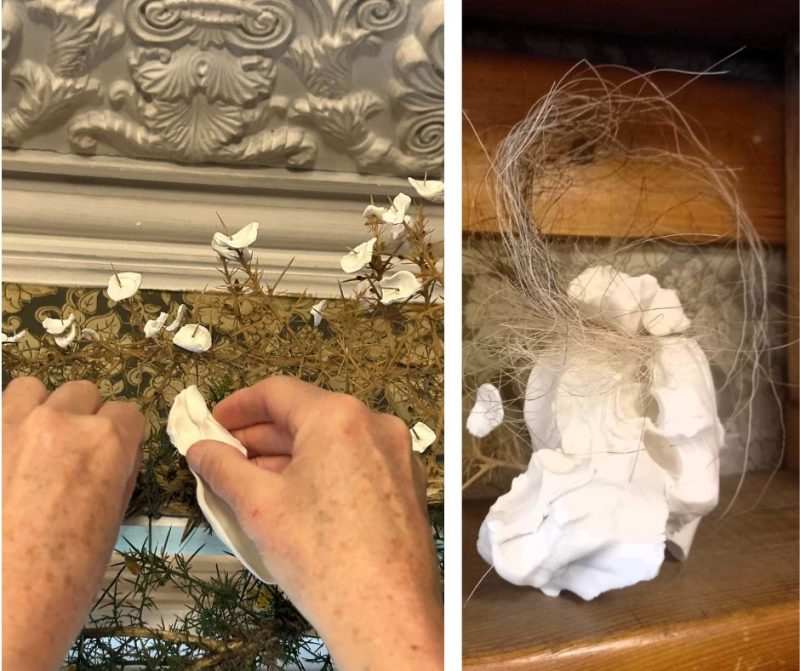
Rebecca’s first piece has been inspired by Lucy’s poem and similarly draws from the collection of books it is held within, without being directly representational. It is titled “Yet the Gorse Flowers”, and is site specific, made from gorse collected over the year, porcelain, local wild clay and horse hair. Suspended in one of the windows of the Reading Room, on the threshold between inside and outside, porcelain petals, skin or bone-like structures catch in the sunlight. The work explores the materiality of porcelain, from raw to fired, translucent to dense. The installation is intentionally a work in progress and will evolve in response to its location throughout the next few weeks.
Rebecca is an alumni of the Royal College of Art working primarily in porcelain and represented by the Belgrave Gallery. A grant from the Arts Council to develop her creative practice first drew her to the Elizabeth Treffry Room, to browse this special collection of books by and about women in Cornwall, donated to The Morrab Library by The Hypatia Trust. The room contains lots of books about Virginia Woolf, as well as beautiful editions of her work, and spending time in this space inspired Rebecca to think about a residency in the library.
Rebecca first visited The Morrab as a child, as part of a regular Sunday walk with her grandfather, through Penlee Park, to Morrab Gardens and on to St Mary’s Church. She has early memories of being tiny here; gazing up at the floor to ceiling bookcases in awe. She has always had a multigenerational experience of the library and has passed down the connection to her daughter, regularly popping in to borrow books, attend classes and workshops, and recently enjoyed a visit to see the collection of pressed seaweeds.
Penzance is Lucy’s home town and she also remembers visiting The Morrab Library as a child. She re-discovered The Morrab Library when attending writing workshops and lectures as part of Penzance Literary Festival. She says, “The first time I walked in I recognised a librarian from school! The library exudes a sense of timelessness and relaxed ambiance. It appeals to all readers of all ages offering quiet places to sit and read or think whilst also encouraging new writers, artists and historians to attend talks or share and explore its environs.”
Lucy studied English and History at University and in her professional role as a nurse has maintained an interest in these subjects.
She says “Literature and writing have always been an important part of my life but recently the focus has shifted from a therapeutic function to creative experimentation. I am currently working on a collection of poems for publication. Spending time with Rebecca in her studio, surrounded by her porcelain, I saw an affinity between this material and human bone and skin, in texture, shape and translucence. We bury our bones in the earth and from this we extract clay. Through this conversation came the idea of the current collaboration.”
The pair hope that their collaborative residency will help to illuminate what a “rare and special place Morrab Library is” and “actively support its continued presence within Penzance”. You are warmly invited to a ‘drop-in’ session held in the Reading Room on the 15th December 10-12: pop in to see their work and chat to them more about their creative practice.
Morrab Library Christmas Cards now on sale
This year’s Morrab Library Christmas Cards are now on sale, featuring a beautiful image by own staff member Harriet.
You can purchase them from reception at £1.00 per card, £2.75 for a pack of three, or £4.75 for a pack of five.
All proceeds go to the care of the Library.
We’re happy to post cards to you for a small additional fee if you can’t make it into the Library.
Illustration: @harrietjadeharrow