by Lisa Di Tommaso | Nov 4, 2023 | Blog, Morrab Library
In 2021, Exeter University student J.T. Albright made his first visit to Morrab Library, one which would change the course of his academic career and, through our archives, immerse him into the world of Regency Penzance. Having now graduated and moved further afield to York to continue his studies, J.T. has not only shared this beautiful blog about his time with us at the Library (see below), but also given us access to his brilliant dissertation, which clearly demonstrates the value of our archive collections. You can click here to read his paper, wonderfully titled : ‘It is a Truth Universally Acknowledged That There are no Secrets: Gossip’s Role in the Regency Era Ballroom’
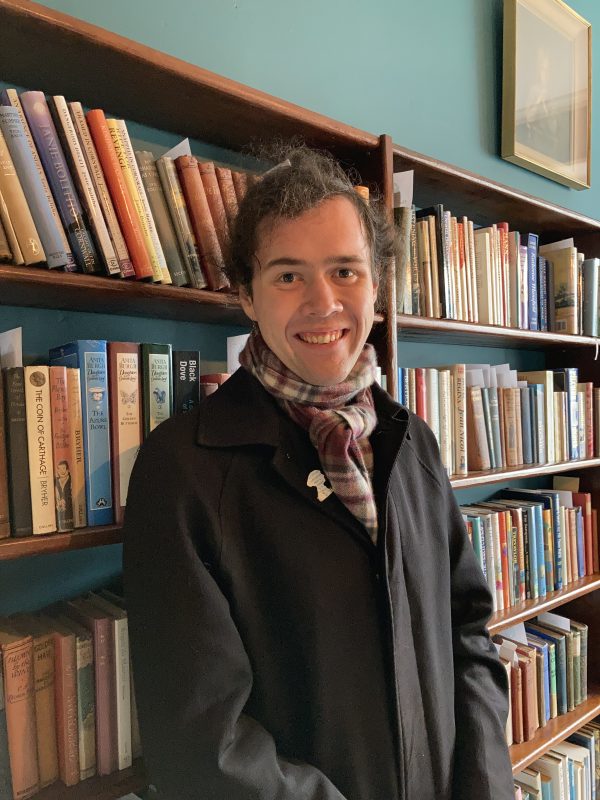
Where does one begin when extolling the virtues of the Morrab Library? Many of them are self-evident: the elegant house full of old books, the sea views and picturesque surroundings of Morrab Gardens, friendly faces and cups of tea, the list could go on infinitely, yet I would say its delights go far deeper than those, lovely as they are. My relationship with the Morrab Library started on a rainy autumn day in 2021 when, at the behest of a dear professor of mine from the University of Exeter, Penryn Campus, I decided to make the long journey by bus from my home in Penryn in order to see the magical environment for myself. If the vast collection of books and quaint ambience did not seal the deal immediately, impossible as that sounds, the rich and varied archive did. Little did I know that when I first entered through that wonderful red portal, the trajectory of my life would change entirely.
It would be correct to say that I have always had an interest in the eighteenth-century, alongside my undying love of rural England, but I had previously thought that my interest in English society would tend more towards the Victorians rather than the Georgians. Now, that position has completely reversed. For my undergraduate, which was an interdisciplinary degree combining English Literature and History, I decided to tackle my three biggest interests when writing my dissertation: Jane Austen and her world, sociability and gossip, and how novels can be used to study history. The Morrab Library, with its archive and special collections, was the primary way that I was able to turn fiction into reality, though perhaps one could say that fiction may come from reality. Through investigating their catalogue, I was able to travel back to Penzance of the 1790s and become a part of this wonderful town’s life in a unique and intimate way.
With Lisa’s help and guidance, I had the privilege of meeting Catharine Tremenheere, nee Borlase, and through her letters I attended balls at the Penzance Assembly Rooms in 1792 and 1793. I would describe her as a slightly more sensible version of the immortal Mrs Bennet in Pride and Prejudice, their minds seem to have been in a similar place though Mrs Tremenheere showed a bit more gentility than dear Mrs Bennet. Alongside Catharine Tremenheere’s letters, which are numerous and a treat to read, I used the 1791 Penzance Assembly Book, which recorded all the accounts and details of the social seasons from 1791-1794, to find out who her neighbours were and how often they saw each other. In addition to her records of balls and assemblies, Catharine Tremenheere also writes about dinner parties, visits to the theatre, and even about riots in Penzance around the time of the French Revolution.
Through her eyes, I saw just how vibrant the Georgians were and that the events in Jane Austen’s novels were not as unrealistic as one may have thought. That is the joy of researching the past and reading books, is it not? The drama and sensibility we find in novels, and think so silly as a result, may not be too far-fetched as we originally believed. Catharine Tremenheere records all sorts of novel-like happenings in Penzance society and in such an endearing way that by the time I reached the letter where her son Walter tells his brother Harry Pendarves that their mother is dead, I was near to tears. This intense journey, both intellectually and emotionally, would never have happened without the Morrab Library and its archive.
From all this foraying into Penzance’s past, in this fantastic setting which we all are a part of, my life has now taken a turn towards making the eighteenth-century its gravitational centre. Soon I shall begin a masters course in eighteenth-century studies to continue my research into the function of assembly rooms in rural society and, hopefully, turning that into a PhD once I complete the next step. All this stemmed from two deeply important sources: my love of Pride and Prejudice and the ability to see how the world Jane Austen wrote about still exists in delightfully large quantities all around us through the archive at the Morrab Library. Certainly, it has been a journey of love and passion through discovery and investigation.
by Lisa Di Tommaso | Sep 18, 2023 | Blog, Morrab Library
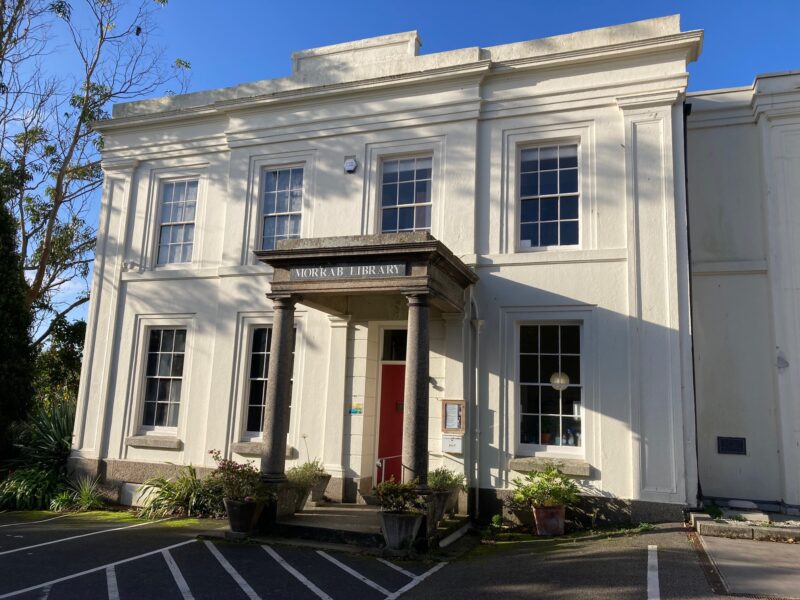
The Trustees of Morrab Library are proposing a significant change in its governance arrangements which will be presented to members at an Extraordinary General Meeting on 13th November – we hope you will be able to attend. In tandem with this exercise, we are looking to appoint a number of people to strengthen the Board of Trustees.
Our priority is to find a new Treasurer. In recent years we have improved our financial systems and we seek someone with experience in finance to take over this essential role, to provide financial oversight and planning. Further information on this role is available here: The Morrab Library Treasurer
We are also seeking people with skills and attributes to complement other Trustees in the following areas:-
- fundraising and reputation management
- building maintenance and development
The Trustees meet monthly, either by Zoom or in person. Sub Committees are in place to support the Board – and working groups are occasionally formed for specific purposes.
More information about the Library and the current Trustees can be found here: https://morrablibrary.org.uk/trustee/
If you are interested in joining us, or if you know someone who might be, we should be delighted to hear. Please send a short CV (no more than two pages) together with a covering letter of application outlining what you can contribute and why you wish to serve as a Trustee.
Responses should be sent by email to secretary@morrablibrary.org.uk as soon as possible. If you would like an informal discussion with one of the Trustees before expressing an interest please write to the same email address with a brief summary of your relevant experience.
If you use social media and can share this information with your followers to help us expand the search please share the links you’ll find on our Facebook, Twitter and Instagram pages.
Harry Spry-Leverton, Chairman, on behalf of the Trustees of Morrab Library
by Lisa Di Tommaso | Jul 3, 2021 | Blog, Morrab Library
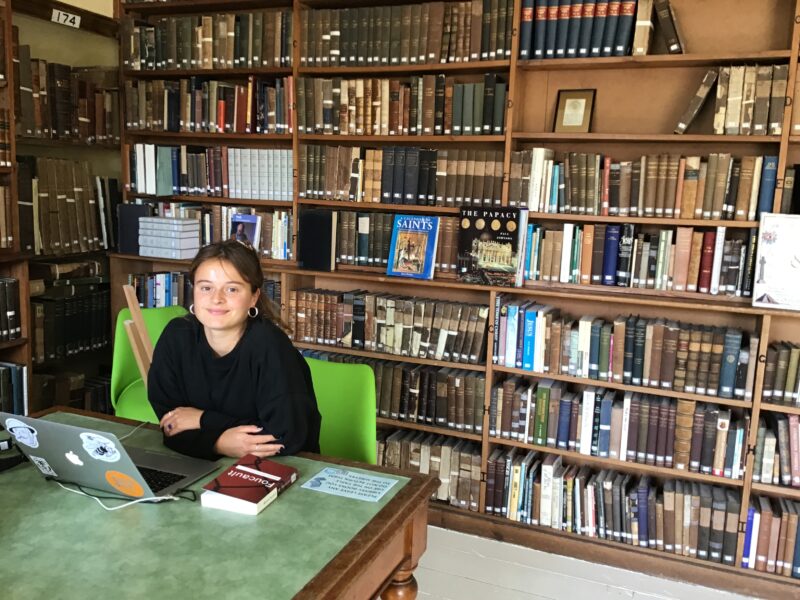
Morrab Library has welcomed a new intern in the last few weeks. Eliza McCarthy is an English Literature student at the Penryn campus of Exeter University, who have funded Eliza’s project through their Access to Internships programme. Halfway through her time with us, we wanted to share how Eliza’s research is progressing, and her thoughts on the library so far….
Over the course of the last month, I have been working with the extensive archive at Morrab Library on John Thomas Blight. The prolific artist and archaeologist is a familiar face around the library (his portrait hangs on the wall just outside the loo) and it has been a great pleasure to work so closely with a collection so integral to the rich history of Morrab Library.
The archive contains incredible diaries from his time at St Lawrence’s asylum in Bodmin, letters to friends and contemporaries, intricate line drawings and pages of rough sketches of sites across Cornwall. Looking through the archive, it is jarring to see such obvious evidence of Blight’s gradual downfall. His earlier sketchbooks contain countless rough sketches of familiar sights throughout West Penwith, drawings of local wildlife which are exquisitely detailed (my favourite being a small seagull, captioned ‘Little Bustard’. Clearly they’ve always been a nuisance). The later diary entries from Blight’s time at St Lawrence’s are just as detailed despite the fact his world suddenly became much smaller, with meticulous portraits of the faces of those confined alongside him, the interior landscape of the hospital, a rug, the bedframe, the heel of his newly darned sock…
It is very evident from Blight’s work, his profound, but sometimes entirely nonsensical musings crammed into tight corners of small notebooks (there must have been a paper shortage) that he so desperately wanted to leave an impression behind him, to be remembered like some of his more privileged contemporaries. Ironically, he was silenced and forgotten about within his own lifetime, swallowed by the social stigma that surrounded his poor mental health.
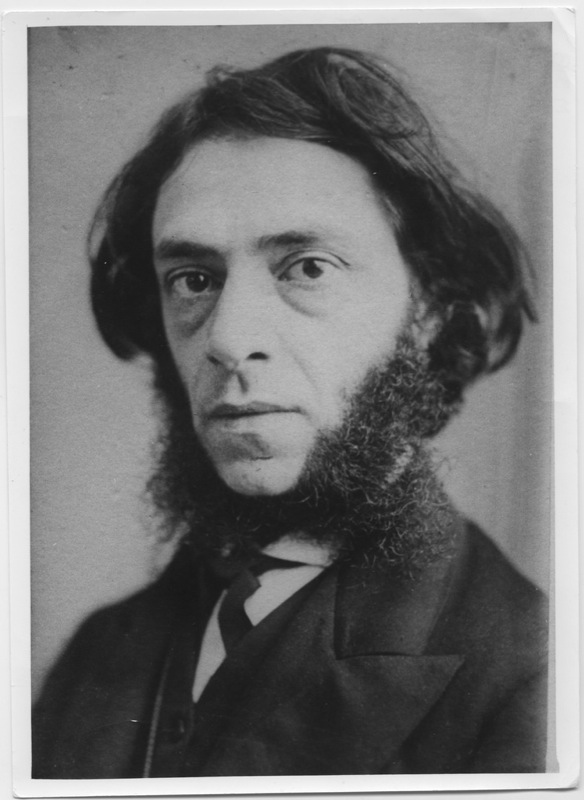
Of course, Blight’s somewhat sad story is well known by many of the library community. However, the goal of this project is to inject a little life into the archive, culminating in a research project that will explore some lesser known areas of the Blight story which perhaps deserve more academic attention than they initially received. I want to delve a little deeper into Blight’s time at St Lawrence’s Hospital, using his story as an anchor to Morrab Library whilst exploring the wider topic of the treatment of the ‘mad’ in the 19th Century, and what it meant on a social level to be deemed insane.
A huge thank you goes to Morrab Library for letting me come in and (gently) rifle through this incredible collection of work, and to Lisa for supplying me with chocolate and various other delightful confections whilst I do it.
by admin | May 19, 2021 | Blog, Morrab Library, News
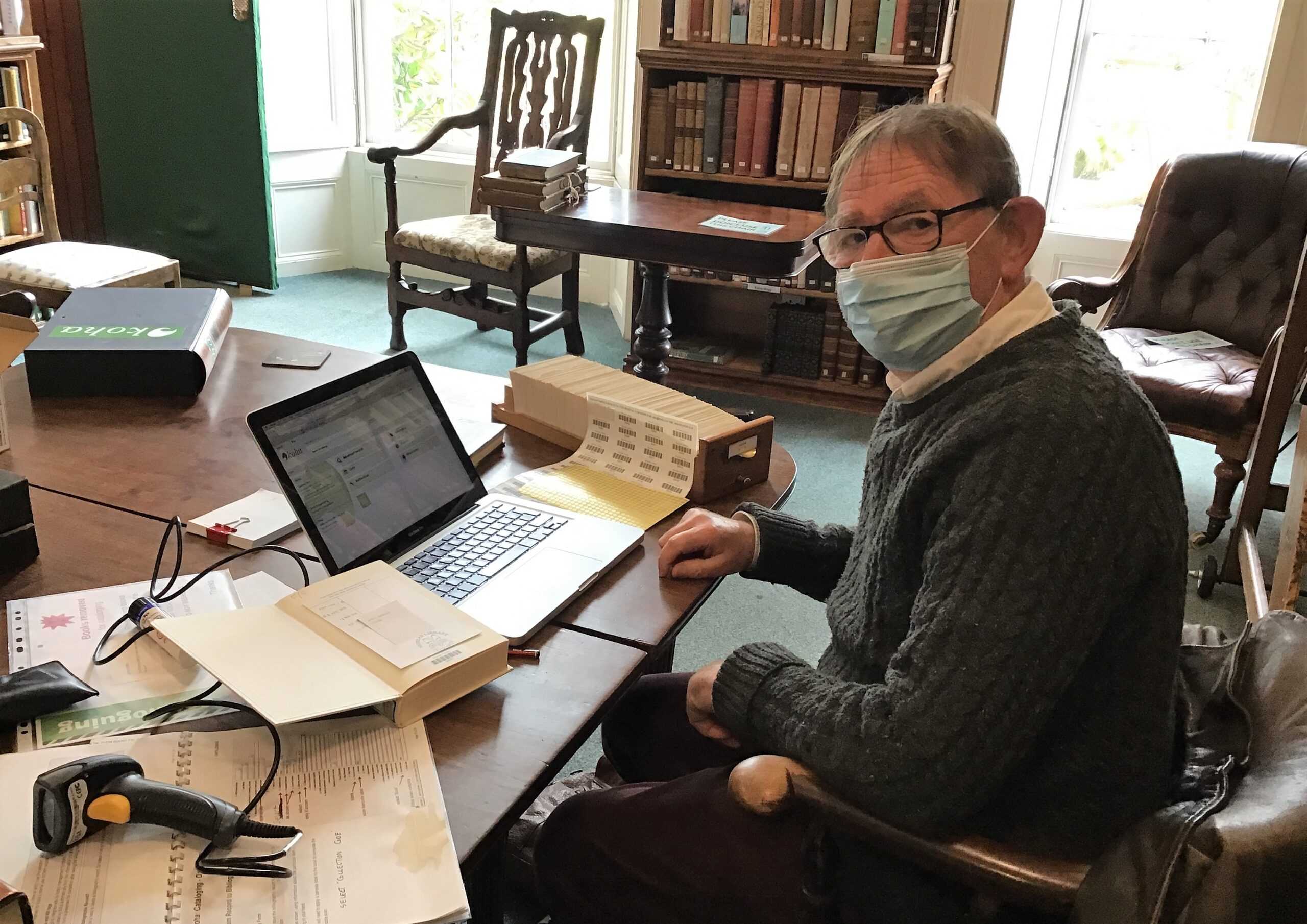
We thought you’d like to know about a rather significant milestone in the history of Morrab Library. Friday the 14th May saw us catalogue our first library book into KOHA, our new online library system.
Member, volunteer and former Chair Peter Chapman had the honour of barcoding the first of our many thousands of books, and adding the record to our catalogue – it was Annabelle Abbs’ Frieda, by the way!
This is a small but important step in our aim to improve access to our collections. By making our books searchable online, you will all be able to truly discover the extent, and the magic, of our collections, even the ones on the high shelves!
You’ll have to be patient though – we have a lot of books, so it will be quite a number of years before we have completed the retrospective project, but we do feel it’s worth the effort involved! There won’t be any changes to the way you search for or borrow books just now, but we will provide regular updates on progress.
The project is currently in its pilot phase (starting with the fiction collection), with Peter and our Honorary Librarian, Harry Spry-Leverton, testing things for us, but soon we will be looking to recruit some more volunteers to help with the cataloguing, so we’ll put the call out when we’re ready.
A big thank you to Sue Garwood, our Assistant Librarian, who used the lockdown periods very productively coming to terms with KOHA, and to Dr Vivian Cothey, member and cataloguing expert, for his brilliant advice and guidance.
by admin | Apr 7, 2021 | Blog, Morrab Library, News
Morrab Library will be opening again on the 14th April, although still in a very limited capacity. The necessity to keep staff, volunteers and members as safe as possible remains our first priority, and we will need to continue to work within the context of health and safety legislation and best practice guidelines for libraries to achieve this.
It needs to be said that while the staff will do all it can to make the library as safe as possible, we cannot of course guarantee it 100%, so each member will need to make their own decision about whether they feel they can visit.
Opening hours and access
- The library will open Wednesday, Friday and Saturday from 10.00 am to 3.30pm.
- The library will be open for book loans and returns, and for readers who wish to book a workspace on the first floor or access the newspaper collection.
- Entry will be by appointment only. We need to be very strict about how many people can safely be in the library and share spaces at the one time. You can email us at : enquiries@morrablibrary.org.uk or telephone 01736 364474 and leave a message with your name and contact entails – staff will contact you to arrange an appointment.
- Please don’t try to visit unless you have received confirmation of your appointment time. We do not want you to have to queue outside for any lengthy period.
- Please book for an appointment as far in advance as you can to avoid disappointment.
- You do not need to make an appointment if you are only returning or collecting books and do not wish to enter the building beyond the entrance foyer.
- When you come to borrow books we will be able to welcome you for a visit of 30 minutes. If you are isolating as a household, a couple or family can come in together.
- Only library members (or members of their household) will be able to access the building – we will sadly not be able to welcome any visitors at this stage, unless they are expressly wishing to join as a new member.
- We cannot accept any book donations at this time.
- The Photo Archive will not be open to visitors on Thursday mornings at this time, but please email photoarchive@morrablibrary.org.uk, or call the library and we can pass on any enquiries.
While you are with us
- It will not be possible to remain in the library beyond choosing or returning books, or working in your reserved room.
- Hand sanitiser will be on offer at the front door, and we will ask that you make use of it BEFORE entering the building. There are additional hand sanitising stations throughout the building.
- It is a legal requirement that you wear a face covering whilst moving around the building, unless you have a legitimate reason for not being able to do so.
- Social distancing practices will be in place (working to the 2 metre rule) and staff will be working behind a temporary screen.
Loans and Returns
- If you are returning library books, please bring them in a bag (preferably one you don’t want back), and include a note with your name on it. There will be special boxes in the foyer where you can leave them – in keeping with health and safety guidelines, they will need to be quarantined for 72 hours before staff can process them.
- The lifting on restrictions on the number of loans will remain, meaning you can borrow more than six books at a time. If you don’t feel comfortable coming to the library yourself, you can nominate a fellow member, friend or family to borrow and collect books on your behalf.
- We will be offering a collection service. If you send us a list of titles you are seeking, we can check our holdings and the shelves, and if they are available, we can bag them up and leave them for you or a friend or family member to collect from the foyer, so you won’t have to come into the rest of the building.
- The magazines and newspapers normally located in the Reading Room will be moved to the tables in the Jenner Room, and be available for loan.
Amenities
- The ground floor toilet will be available, but we ask that it be accessed only if completely necessary. Please leave the space as clean as possible after use. A hand sanitising station will be located just outside.
- Sadly, the kitchen will be closed to members, and not accessible.
- Lockers will not be in use. Bags must remain with you. They cannot be left at the desk or elsewhere.
- The till will be in operation for book and other sales, donations and new memberships and renewals. Payment by card is our preferred option, although we will accept cheques and cash. Appropriate hygiene measures will be in place for using the till.
- The photocopier will only be available for the use of library staff, but we will happily copy anything you need on your behalf.
- The lift will be in operation and hand sanitising stations will be available in the foyers on each floor.
- Parking at the library should generally be possible during this time, although if you would like to be guaranteed a parking spot, please let us know when you make your appointment.
Cleaning
- Library staff will carry out regular cleaning of ‘hotspots’ around the building throughout the day, such as door handles, stair bannisters and the toilet.
- We will also undertake a deep clean of the library after hours each day.
- Desks, chairs and other items will be cleaned in between room appointments.
Please contact the Library (enquiries@morrablibrary.org.uk), or leave a message on 01736 364474 and we’ll call you back, if you have any questions or concerns.
We would also like to offer my assistance to any of you who will need to continue to self-isolate and won’t be able to visit, or do not have anyone who can borrow books on your behalf. Please get in touch so we can find a way to help you if we can.
I know this remains a less than ideal situation, but hopefully it won’t be too much longer before we can return to the normality of the Morrab Library we all love so much. Thank you so much for your wonderful support throughout lockdown, and as we move forward into the new year.
Lisa Di Tommaso
Librarian
by Lisa Di Tommaso | Mar 26, 2021 | Blog, Morrab Library
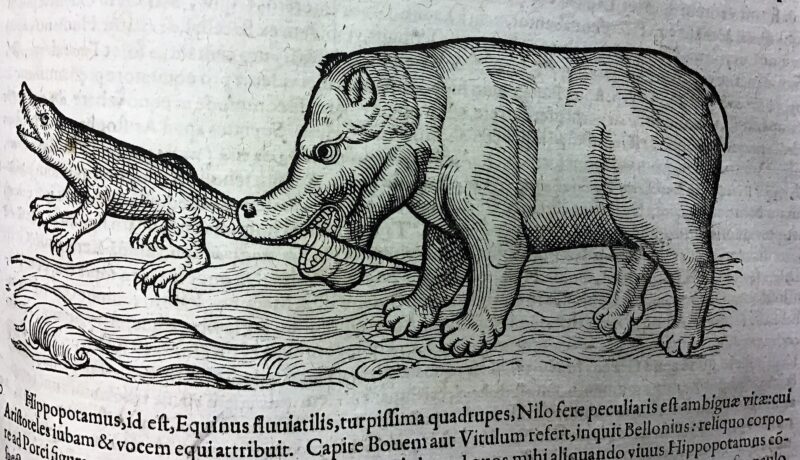
Humans have been drawing what they see of the natural world for over 40,00 years. Initially capturing images on rocks and in caves, this evolved over many centuries into hand drawn depictions and written descriptions being recorded in manuscripts. The development of the printing press in the 15th century changed everything – it was the first time mass produced books, complete with images, could be disseminated to a far wider audience than ever before. This, alongside developments in shipbuilding which allowed further travels afar, generated enormous interest and a huge demand for knowledge about the natural world beyond people’s own geography.
This period heralded the time that the science of natural history emerged, when many naturalists tried to make sense of the world, studying, collecting and classifying species and publishing compendiums and encyclopedias. This was also still a time when people accepted myths, legends and monsters as reality, so it was not unusual to believe in both science and the existence of dragons and unicorns.
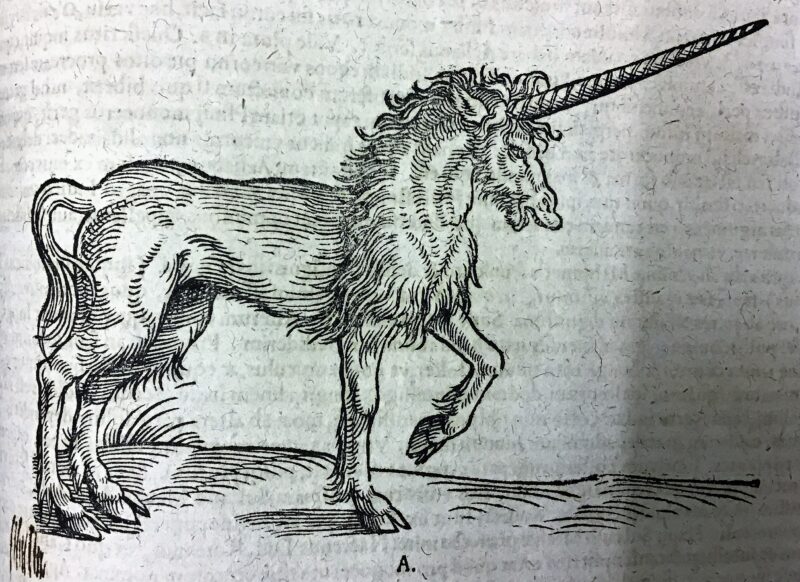
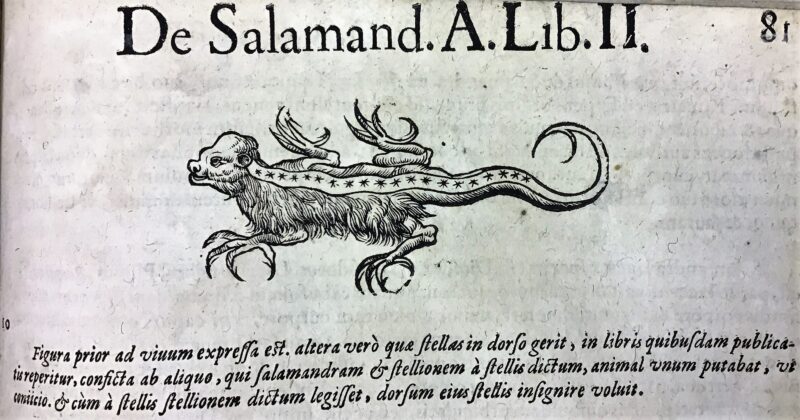
Many published naturalists at this time didn’t travel far. Instead they relied on (sometimes distorted) descriptions of animals that fellow travellers and explorers had seen in order to create an image. As a result, depictions of animals weren’t always entirely accurate, and mythical creatures such as satyrs, hydras and sea monsters were often to be found depicted in the pages between horses and geese. They couldn’t prove that the creatures described didn’t exist, and there was no David Attenborough on hand to tell anyone otherwise, so everything was included. For example, many sailors told of amazing sea creatures and mermaids on their journeys, but it must be remembered that fresh water wasn’t available and rum was the drink of choice onboard! They may well have just been exaggerations of quite normal, or now extinct, sea creatures.
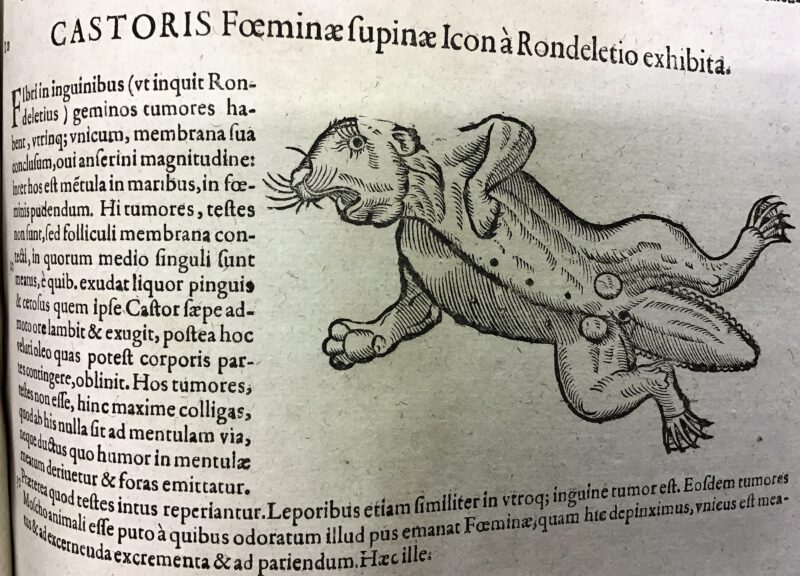
One of the earliest published naturalists was Conrad Gesner. A Swiss national who rarely travelled far and who died from the plague at the age of 49, he published widely on a number of subjects. His magnum opus however was the five volume Historia Animalium (1551-1558), comprising more than 4,500 pages of images and descriptions of all known creatures at that time. He combined information from his research of historic sources, such as the Old Testament, Aristotle and Pliny, as well as folklore and medieval bestiaries, with his own observations to create the first comprehensive description of the animal kingdom. Historia Animalium was also one of the first books to be illustrated with woodcuts drawn from personal observations by Gesner and descriptions from his colleagues. It was published in the two recognised scientific languages of the day – Latin and Greek.
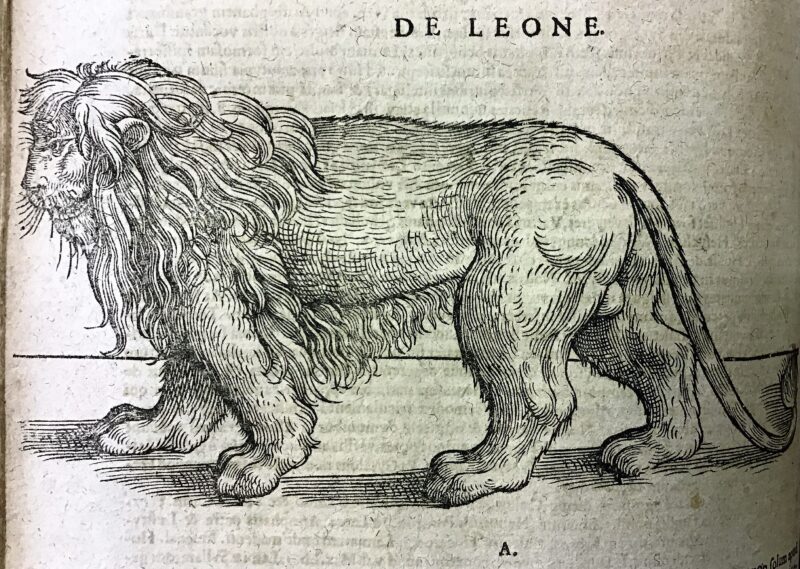
The book wasn’t without its controversy. Pope Paul IV added Historia Animalium to the Catholic Church’s list of prohibited books. Gesner was a Protestant and the Pope felt that his faith contaminated his observations and writings.
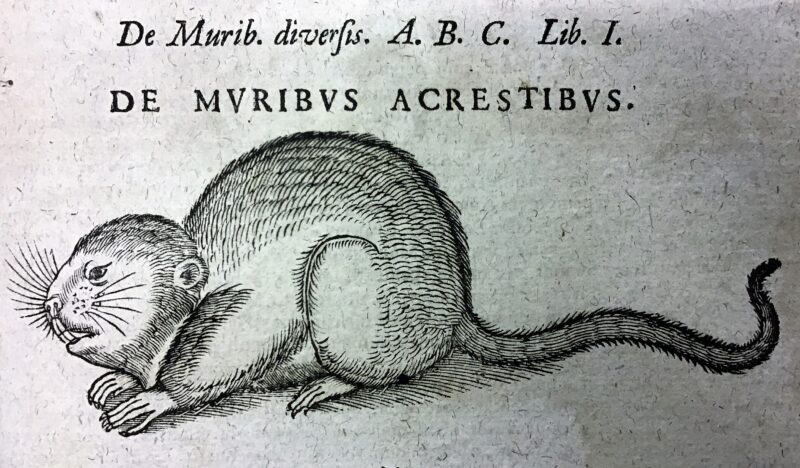
The legacy of Gesner and other naturalists of his time cannot be underestimated. They were the people who established the basis of the science of zoology, classification and taxonomy – the first to try to categorise like groups of species together. Their drawing style and technique still influence the way scientific illustration is presented today. And the volumes provide an important snapshot into society’s knowledge, and beliefs of that time, where mythology and science were beginning to disconnect.
Morrab Library is fortunate to hold the first two of the five volumes of Historia Animalium in its collections. Our editions are dated 1617-1620, around 70 years after they were first published, and they are a very special treasure amongst our collections.
Lisa Di Tommaso, Librarian