by Lisa Di Tommaso | Aug 26, 2025 | Blog, Morrab Library
One of our Library volunteers, Michael Malone-Lee, recently happened upon an unusual, witty, anonymously published poem in an innocuous volume in the Theology Room, dating from 1811.
Enchanted and intrigued, Michael delved deeper to uncover its author, the Revd. C. Valentine Le Grice (1773-1858), and explores the background to his entertaining piece, The Petition of an Old Uninhabited House in Penzance to its Master in Town.
The poem is a lament for the past in which the poet contrasts the ancient, ruined house with the contemporary gentrification of Penzance, a subject perhaps still of relevance today.
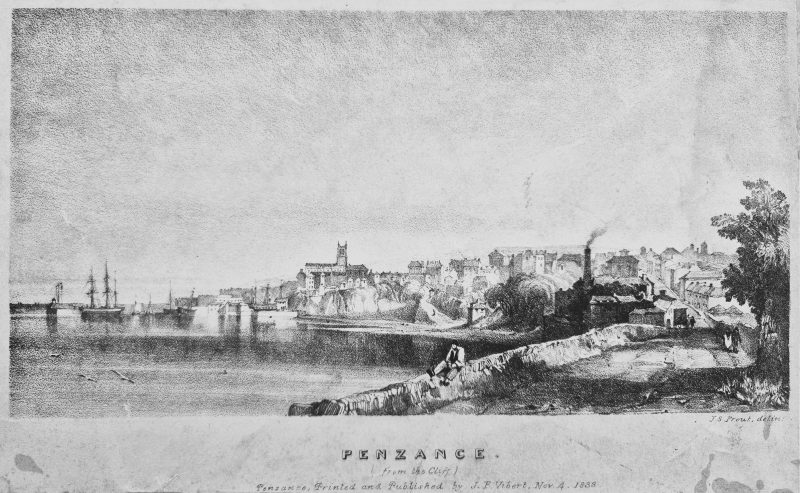
A view of Penzance, printed and published by J.F. Vibert, 1833 (MOR/VIV/16)
by Lisa Di Tommaso | Jul 14, 2025 | Acquisitions, Blog, Morrab Library
When former Morrab Library President and Patron John le Carré passed away in 2020, his extensive book collection was donated or sold across various locations. The library made the decision to acquire one of these volumes, which holds a particular special link to the library, through two people who played important roles in its history and collections.
Richard Carew (1555 – 1620) was a Cornish scholar of antiquities and his Survey of Cornwall, first published in 1602 , is an important title in its own right. The volume details the geography, history, and culture of Cornwall at the time, and offers insights and observations that reflect Carew’s own personal experiences and knowledge of the region. Carew aimed to document the distinctiveness of Cornwall, its natural resources, and its people. This particular volume is the 1811 edition (held at: SPC 942.37).

While we’re not certain of the circumstances that led Mr le Carré to purchase this title, it is not beyond the realms of belief that its previous owner proved a significant influence. The book carries the bookplate of Arthur Quiller-Couch (1863-1944), or ‘Q’, a Cornish novelist, scholar and literary critic. The library holds many of Q’s works, and in a speech to the library in 1919, said of the Morrab:
“There are some things in this world which the traveller, if he has eyes to see, can’t help but find just right. [It is not] fanciful to suppose …a guest at closing time, resting his strained eyes on the view across Mount’s Bay, with a sense that here was the real world scarcely less enchanting than the visionary sea of marvels, a city of God behind him, upon which the caretaker was closing the shutters for another night…”
 Arthur Quiller-Couch
John le Carré was was a passionate supporter and friend of The Morrab Library for many years. As well as holding the role of President from 1997-2002, he later continued for many years as our Patron. His relationship with the Library stretched even further back to the 1970’s, giving his time to many events and meetings to support the library over the years. Mr le Carré supported the library in many ways, including establishing the Morrab Fellowship, which for a number of years provided a bursary to local sixth-formers to purchase books for their studies. He also commissioned the construction of a number of the mahogany reading tables located in our rooms upstairs, and he paid the insurance premium on our book collection throughout his tenure as President. Mr le Carré will be remembered for his vision for the library’s future, and his aim of encouraging young people to join and be inspired by this special place.
 John le Carré pictured with Morrab Library colleagues in 1975
So Richard Carew’s important tome provides a special link to two of the library’s most interesting and important supporters.
At the back of the volume, there is a page of unattributed handwritten annotations on the subject of Cornish etymology. Intrigued by this, one of our brilliant library volunteers, Jane Prince, delved into the background of the provenance of Carew’s volume, exploring the possibilities of how it may have come into the hands of Arthur Quiller-Couch, before passing to John le Carré, and uncovering who may very likely have been been responsible for the mysterious note. Her paper follows…

The mysterious, unattributed notes
“This volume, which contains Sir Arthur Quiller-Couch’s bookplate, was accompanied by a slip from the sales house mentioning the notes made by a former owner, suggesting that these may have been made by Q himself. However, a comparison with the facsimile of a letter in Q’s handwriting in Brittain’s biography shows that this is not the case. However, the cross-references in these notes to Halliwell (probably to his Rambles in Western Cornwall of 1861) indicate that the volume might, in fact, have been a survivor from the library of Q’s father, Dr Thomas Quiller Couch.[1] Most of his books were sold to pay debts on his death in 1884, when Q, still an undergraduate at Trinity, Oxford, was left the head of the family with a mother, two sisters and two much younger brothers to support. The reference in Q’s autobiography implies that he kept some of his father’s extensive library.[2]
 Arthur Quiller-Couch’s bookplate in Carew’s 1811 volume
James Orchard Halliwell (later known as Halliwell-Phillips) was a contemporary of Thomas Couch and they had a common acquaintance in J. T. Blight, who was a friend of Thomas and who also illustrated Halliwell’s Life of Shakespeare (1848). A footnote referencing Halliwell’s Rambles accompanies the details of Chapel Uny Well taken from Thomas’s original notes for Ancient and Holy Wells of Cornwall, which was published, with additional research, by Q’s sisters Mabel and Lilian.[3] The entry for Scarlet’s Well, Bodmin, quotes Thomas Couch’s manuscript in full in which he in turn quotes from Carew’s Survey.[4] A footnote to St Nun’s Well, Alternon also refers to Carew’s Survey but citing the 1769 edition, although it could have been the case that Mabel and Lilian just looked up the reference in that particular edition. Ancient and Holy Wells was published in 1894 by which time Q was living and working in Fowey, so his sisters would no longer have had access to their father’s copy of Carew.[5]
The Morrab Library is fortunate in having an archive of J. T. Blight’s sketchbooks and diaries, including a letter to him from Thomas Couch. The annotations to Carew’s Survey are only rough notes and Thomas Couch’s letter is in formal handwriting but similarities between certain letters seem to support the proposal that the book originally belonged to Q’s father.[6]
The cross references to Halliwell are also of relevance to the Morrab Library in that Halliwell donated more than 2,000 volumes to the library after visiting it during his stay in Penzance. Halliwell lodged with Mrs Margery Cornish in Clarence Street and his explorations of the district resulted in Rambles in Western Cornwall By the Footsteps of the Giants published by John Russell Smith, London, in 1861. His obituary in the Cornishman of January 1889 described Halliwell’s donations of ‘rare and valuable books’ as making ‘one department richer than any other provincial library of its size in Elizabethan and Dramatic literature.’ [7] He was best known as a Shakespearian scholar. He was also educated at Jesus College, Cambridge where, co-incidentally, Q was granted a fellowship twenty years after Halliwell’s death.
 Bookshelves in the Library honouring Halliwell
 J.O. Halliwell-Phillips
If, however, Q did not inherit the volume of Carew from his father it is likely that he bought it from Gustave David, the antiquarian bookseller who kept a stall in the market in Cambridge and was much patronised by Q and his contemporaries. David attended book sales in London every week and his Cambridge stall (and later his shop) was well-known as a source of hidden treasures at reasonable prices. He used to put aside volumes which he thought would interest his regular customers. In 1925 Q and others gave a lunch at Cambridge in honour of David, and Q contributed to a small book produced as a memorial tribute in 1937, entitled David of Cambridge: Some Appreciations.[8]
- F. Brittain, Arthur Quiller-Couch: A biographical study of Q, (Cambridge, 1947), p. 117.
- Memories and opinions. An unfinished autobiography by Q, ed. S. C. Roberts, (Cambridge, 1944), p. 91.
- Mabel and Lilian Quiller-Couch, Ancient and Holy Wells of Cornwall, (London, 1894), p 28.
- Ibid pp. 211-212.
- Ibid p. 172
- Morrab Library Archive: MOR/BLI/1
- The Cornishman, Thursday, 10th January 1889, no. 549, p. 7.
- David’s son Hubert (1900-1990) continued the business and was also a designer of book-plates.
by Lisa Di Tommaso | Feb 13, 2024 | Blog, Events, Morrab Library, Uncategorized
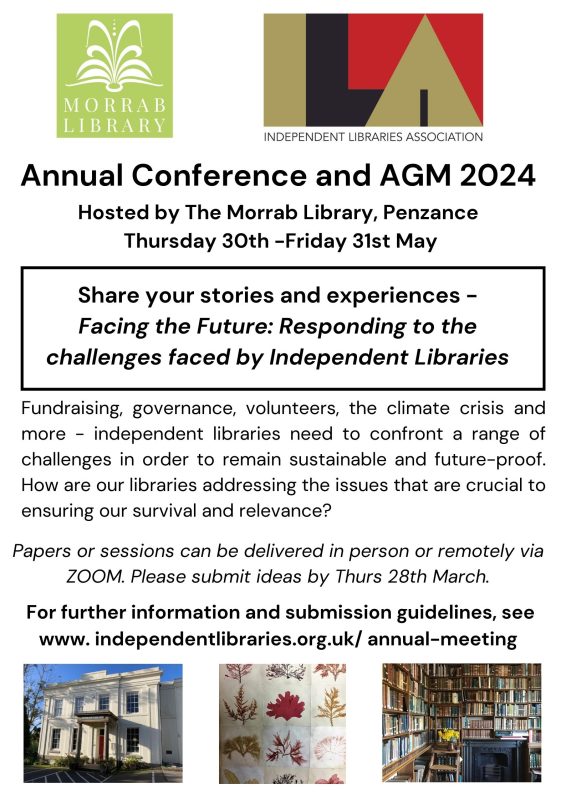
We are delighted to invite you to take part in the ILA Annual Meeting, to be held on the 30th and 31st May at The Morrab Library in Penzance, Cornwall.
Library staff, trustees, and volunteers are all welcome to deliver a paper, lead a discussion, or share your experiences around the theme of “Facing the Future: Responding to the challenges faced by Independent Libraries”, either in person, or via ZOOM.
Fundraising, governance, volunteers, the climate crisis and more – independent libraries need to confront a range of challenges in order to remain sustainable and future-proof. How are our libraries addressing the issues that are crucial to ensuring our survival and relevance? Proposals could include:
- Successful fundraising projects at your library, large or small;
- Tips and tricks on writing successful fundraising applications;
- Encouraging and supporting volunteers in the various roles they play;
- Managing a significant volunteer project;
- Experience of making old and even listed buildings more environmentally sustainable;
- How good library governance can support change management.
We emphasise that your paper, or the session you lead, does not need to be scholarly, and all staff, trustees and volunteers of independent libraries are welcome to deliver sessions.
We would love to welcome you and help to share your stories about the wonderful world of Independent Libraries!
We shall open up bookings for attendance at this hybrid event at a later date.
We look forward to hearing from you.
by admin | Nov 24, 2023 | Blog, Morrab Library, Sale
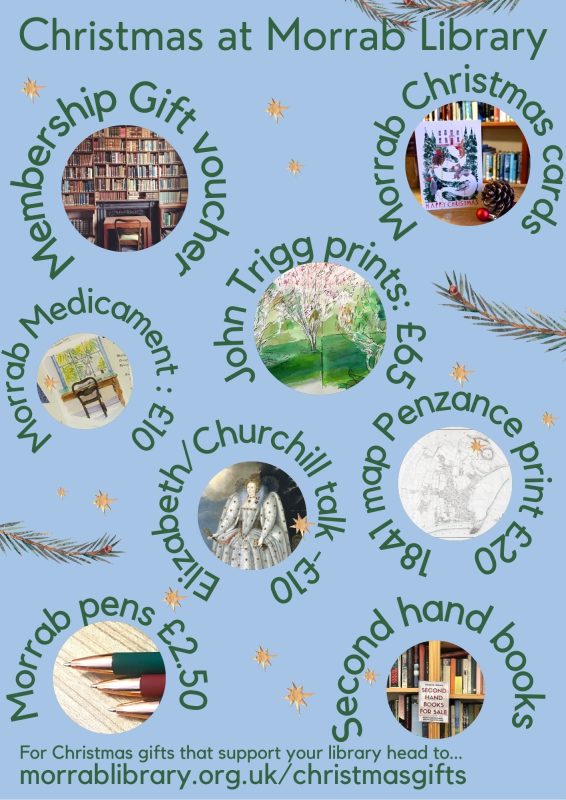
We have a variety of other uniquely ‘Morrab’ gift options which all help to support the work of the library –
 Gift Membership
Share your love of Morrab Library with friends or family – a gift that include access to 70,000 books(!), tranquil work spaces, our marvellous library community and more (£40 for a year’s household membership – we also offer a discounted student membership at £20).
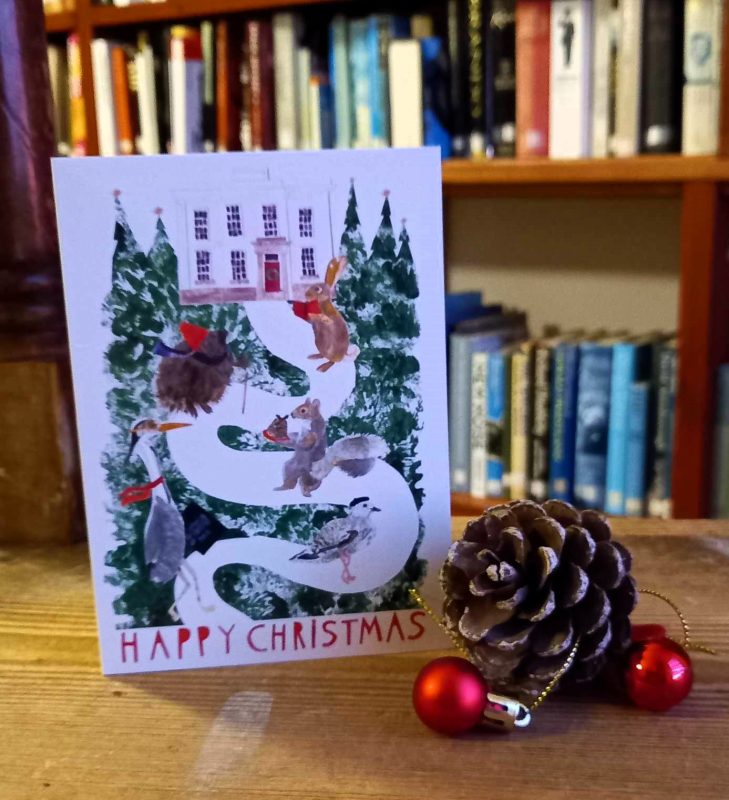 Morrab Library Christmas Cards
A beautiful design by our own staff member, Harriet-Jade Harrow. £1 each, £2.75 for 3 or £4.75 for a pack of 5.
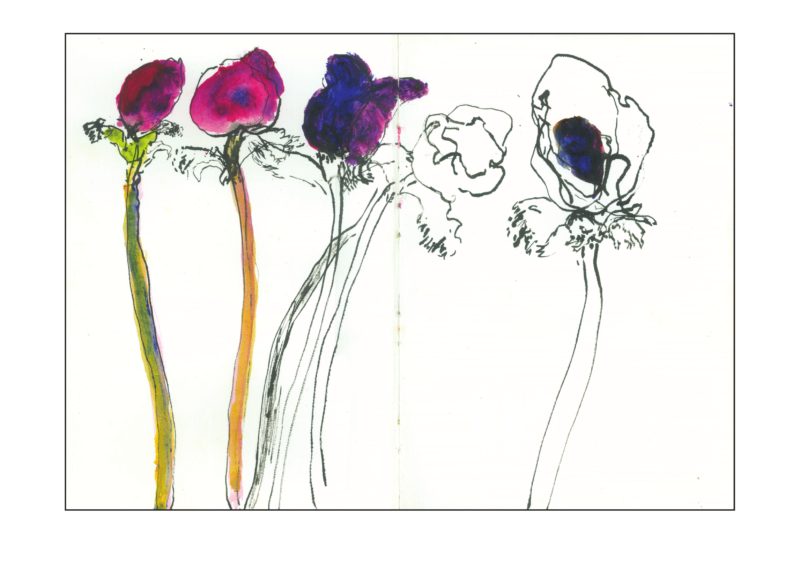 John Trigg prints
Choose a high quality print from one of twelve beautiful images, taken from the collection of drawing books donated to the library by the artist John Trigg (£65).
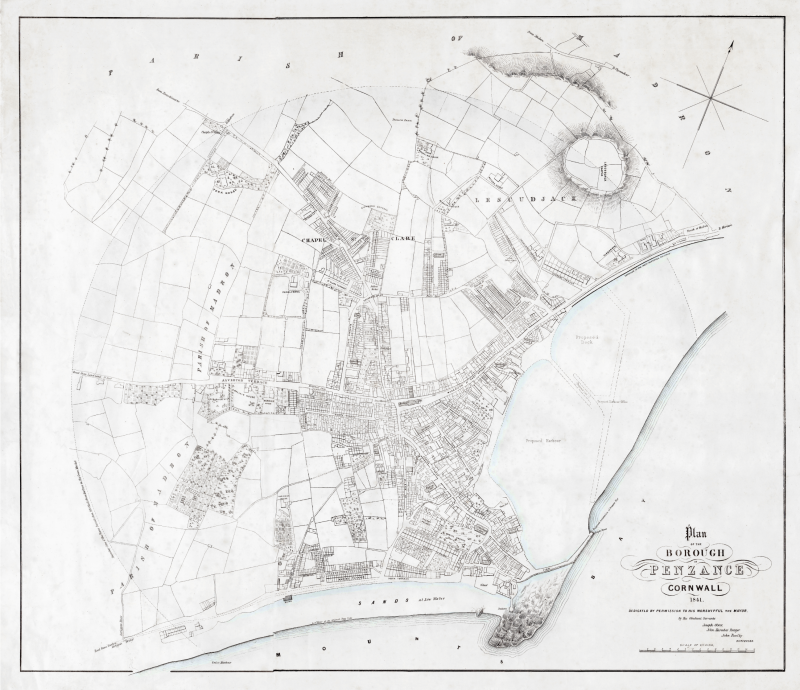 Penzance Map
A high quality reproduction of the 1841 map of the Borough of Penzance (£20).
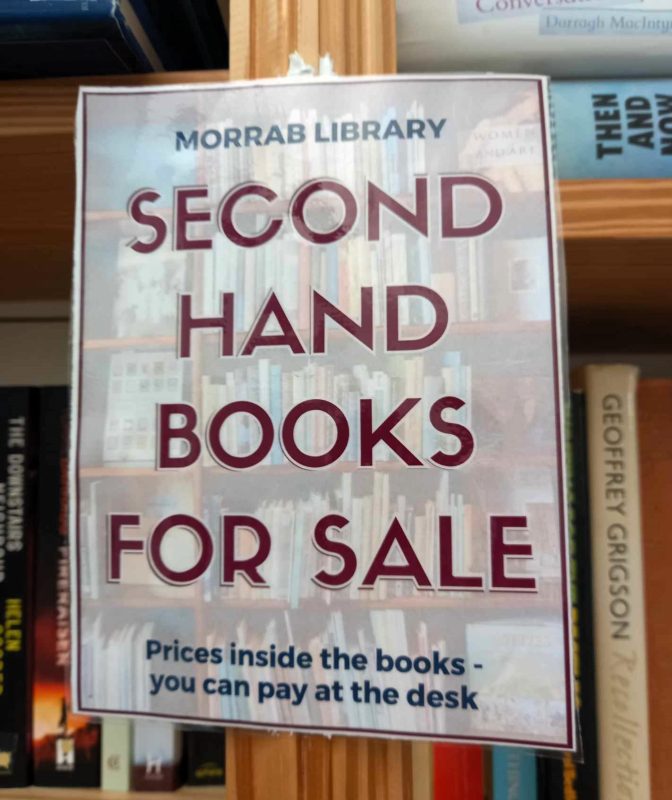 Second hand books
There’s a brilliant, eclectic selection of second-hand books for sale – a perfect Christmas gift for a like-minded book lover.
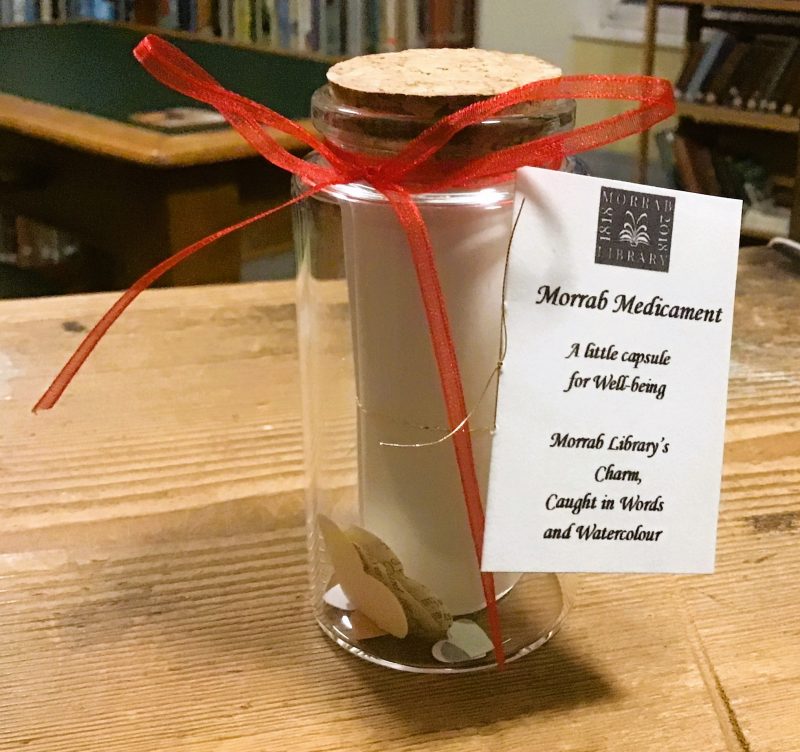 Morrab Medicament
A whimsical creation by members Sue Lewington and Steph Haxton – it’s Morrab Library in a bottle! Each jar contains a library poem, a drawing of a library scene, as well as a charm. Limited edition (£10).
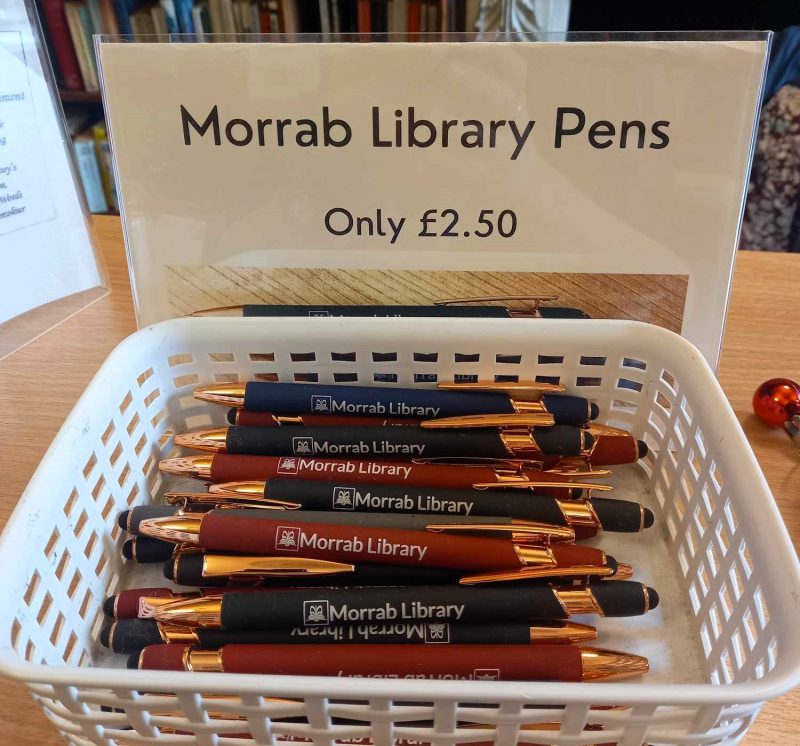 Morrab Library Pens
High quality black ink pens with the library logo and name embossed on it (£2.50).
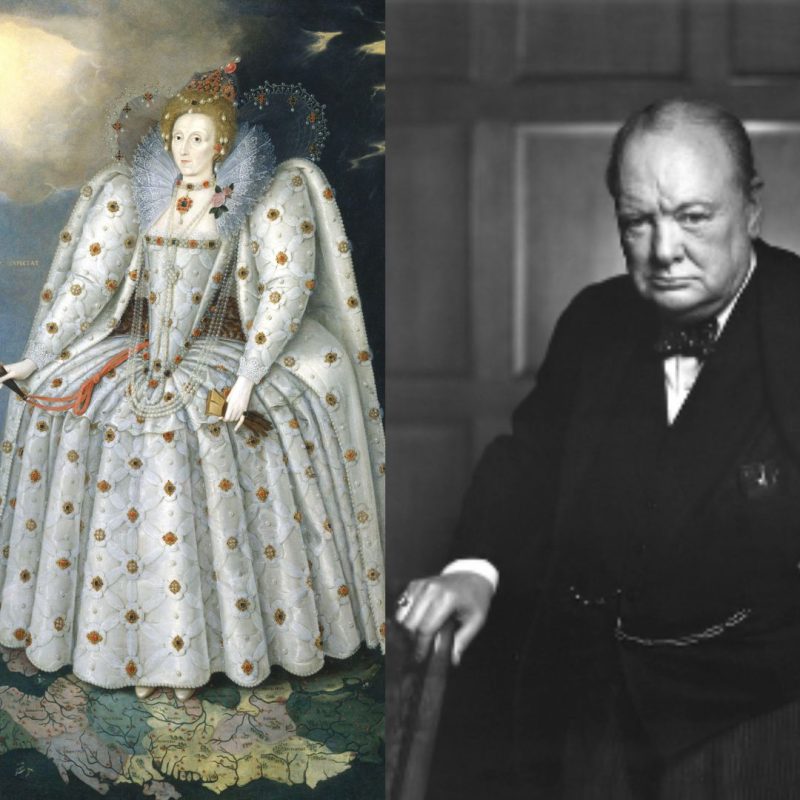 Acorn event with Morrab Library – Elizabeth I and Churchill talk
Tickets are on sale for the next talk by Mark Cottle on Feb 29th. Studies in Leadership – Elizabeth I and Churchill will focus on the life times and similarities of each leader. (£10 from the Acorn Theatre).
Get some Christmas shopping done and support the library at the same time!
by Lisa Di Tommaso | Nov 22, 2023 | Blog, Morrab Library, Sale, Uncategorized
This year’s Morrab Library Christmas Cards are now on sale, featuring a beautiful image by own staff member Harriet.
You can purchase them from reception at £1.00 per card, £2.75 for a pack of three, or £4.75 for a pack of five.
All proceeds go to the care of the Library.
We’re happy to post cards to you for a small additional fee if you can’t make it into the Library.
Illustration: @harrietjadeharrow

 Photo: Ian Kingsnorth