Select Page

A reopening, of sorts…..
Dear Members,

You’ll have seen the news from the Government yesterday confirming permission to reopen libraries from the 4th July. After consultation between Trustees and staff, we are happy to say that Morrab Library will be able to reopen with a limited service from Wednesday July 15th.

This gives us time to bring staff back from furlough, to establish necessary procedures, and undertake a deep clean of the library in the weeks prior to this. The necessity to keep staff, volunteers and members as safe as possible is our first priority, and we will need to work within the context of health and safety legislation and best practice guidelines for libraries to achieve this. So please bear with us as we take a careful and steady approach over a period of time to try and get everything back on track.

More details will follow very soon, but for now, please be aware that initially, the library will be open three days a week – Wednesday, Friday and Saturday, from 10.00am to 3.00pm by appointment only, and only for loans and returns. You will need to call or email ahead to book a time to visit, as we will need to manage the numbers in the building at any one time and ensure social distancing, which at least for now, will remain at 2 metres to mitigate any risk to our members.

We’ll be able to take bookings for appointments from Tuesday 7th July, and more information will follow soon. We do envisage a busy first rush, so we may need to beg your patience as things settle down.

Once we have established safe processes, we will then, as quickly as possible, look to reopen the rooms upstairs for members to work in. This will also work on an appointment system. The opportunity to host classes and workshops will be reviewed over the summer, based around future Government guidance.

It will be wonderful to see you again, although please be aware that we will need to work to very strict guidelines, at least initially. We will do everything we can to restore the library to full service in due course. Please keep an eye out for more detailed information about our reopening over the next week.

Many thanks for your wonderful support throughout all of this.

Take care,

The Trustees and Library team
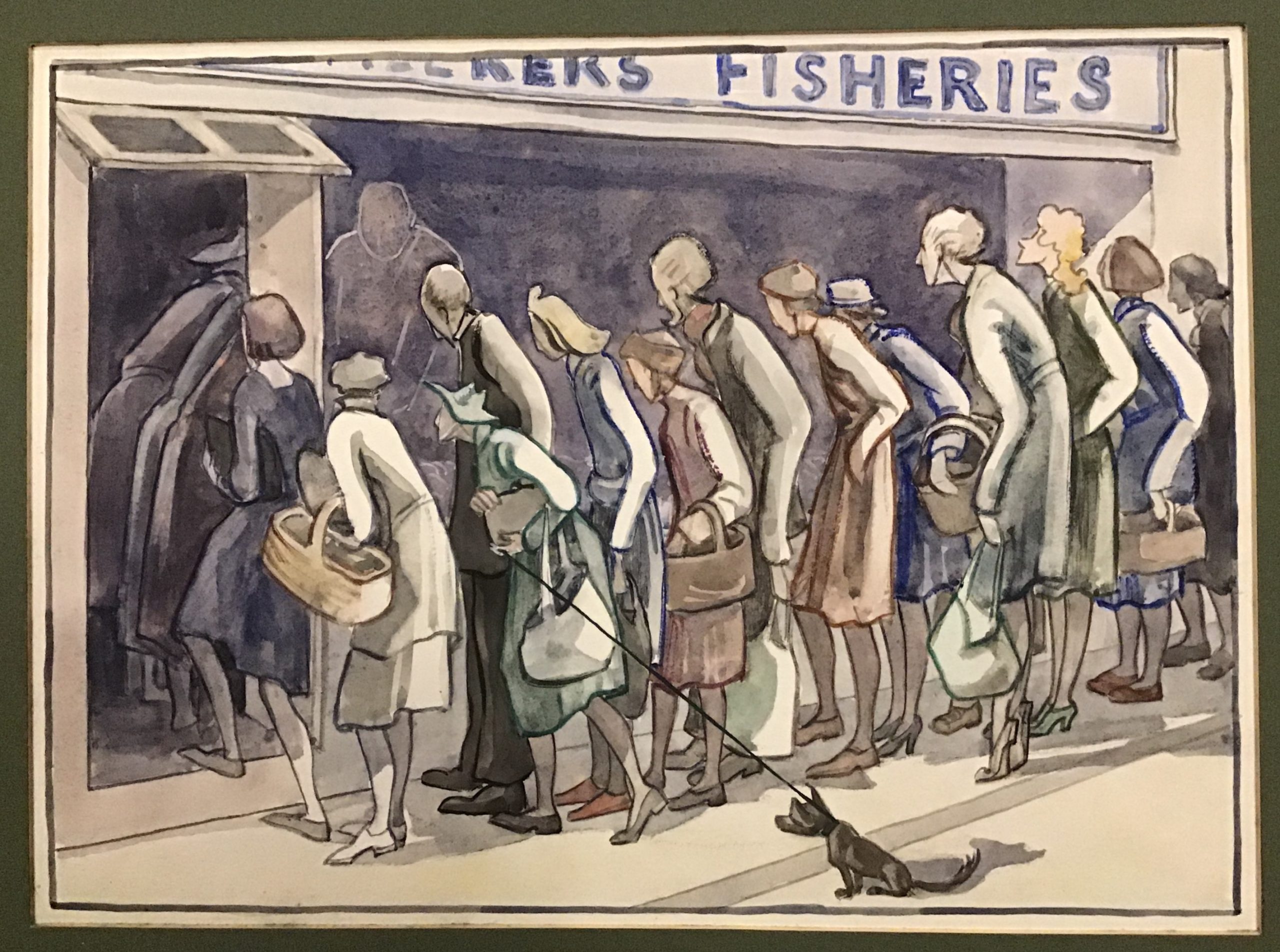
Hilda Quick & VE Day


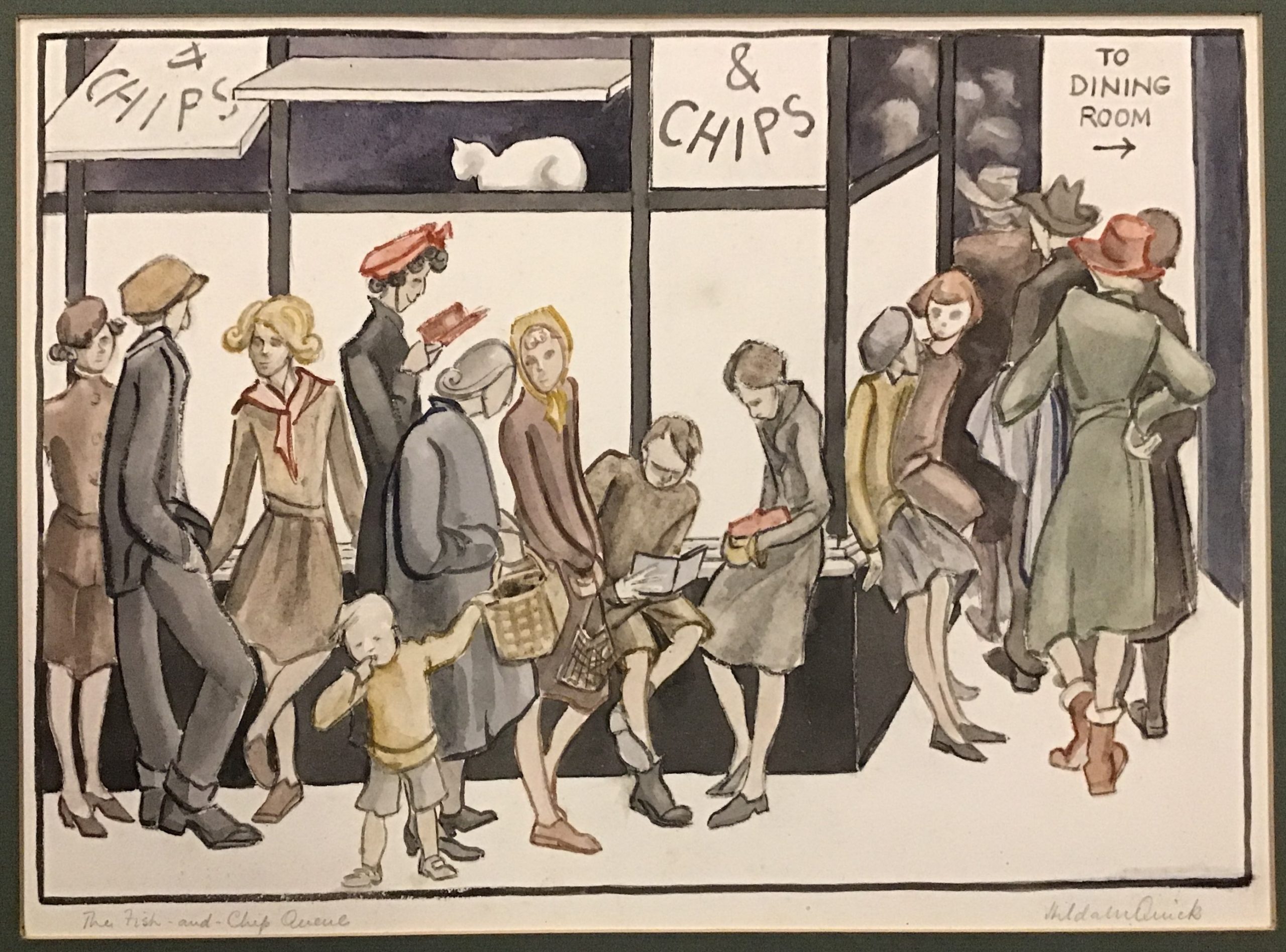
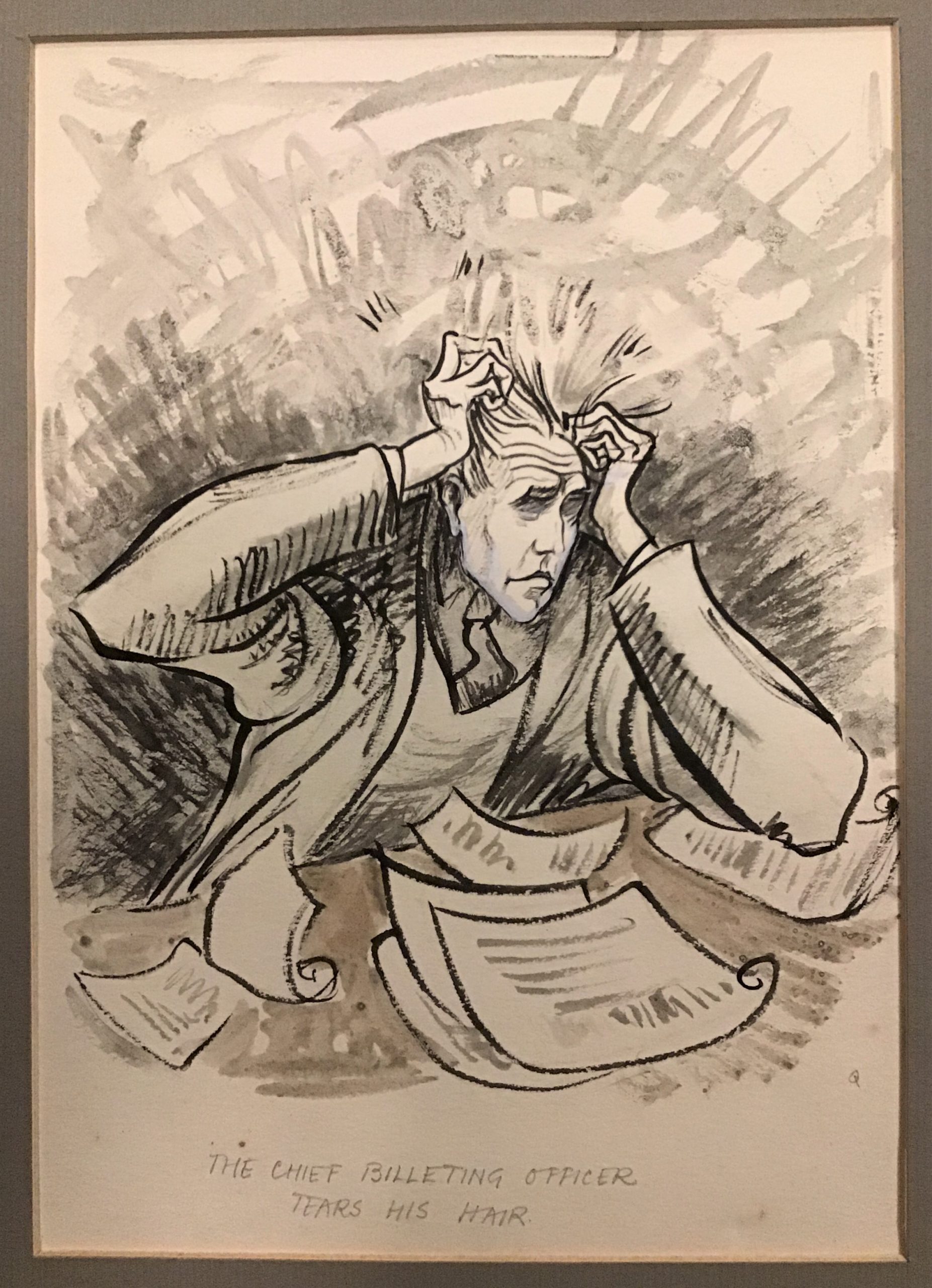
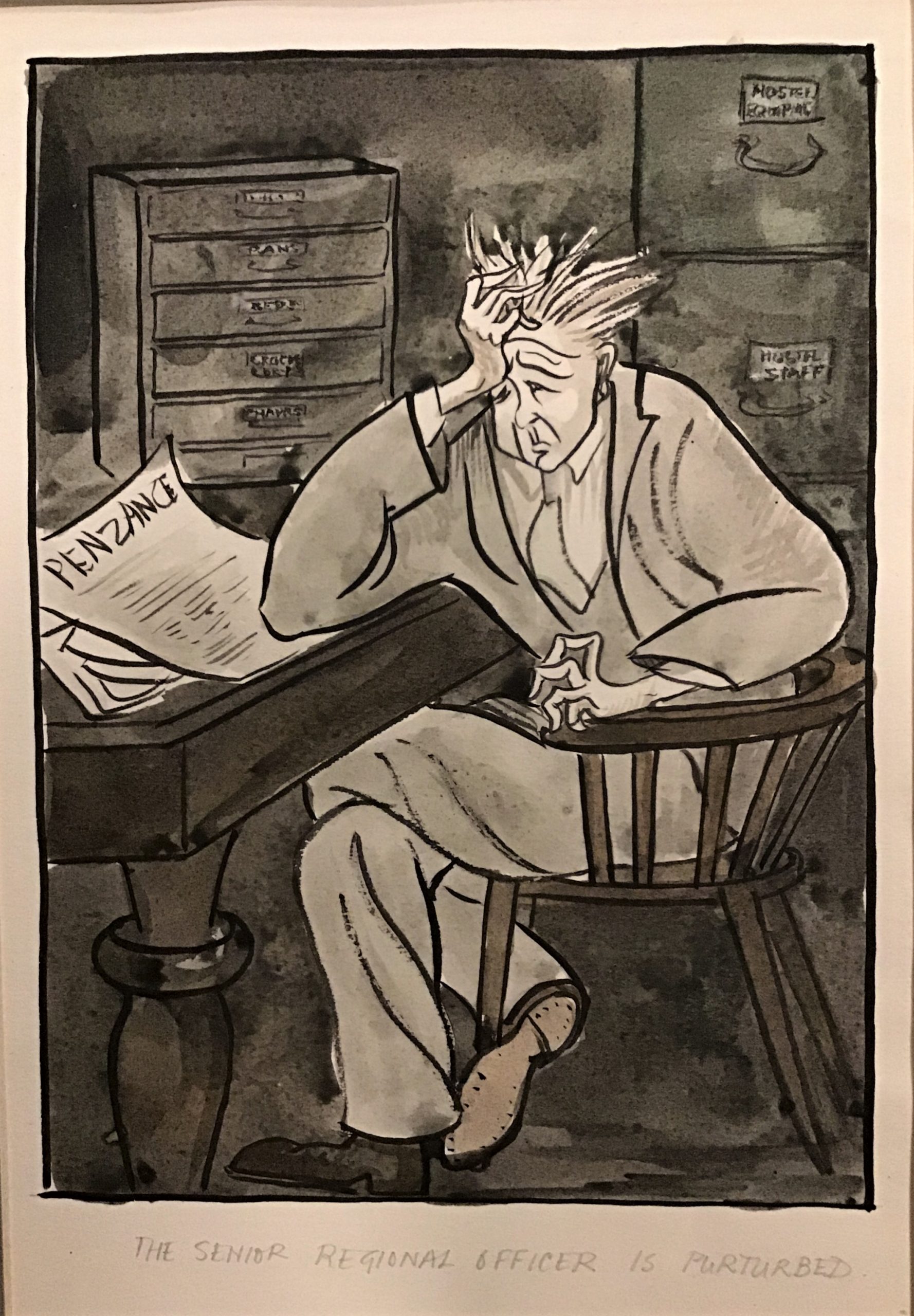
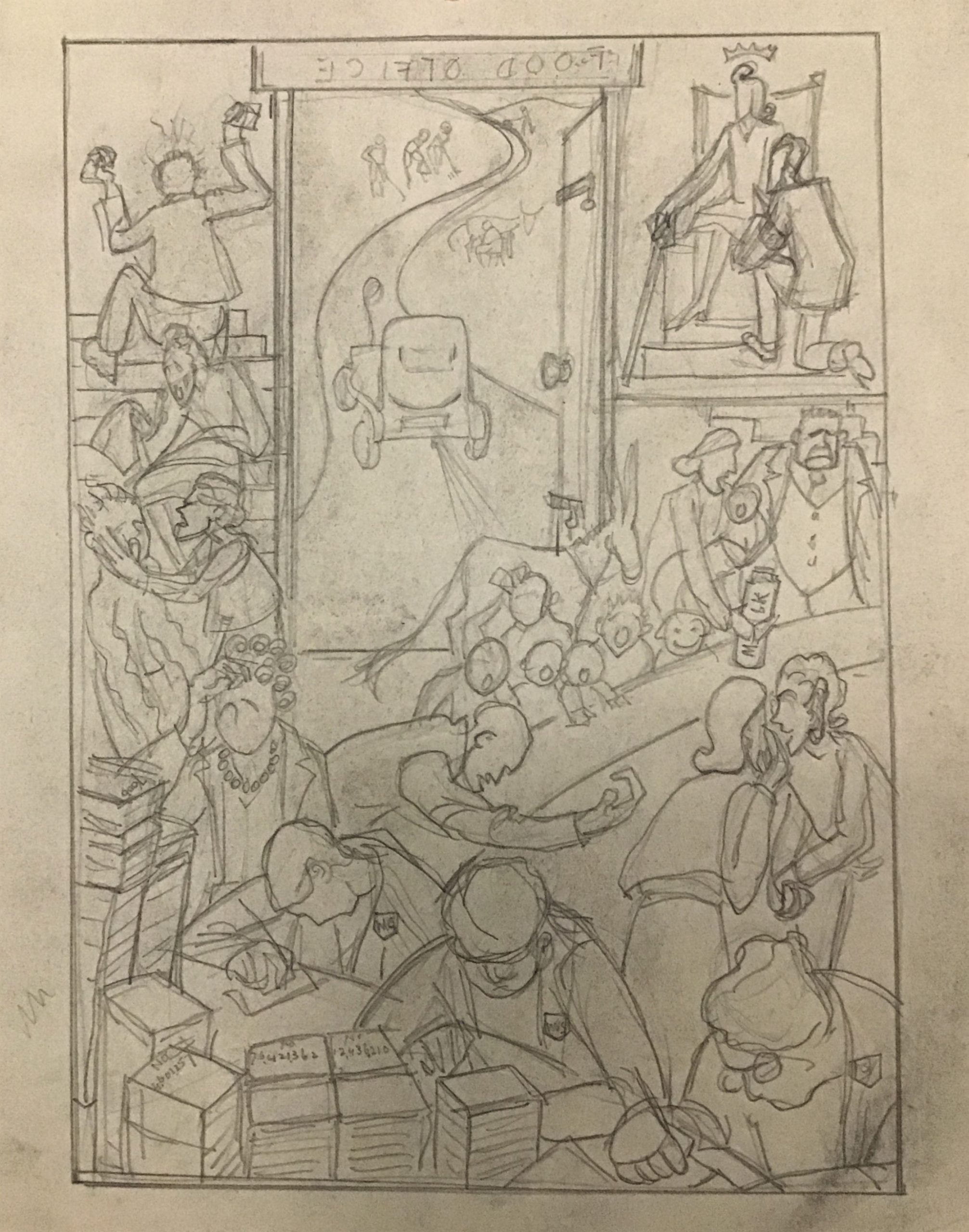
The library is lucky to hold archives of work by the Cornish artist and illustrator Hilda Quick.

Quick was born in Penzance in 1895 and trained at the Central School of Arts and Crafts, London, later specialising in wood engravings. Locally, she created designs for the Minack Theatre programmes, working directly with Rowena Cade (founder of the Minack). She also illustrated numerous books including her own — Marsh and Shore, about bird-watching on the Cornish coast, which became a bestseller.

She lived in Penzance until the death of her parents in 1951, after which she moved to St Agnes in the Isles of Scilly, remaining there for the rest of her life and continuing to produce work until her death at the age of 83 in 1978.

During her long career Quick produced numerous studies of the local community in Penzance and Newlyn, including these rather wry and playful sketches. They were made during the second world war and give an insight into the everyday lives of people in Penzance during that time – from the desperate and dutiful queues at the local fishmongers and chaos at the food office in St John’s Hall, to Penzance’s exasperated ‘chief billing officer’ pulling at his hair.

VE day commemorates the beginning of peace in Europe, a peace that must have been felt in a thousand little ways across the country, from our own land’s end to the highlands. It celebrates the peace that started the long and complicated process of healing for many countries. Hilda Quick’s drawings capture a time that is past but VE day reminds us that the value of peace, and working together, is ever-present.


Immy & Marlene – Duke of Edinburgh Volunteers

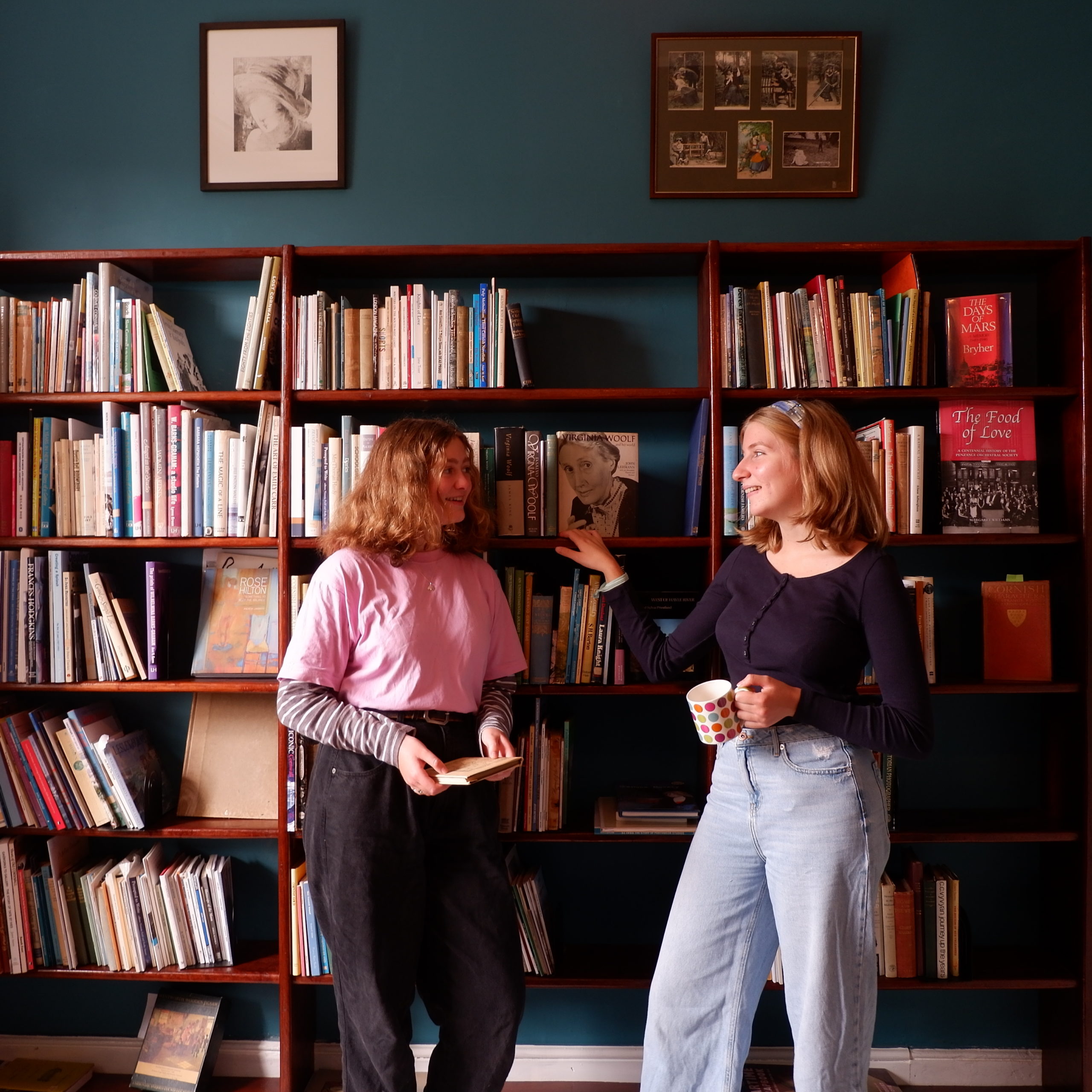
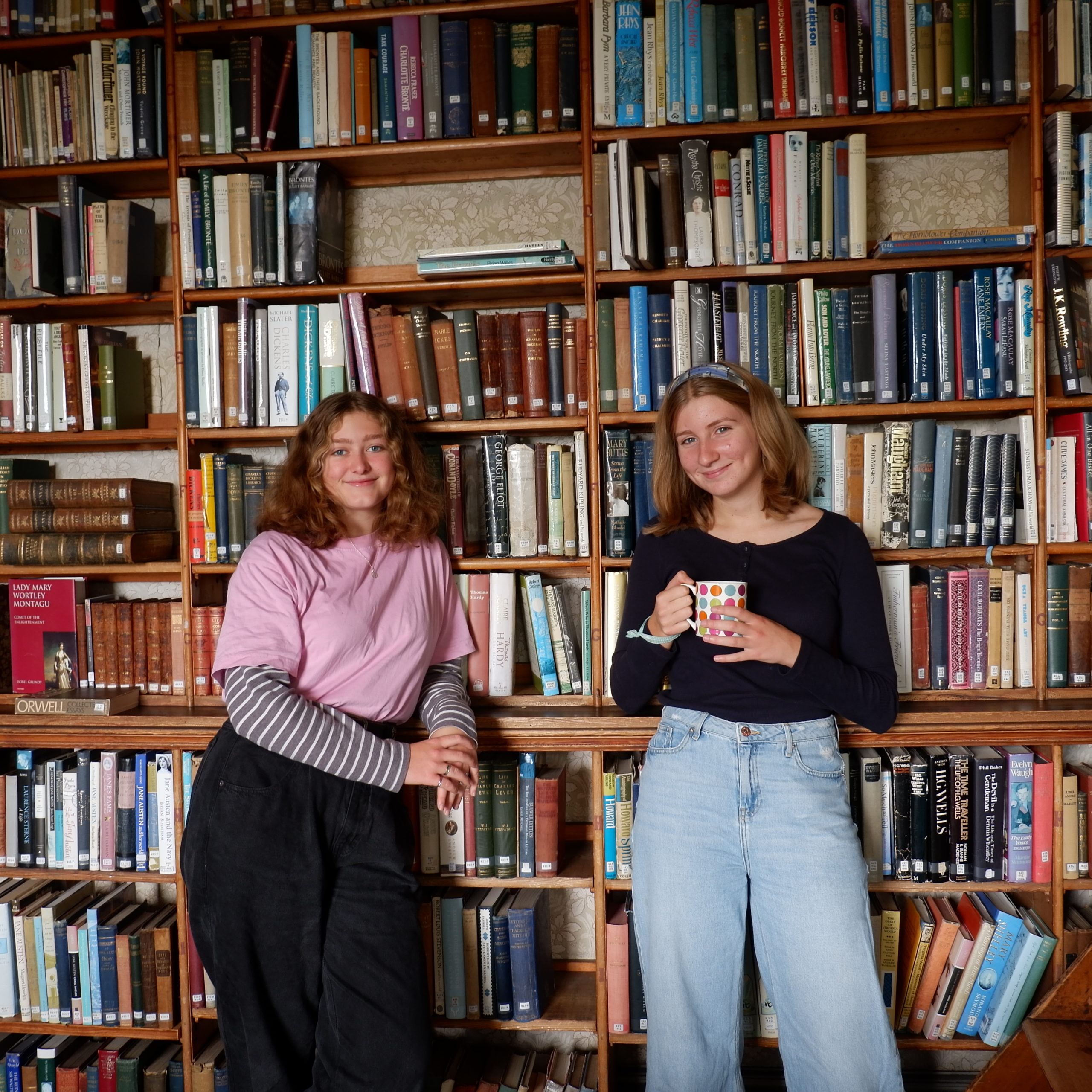
Looking back one of the highlights of 2019 was having these wonderful young ladies complete their Duke of Edinburgh volunteering with us. Their enthusiasm was completely infectious! Near the end of their time here we asked them to write a little something about the library which you can read below. We think they’re some of the best reviews we’ve ever had! 


“Hello! My name is Immy and I have been coming to the Morrab Library for a few months now and it’s been really great. The people are so nice and funny, just being at the library I lose track of time and I end up spending a few hours here. By doing this it takes me away from my phone and stress… the atmosphere is so peaceful and quiet it feels like you’re in a different place, completely stress free. Which is absolutely needed in this 21th century. Even if you might not realise it, you probably are stressed out by one thing or another. And if you’re not it’s a great place to experience! The rooms are lovely! If you like a modern look you might like the art room and if you want to learn about West Cornwall then visit the Cornish Room. My friend and I found these funny poems written by a Cornishman, and it got me into poetry! I never really liked it until I found that little treasure. There’s many beautiful looking books from and about different eras. You can learn so much from a library, why not do it in a peaceful library with a stunning view of the Morrab Gardens right in front of you? I never came here before I started volunteering and it’s so refreshing and relaxing. If you don’t like reading just come to the library to look at its beauty. It’s been here since 1818 and it’s just so beautiful being in such a historic place.” 


“Hey! I’m Marlene. I volunteer at the library with Immy and I completely adore it. We’ve been coming here for almost nine months and our Duke of Edinburgh time is almost up, but I’m going to come by and visit afterwards because I’ll really miss all the lovely lovely people here and the beautiful vibe. My favourite place is the Natural History Room. The walls are covered with row upon row of gorgeous wooden shelves and stacked with hundreds of old volumes and pretty pictures. The light comes in gently from one tall window and the room is always in a state of peaceful twilight. Morrab Library is absolutely one of my favourite places in the world – and there’s something for everyone! Immy’s already told you all about the many attractions of the Library… there are so many hidden treasures to be stumbled upon here. The tiny book of Cornish poetry that we unearthed and pored over for hours is probably one of my favourite books. I’ve also found tons of beautiful clothes books from centuries ago which were a portal to another world entirely – just like the library itself!”

Morrab Calendar – on sale now!


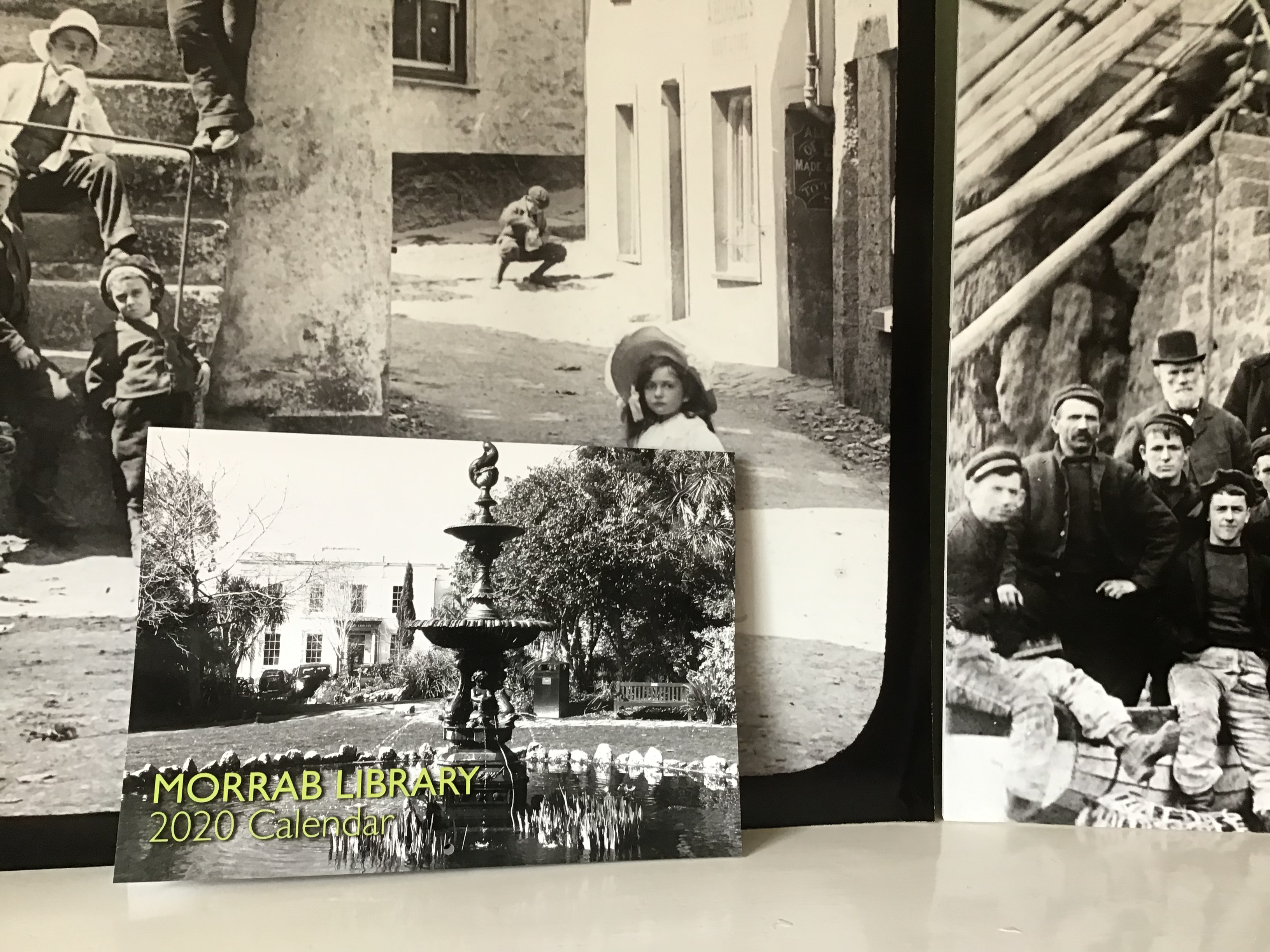
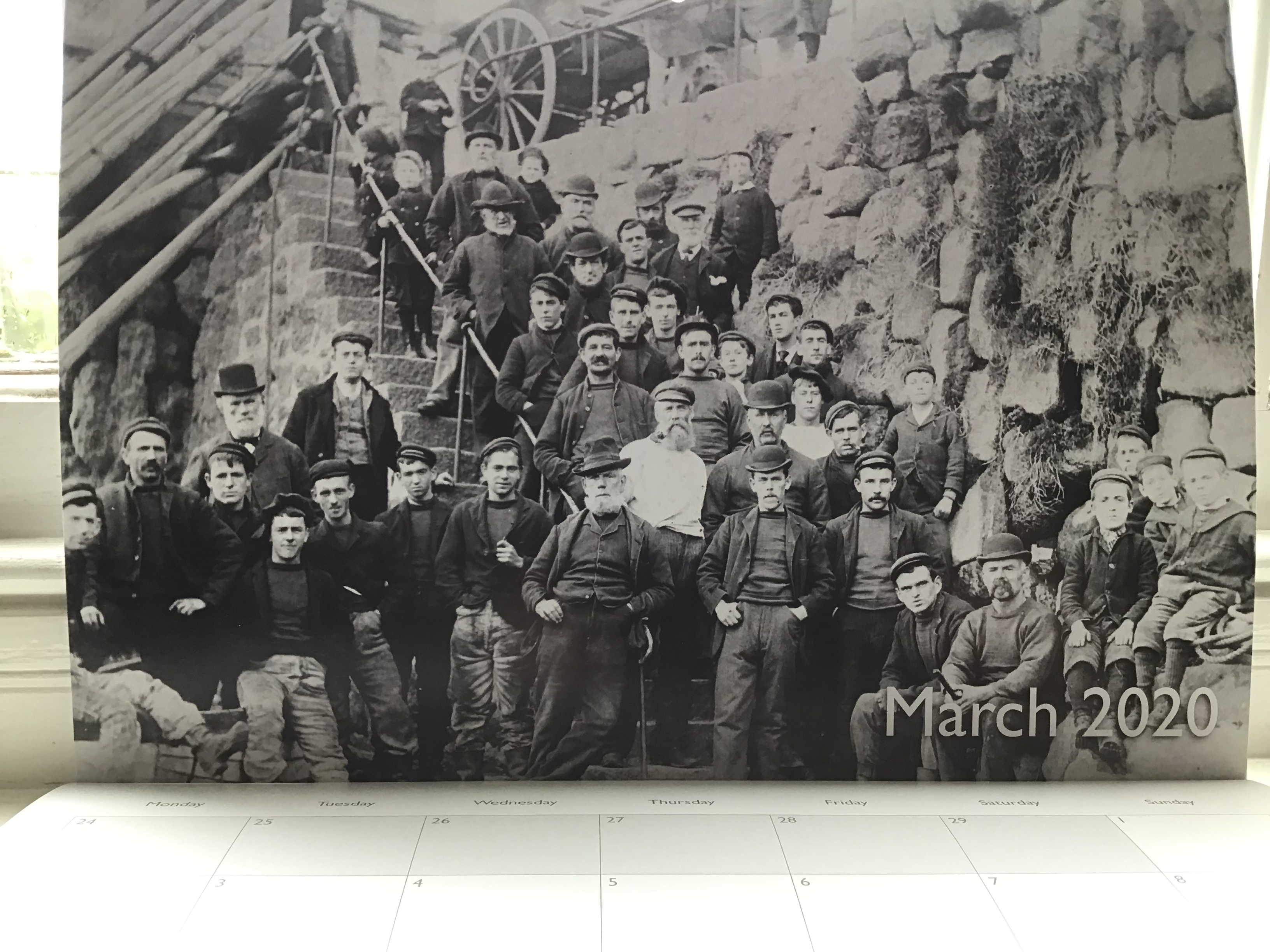
Travel back in time with our 2020 Calendar …

We’re delighted to announce Morrab Library has produced a 2020 Calendar using photographs from our Cornish Photo Archive. The calendar is now available for purchase at the desk. At £10 it’s the perfect gift and a great way to support the library.

Stocks are limited! All proceeds go to the library. 

To find out more about these very special historical collections you can browse our Photo Archive here – http://photoarchive.morrablibrary.org.uk/

New Display: A Journey to Space

A Journey to Space: Morrab Library, Cornwall & Beyond

Inspired by a recent well attended Morrab Library talk about Spaceport Cornwall, Sue created a display of books and items from our Library collections.

50 years ago NASA sent explorers to the Moon. Now Cornwall is looking to host a spaceport at Newquay Airport. Closer to home, an exploration of the inner space of the Morrab Library reveals our changing view in the heavens through time.

Topics covered in the display are:

Pioneers of Ideas

Humans have always looked to the sky … drawing some very different conclusions about what they see and what it means.

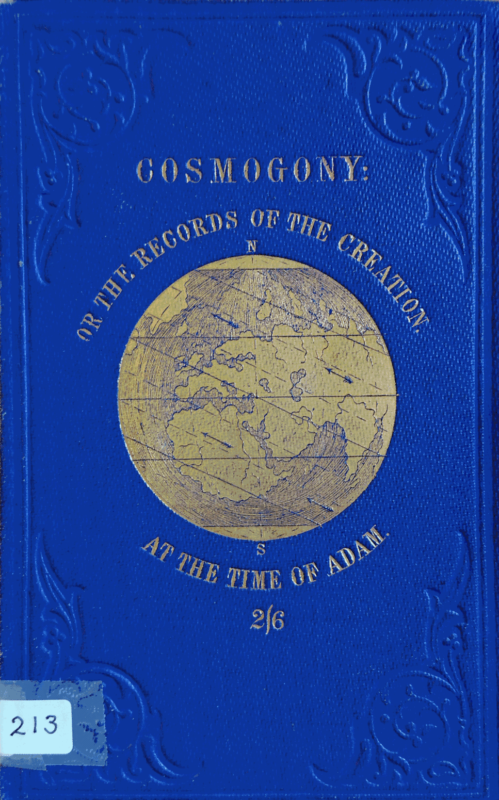
Cosmogony: Or the Records of the Creation at the Time of Adam. from Morrab Library collection

Mapping space

A rational scientific approach requires examination and organisation of data.

The discoveries, inventions and work of many people are needed.  Cornish scientists contributed to the field of discovery including astronomer John Couch Adams who discovered Neptune.

Past Preoccupations

Items from the Morrab Library show some of the events and topics of interest in the past to our members.  We have several old astronomy books including a beautifully illustrated copy of Ball’s Popular Guide to the Heavens – a popular guide to the study of the sky (1905).

The 1999 solar eclipse was a memorable event in Cornwall. Morrab Library’s  Archive holds very special scrapbook of the 1999 Solar Eclipse.

Technical Details

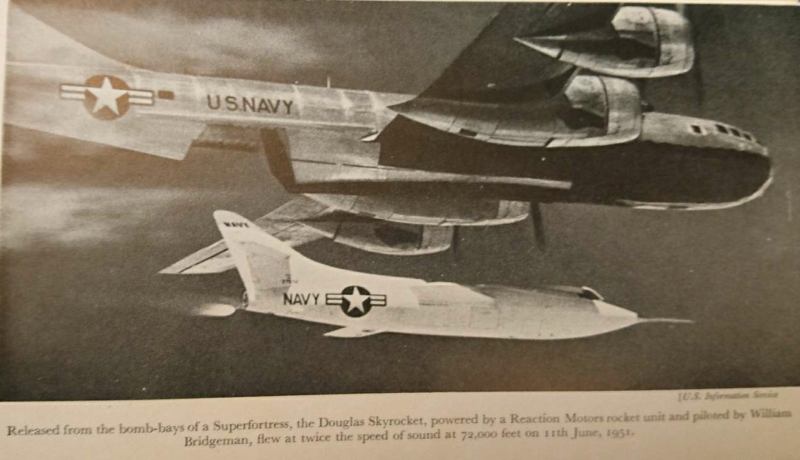
As well as some of Cornwall’s past aerospace connections we looked at space technologies.  “Sound Barrier” by Duke & Lanchbery (1953) has photos of the X-1 high altitude aeroplane and rocket launch from aeroplane. Using an aeroplane as a launcher is an older idea now being reconsidered for the Newquay Spaceport.

“Sound Barrier” by Duke & Lanchbery (1953)

Other Views 

There are other views of the stars in the sky  – for example the artistic view. Children’s books such as “Vincent’s Starry Night” by Michael Bird (2016) have wonderful illustrations and stories.  The painting from the title of this book was created while Van Gogh was in an asylum. There are many theories of the meaning of this painting including speculation that he had seen an illustration of the Whirlpool galaxy in a French book popularizing astronomy by Camille Flammarion, the Carl Sagan of the 19th century. Compare it to the illustration in our copy of Ball’s Popular Guide to the Heavens.

Ball’s Popular Guide to the Heavens


The English Country House & The Novel

This blog piece was written by Library member, Jean Y. Jones.


A sunny morning. In Morrab Library I sat in my leather chair, book in lap, gazing out of the Georgian window over the gardens and out to sea. The library was quiet and peaceful. The book on my lap, taken from the shelves in the Cornish Room, was Daphne de Maurier’s Rebecca.


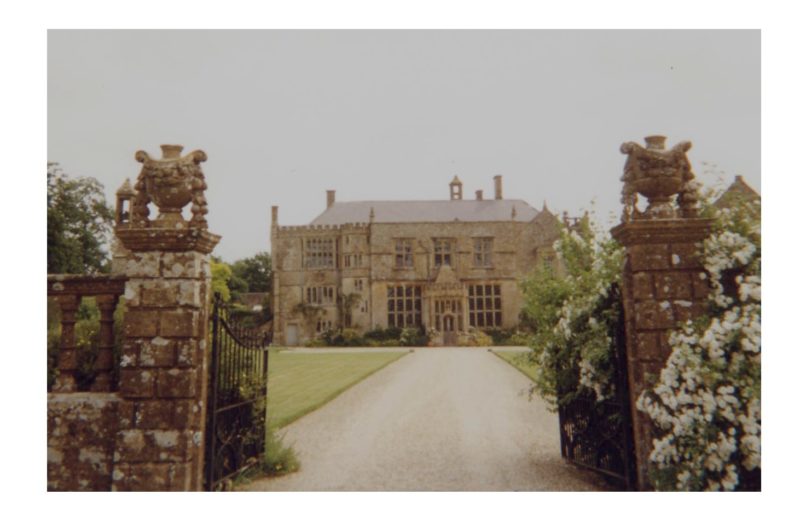
Manderley, the house of all our dreams, a country house of the kind familiar to us all through the medium of the novel. The link is astonishing. From its earliest inception as a literary genre, the novel has looked to the english country house for background and setting.


When Richardson considered using imaginative story-telling as a vehicle for his views and opinions he placed his heroine, Pamela, in the country house, a pretty servant faced with moral dangers therein. So successful was he that Smollett and Fielding rapidly followed in his footsteps. The country house proved a perfect background to exploit, for tales of high romance and derring-do, of Gothic mysteries and horror. Jane Austen, writing a while later, used the country house as a more conventional setting, with its beautiful parklands, grand rooms well-furnished and well-appointed, of the kind so highly admired by Henry James. With it came a way of life that over generations had evolved into a strong social class system, the English gentleman exhibiting an etiquette of manners, at times civilised in the extreme, exclusive and insular. Save for the imaginative incursions of the novelist.


So great was the attraction of the country house to literature that it moves frequently from background to foreground. In Pride and Prejudice Darcy might well have remained a bachelor  were it not for Pemberley and its effect upon Elizabeth. Similarly, in Northanger Abbey Catherine is quite led astray by the house, almost as much as General Tilney was by rumours of her wealth. 


The country house is used to a more passionate and vibrant effect by the Brontes – Wuthering Heights, brooding over the moors, Jane Eyre with its mad woman in the attic. Even Charles Dickens succumbed to its use, in Great Expectations skilfully creating in the mind’s eye the dark and deserted rooms leading ever inward to Miss Havisham’s wedding feast. 


But with industrialisation breaking up the patterns of rural life, universal education and democracy, the tenor of novels shifted to the more social and political. Disraeli’s Sybil, George Eliot’s Felix Holt, the Radical, Trollope, concentrating on domestic dramas played out in the country house, closely followed by Galsworthy’s Forsyte Saga. All still using the country house and its social context to centre their narratives on. 


As the twentieth century progressed, writers of a different mettle appeared, some, self-proclaimed self-conscious intellectuals like those of the Bloomsbury Group, products themselves of the country house epitomised in novels like Mrs Dalloway, Howard’s End and Brideshead Revisited. These gave way in turn to the novelist writing for a newer kind of reader, exploring a wider range of experience. Though still the country house maintained its allure as in D.H. Lawrence’s Lady Chatterley’s Lover. Crime writers found it a great setting and jumping-off platform, as evidenced in Agatha Christie’s works, and Conan Doyle. This has persisted to the present day. 


Its romance endures, in the charm of Georgette Heyer’s Regency works, in for example Catherine Cookson and Jilly Cooper’s writings, right through to contemporary fiction. And who can forget the superbly written “Remains of the Day” by Ishiguru?


The country house may no longer by the symbol of power, wealth and privilege it once was. Yet it lives on, in our novels, in our imaginations, and on the shelves of our own country house, Morrab Library.